

Moss The Forgotten Relic review: the 2 best VR games of all time are just as good on console

Published Jul 14, 2026, 11:00 AM EDT
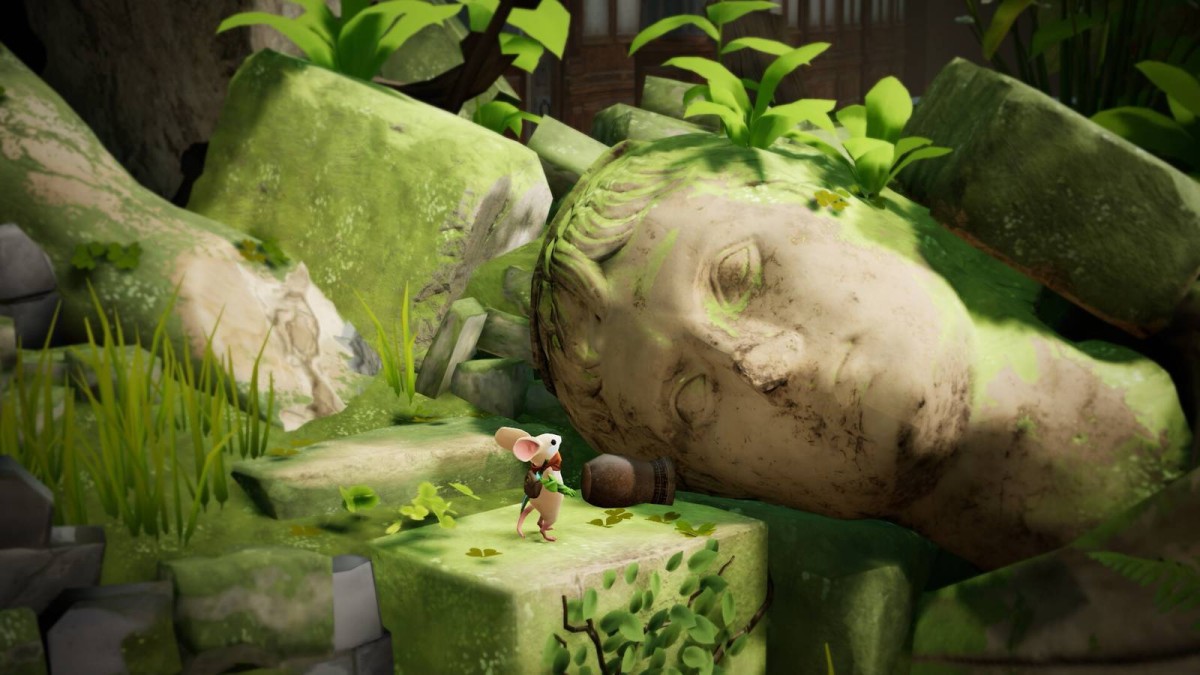
Moss: The Forgotten Relic is a storybook brought to life
 Image: Polyarc
There’s a whole world of video games that I just can’t play. Not that I don’t want to, but because I am physically unable to: VR games. Just the idea of strapping on a VR headset is enough to give me nausea. I’m the guy who gets sick on car rides and who had to leave my first (and only) IMAX movie many years ago to part with my lunch.
Because of the inability to engage with VR as a medium, there are plenty of great VR video games I’ve missed over the years, like Moss and its sequel, Moss: Book 2. I’ve consistently clicked on these games with interest when browsing PlayStation Store sales, only to meekly back out of the product pages when learning they’re VR-only. That’s no longer the case, however, as developer Polyarc has packaged both games in the flat-screen release Moss: The Forgotten Relic, to be enjoyed sans any VR headset. It’s a great adventure with only a few hiccups along the way.
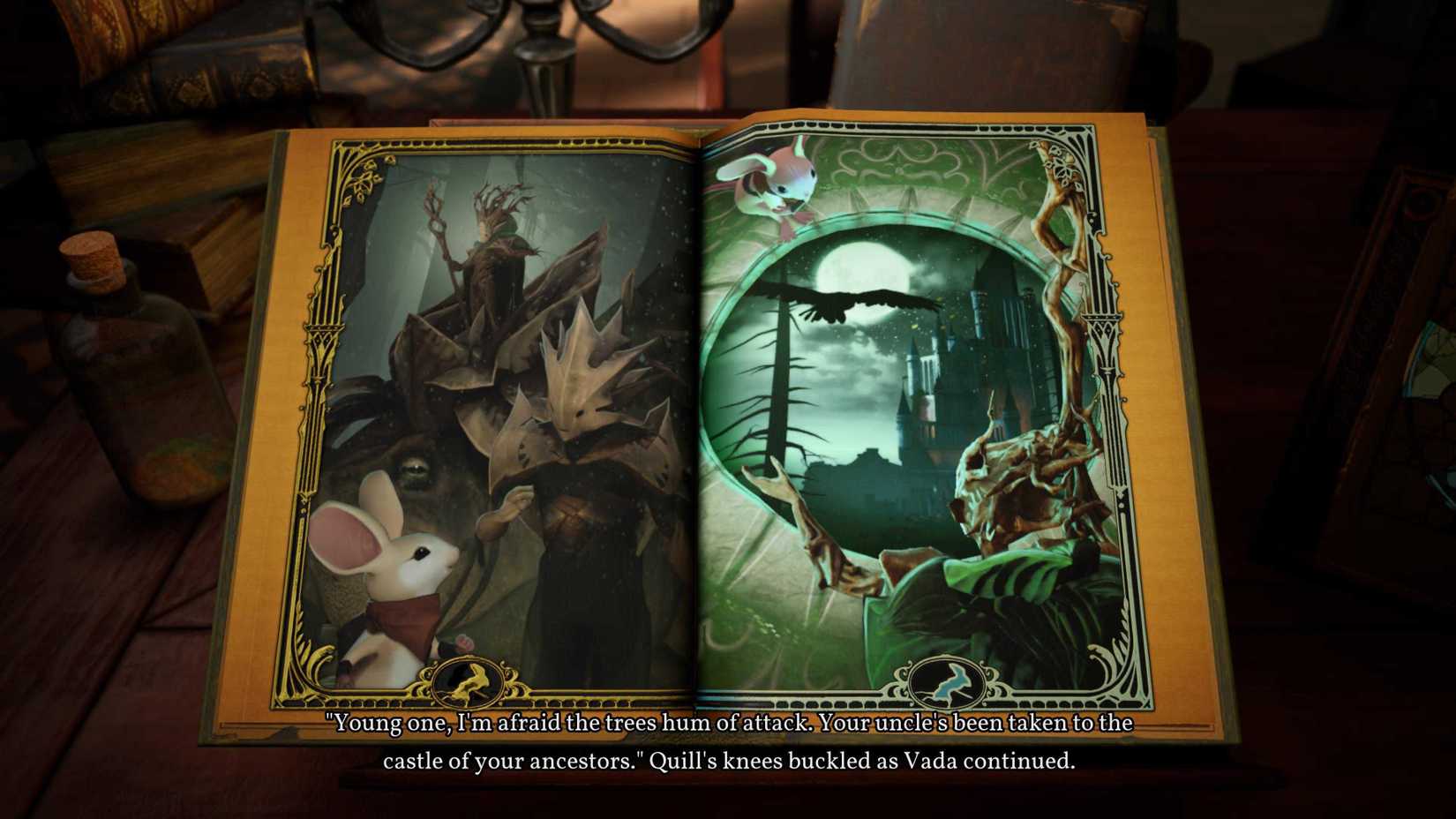 Image: Polyarc via Polygon
In Moss: The Forgotten Relic, you are as much a character as any of its anthropomorphized animals. You’re the Reader, flipping through the pages of a storybook you find in a library. You meet the young mouse Quill, who quickly realizes that you are watching over her. After she finds a piece of Glass (the series’ MacGuffin), her uncle is captured. With the help of her Reader (that’s you), she sets off on an adventure to find him and encounters so much more than she bargained for, and grows into quite the hero along the way.
As the Reader, you aid Quill in all areas of gameplay. You facilitate her platforming through colorful forests or dreary levels set inside a morose castle, like moving boxes around for her to jump on or elevating platforms from the floor. It’s simple stuff, though the transition from VR game to traditional 3D platformer falters in one aspect: you can’t control the camera.
One thumbstick controls Quill while the other controls my hand as the Reader, meaning my platforming is at the mercy of the game’s camera. Judging the distance for jumps can be tricky and may take a few attempts as I figure out the angle of a level. Normally that’s fine, but it can grow tiresome, and there’s one section at the end of the first half that frustrated me like no other as it required precise platforming the fixed camera angles just weren’t built for. But a finicky camera is the game’s only knock, and, as someone who’s played plenty of FromSoftware titles, it’s something I’m used to.
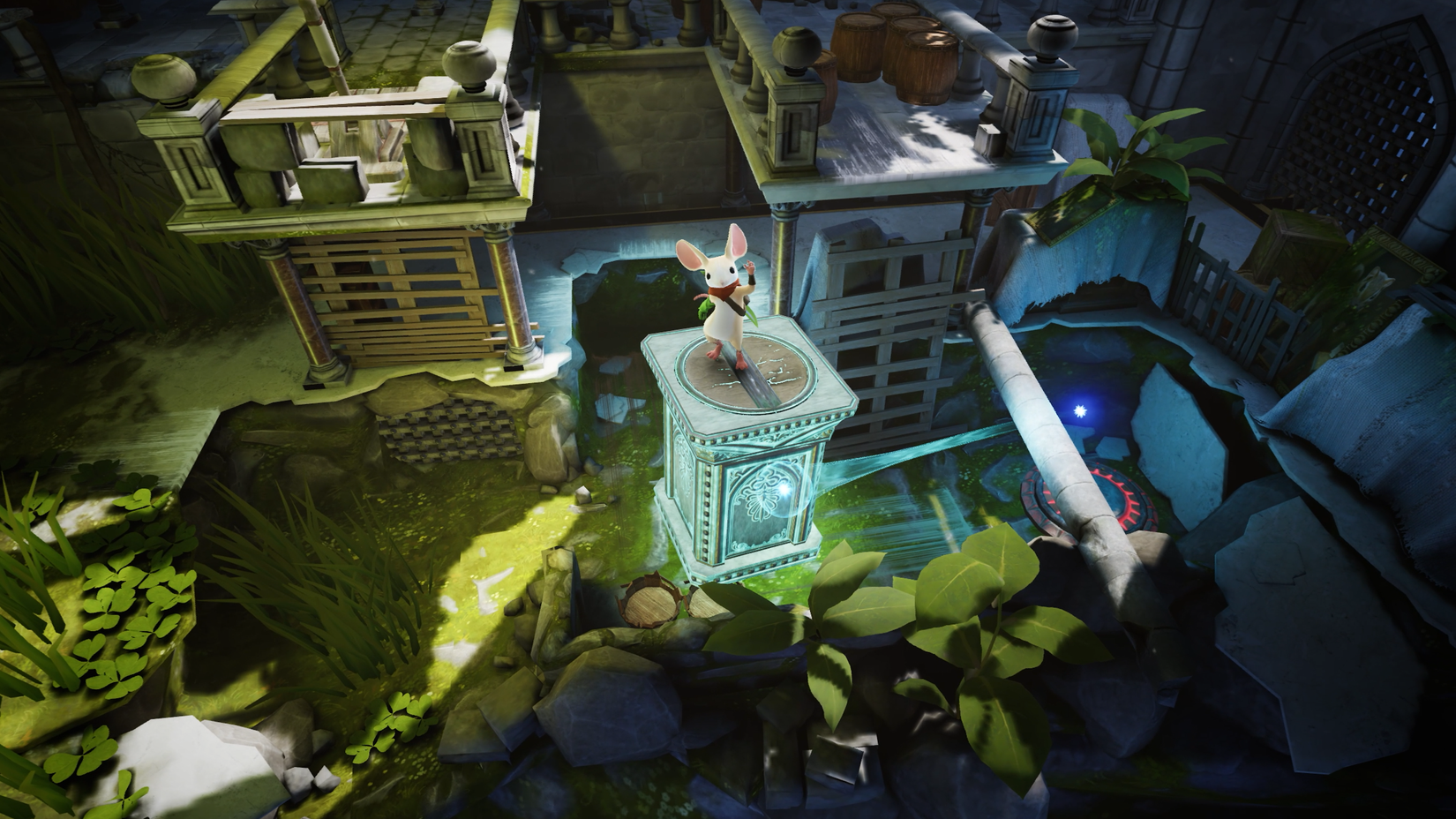 Image: Polyarc
Moss’s environmental puzzles are never too head-scratching, though they do require some appreciated trial and error at times. I might need a few laps scouring a level before that lightbulb moment triggers and I clearly see a solution. Quill gets more tools for her puzzle-solving toolkit as the games go on, and the Reader gets in on the action too by frequently having to take control of an enemy to use it in helping Quill navigate the environment. By the end of Book 2, I have to gleefully and masterfully switch between those tools to satisfyingly clear a puzzle.
Combat is the third pillar of Moss’s gameplay, and it’s the weakest. Unlike the puzzle solving, which provides engaging challenges, the combat is more a test of patience as I mow down waves of enemies in closed-off arenas using the same few attacks at my disposal. Combat does get better in the second half, however, as Quill acquires additional weapons, lending some much-needed variety that makes the fights much more fun.
Moss excels in giving its hero so much personality, and journeying with her is the best part of the game. Quill doesn’t cleanly vault over tall ledges like an assassin parkouring around; she has to scramble up with her little mouse feet doing their best to propel her forward. Presented with a short enough platform, she’ll somersault over it in style.
She’ll offer a high five after completing a challenging combat section or after solving a puzzle. As the game progresses, the number of high fives on offer increases until suddenly Quill is dancing around and spinning in a circle while you give her consecutive high fives. Moments like these really make the bond between a player and a character feel special.
 Image: Polyarc via Polygon
Quill’s personality is highlighted when you briefly play as another mouse, Sahima, late in Book 2. This new mouse is a curmudgeon, not wanting to deal with you, The Reader. Sahima crosses her arms and looks away from you instead of offering a high five, and she will impatiently point at objects if you’re taking too long on a puzzle. One time I accidentally made Sahima fall into water (an instant fail in Moss), and when she respawned she sarcastically clapped my way. (OK, maybe it was more than one time.) Cold, but I did deserve it.
Sahima made me miss my time with Quill, who grows into quite the heroic mouse over the course of the games’ combined 10-hour runtime. Quill is as brave of a hero as any, and an empathetic one too. Reunited for the final stretch, we try to save the world of Moss without any further casualties. As Quill learns, that’s easier said than done, and when her heart breaks, so does mine.
Outside of some camera-caused annoyances, there’s a lot to like in Moss: The Forgotten Relic. Its combat is serviceable, but the game really shines when it tests your knowledge of its systems during puzzles. Being rewarded with a high five by the game’s adorable hero makes solving all those puzzles more than worth it.
Moss: The Forgotten Relic will be released July 16 on Nintendo Switch, Nintendo Switch 2, PlayStation 5, Windows PC, and Xbox Series X. The game was reviewed on PS5 using a prerelease download code provided by Polyarc. You can find additional information about Polygon’s ethics policy here.
What's Your Reaction?
 Like
0
Like
0
 Dislike
0
Dislike
0
 Love
0
Love
0
 Funny
0
Funny
0
 Wow
0
Wow
0
 Sad
0
Sad
0
 Angry
0
Angry
0







Comments (0)