

NASA said nyet to Roscosmos plan to cut into leaky ISS segment
SCIENCE
Crew sheltered in SpaceX Dragon as aging Zvezda segment's cracks continue to test orbital nerve
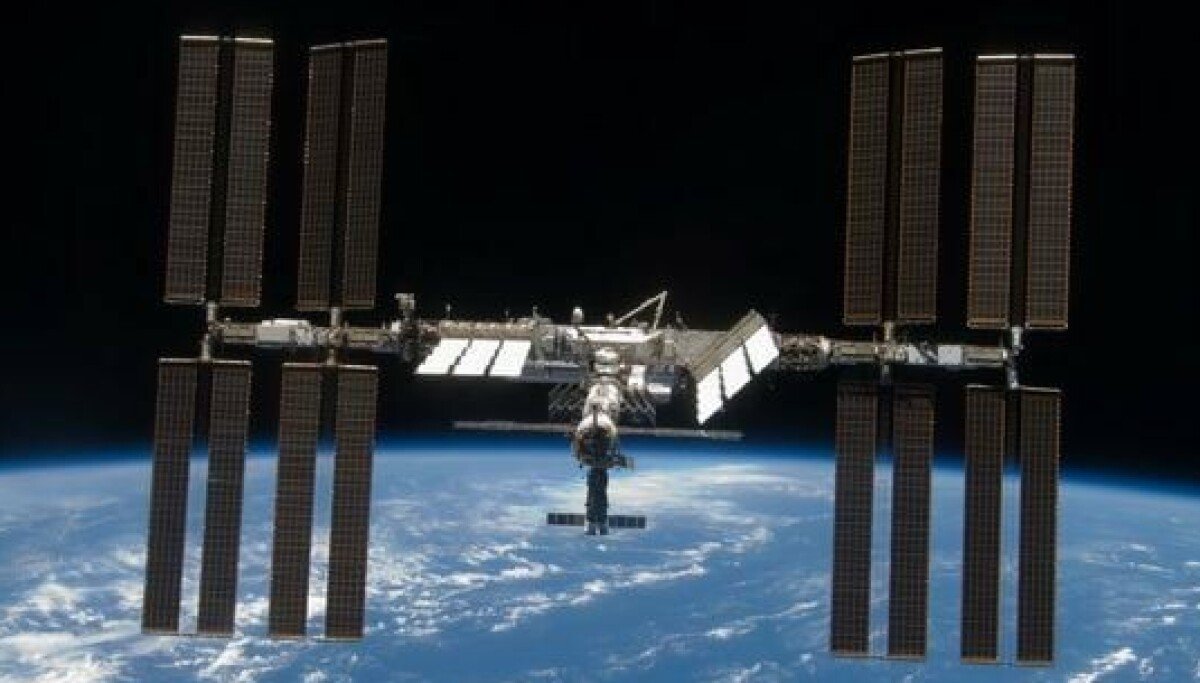
Russia's space agency Roscosmos intended to cut into part of the International Space Station (ISS) to determine the extent of leaks in the aging structure, according to a space agency source.
The Register was told that discussions involved a handsaw . Other reports have suggested cosmonauts planned to deploy a drill.
Whatever tool was involved, the plan made NASA sufficiently alarmed that the agency sent its astronauts scurrying into the relative safety of a SpaceX Dragon capsule docked at the ISS. Neither NASA nor Roscosmos has commented officially.
Russia's plan was to use the tool to learn more about the extent of the crack. NASA said: "This revised approach involved cutting a bracket to access better an area identified as a possible leak source for further inspection, using a method that could have resulted in elevated risk to the structure in the area."
However, this could have created unpredictable loads on other cracks. Eventually, the plan was called off in favor of more measurements and data gathering.
The SpaceX Crew-12 astronauts and NASA astronaut Chris Williams were forced to shelter in the Crew Dragon spacecraft earlier in June following a sharp increase in the rate of air leakage from the orbiting outpost. The offending area is the Zvezda service module's transfer tunnel, known by the Russian abbreviation PrK.
While more epoxy patches might address the problem in the short term, the fact that additional cracks have appeared suggests issues Zvezda has wider problems. That's not unexpected given the age of the craft, some parts of which date to the 1980s when it was a backup for the Mir space station. Russia launched Zvezda in 2000, so it's now endured decades of stress.
The module has leaked for years. In 2024, ESA astronaut Andreas Mogensen suggested one option for dealing with the cracks was to seal off the module once and for all. He told The Register: "The lucky point is that the cracks are confined to that chamber at the very end. So, as long as Russia is willing to forego that docking port, that wouldn't impact operations too badly."
The crew routinely keeps the hatch to the tunnel closed when not in use, but a more permanent solution might be necessary in light of the ongoing problems.
"So, yeah, worst case, you could seal it off," said Mogensen, "and I think the Space Station could continue. But of course, you never know what other problems might arise."
Mogensen's "worst case" is, according to reports, likely the way forward: permanently sealing off the affected segment. A sudden depressurization of the PrK segment is a risk NASA is no longer willing to take. ®
What's Your Reaction?
 Like
0
Like
0
 Dislike
0
Dislike
0
 Love
0
Love
0
 Funny
0
Funny
0
 Wow
0
Wow
0
 Sad
0
Sad
0
 Angry
0
Angry
0










Comments (0)