

No One Turns Female Competition Into Terrifying Cinema Quite Like Sophia Takal
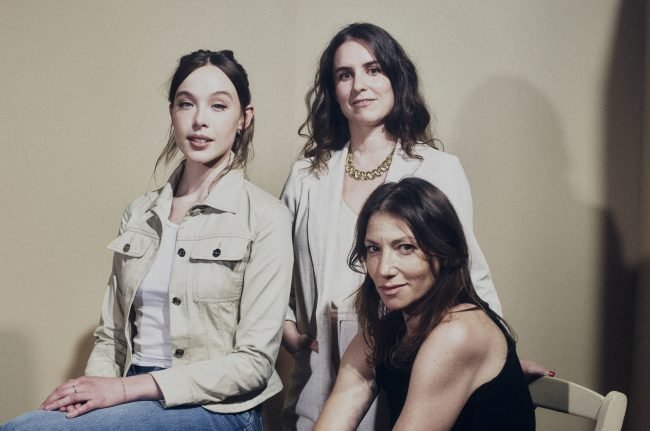
The last time that filmmaker Sophia Takal was at the Tribeca Festival, it was with her 2016 thriller “Always Shine.” For fans of the director (like me), the feature starring Mackenzie Davis and Caitlin FitzGerald was a clever continuation of and twist on the themes Takal explored in her first feature, “Green.” Or, as I wrote 10 years ago, “While ‘Green’ was more concerned with the kind of jealousy sparked by competing for a man, ‘Always Shine’ turns its gaze on something Takal knows even more about: professional jealousy.”
Just two films in, Takal proved herself to be our foremost contemporary chronicler of a particular kind of female rage, the kind of consuming envy that’s not just about what someone has or what someone wants, but how those things are also tied up in who we want to be.


And when is that feeling more pronounced than when we’re coming of age?
For her fourth film, Takal wanted to put her cinematic obsessions through that exact lens. “I had always really wanted to make a navel-gaze-y solipsistic movie about myself as a teenager, but I never could really find a way in,” Takal told IndieWire. “And then ‘Lady Bird’ came out and then I was like, ‘OK, well, I’ll never do that, because that was perfect.'”
The result is “Act One,” which follows dedicated (OK, obsessed) young actress Hannah (Ella Beatty) as she falls under the sway of charismatic acting teacher Melanie (a career-best Ari Graynor) and basically blows up her entire life in the process.
Takal credits her “Black Christmas” co-writer April Wolfe for unlocking something when she shared stories about “acting teachers who were on power trips, basically,” Takal said. “I realized that if I could couch my own feelings of teenage angst in a more psychosexual thriller world, that maybe there would be an audience for that. I could process what it was like to be a teenage girl who had desire and was pushing boundaries and trying to figure out their own sense of what they were comfortable with and not comfortable with. If I could make it more propulsive and in that kind of genre space that I like to be in, people would have fun watching it.”
She turned to films like “The Babysitter,” “The Crush,” “Fear,” and “Poison Ivy” to assist with that vibe. She also, as always, looked to her own life for more inspiration.
The week before the film premiered at Tribeca, I met Takal and Graynor out at Veselka in the East Village, a funny spot for the film, as Takal and her cast did a very early rehearsal there, almost two years to the day of our interview. “At first you were like, ‘I can’t decide if we should just go out to lunch or if Melanie should take them to lunch,'” Graynor recalled. “And I thought Melanie should take them to lunch.” Takal added with a laugh, “Yup, and I just ate cold borscht, watching them.”
Act One
During the early days of the COVID lockdown, Takal began to work on a script that would eventually become “Act One.” “I had written a 180-page version of the script that was a lot about not getting invited to prom and I put it away and then I sent it to a friend of mine who’s a film executive and very, very smart and I was just like, ‘What do I do? I think there’s something,'” Takal said. “And he was like, ‘Get rid of all the prom stuff, and you’ll have a movie.'”
The prom stuff is still in there a bit — what better way to establish how little Hannah vibes with her high school peers? — but paring it down to focus more on the bond between Hannah and Melanie ultimately proved to be the key. For Takal, who also studied acting as a teenager, their relationship offered a fresh way to explore competition, ambition, and jealousy. It was also, somewhat hilariously, a dynamic familiar to most other actors.
“When I was meeting with actors for all the different roles, everyone thought that the character was based on a specific acting teacher that they had had, and everyone had a different acting teacher,” Takal said. “There’s a scene where Melanie is like, ‘You’re an ingenue, you’re a character actor, you’re a heavy.’ I did a Stella Adler teen summer program, and our teacher at the time, it was just like, ‘That is the person who’s going to make my career.’ He went through and told everyone, ‘You’re this, you’re that, you’re that.’ He said to me, ‘Take off your glasses. You would be an ingenue if you wore contact lenses.’ And then I got contacts.”
That exact scene makes it into “Act One.” And Hannah? She gets contacts, too. In fact, the whole thing was so close to the bone that Takal even shot the film in the very same acting studio where she took acting classes as a teenager.
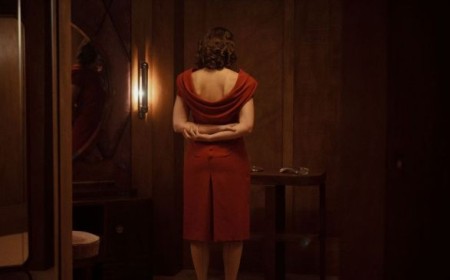
 ‘Act One’Courtesy Tribeca Festival
“There were so many entry points for Sophia, and I think there were so many entry points for me,” Beatty told IndieWire the next day on the phone. “I really enjoyed figuring out how to talk about all of the experiences or imaginings or made-up stories in our head that we had and then also translating them into this fictional story about this fictional girl and her life and her reality.”
And while Beatty did not have the acting school experience that Takal had (or, thank God, that Hannah has in the film), she still found plenty to attract her to the fraught bond between Hannah and Melanie.
“I had an experience going to an acting school that was really wonderful and expansive and fulfilling,” Beatty said. “And also, I responded to something in Sophia’s writing and conceit of the project right away, which was what happens to a group of people or to a person under a set of circumstances, like an acting class, or in environments that are sort of small and can feel very intense at times. [Places where] there are systems that are set up where people feel eager to please and eager to be praised.”
While making the film, Takal couldn’t help but feel her own feelings crop up, though perhaps in some unexpected ways.
“I had a really complicated relationship with Melanie,” Takal said, gesturing toward Graynor. “Not you, Ari, but Melanie, because Melanie was also a director, and I realized, I don’t know, this probably was so obvious to you, but I was like, ‘Whoa, I hate directors.’ It was really complicated and hard to be directing a director character, it was just such a strange experience. And then the stuff between Hannah and her mom, the whole family situation, is very much my family situation. What was really funny about that was, when I showed people cuts of the movie, they were like, ‘These parents are way too much. This is not realistic.'”
Hannah’s family does not understand her obsession with acting. And her drive to be the very best? That’s even more foreign to them. And while Beatty’s own family — like, oh, no big deal, her father Warren Beatty and mother Annette Bening — absolutely get why she loves acting, she was drawn to the ways in which Hannah’s feelings still feel very relatable.
“I’m very lucky,” Beatty said with a laugh. “I have a very supportive family, but Hannah really struggles with that feeling that so many people can relate to, of being an artist or an actor or a musician or a painter or whatever it is, and [feeling like] ‘this is my fate, my destiny,’ and feeling very misunderstood by the people around you. I didn’t struggle with the same things Hannah struggled with, but wanting to find a sense of belonging, wanting to feel chosen, and feel like her family understood her? I think those are things that any person who has just been a teenager can relate to.”
Act Two
Once Hannah joins Act One, everything in her life escalates. Suddenly, she’s Melanie’s favorite student, and with that comes true artistic improvement, male attention (from fellow student Henry, played by Nate Mann), and a profound disconnection from everything else in her life.
“I think you see a person in our movie who is pushed to some really crazy places,” Beatty said. “I was interested in exploring what our capacity for high drama in our own lives is like, especially when you’re an artist who enjoys watching high drama. … Life is messy. People are messy and imperfect. And when you’re that age, you have a kind of brazen self-confidence, because you know nothing, so in some ways, you kind of feel like you know everything. There is that kind of adolescent fervor and intensity I read in the script immediately.”
And it’s hard not to see why she’d be so drawn to Melanie, who Graynor imbues with gravitas, talent, admiration, and just a touch of fear. Hannah would follow her anywhere, and who’s to argue with that, when it does seem that her new teacher is just as invested in making her dreams come true? Well, at first.
 ‘Act One’
“Ari really, really created that character and made her so dynamic and so charismatic and so much more charismatic than I imagined,” Takal said. “Ari plays Melanie as a very magnetic and dynamic person, which she is. On the page, she was written a bit more severely, and Ari really wanted to bring more warmth to her in the beginning.” She turned to Graynor again. “I’m really glad you pushed for that because I think that really helps explain how Hannah gets into what she gets into.”
Graynor’s own brand of charisma and warmth — she’s the kind of person who hugs hello and goodbye, even when she’s just met someone — compellingly carries over to the even scarier Melanie. It doesn’t hurt that the teacher’s ethos and belief in the power of art are also ones Graynor shares.
“So much of what Melanie says, I agree with,” Graynor said. “It sounds highfalutin, but to search for the truth and the struggle of being an artist and the dedication to that? When I first read the script, especially that first part before you have any idea where it’s going, the discussion of what it is to be an artist and an actor and all of those speeches, those are things that I believe in, that we all believe in. … It was fun and a real challenge to figure out where those terms happened for her and where the scary was started.”
The “scary” does indeed kick in, but there’s also something to Melanie’s dearly-held beliefs. Takal felt it too.
“The idea that nothing is more important than art? I’m not like that all the time, but when I’m on a set of a movie that I deeply care about, I am like, ‘We have to do this. We don’t have another chance. This is the most important thing,'” Takal said. “So I was feeling all of that and then looking at it critically at the same time for Melanie.”
Graynor considers herself an “instinctual actor,” and one who crucially did not attend acting school, but her process is a classic one: she thinks a lot about backstory, intention, and desire. That Melanie eventually feels such competition and jealousy with Hannah has to come from somewhere deep, and Graynor strove to find it.
“She’s the king of that space and king of these people, but also I think underneath that is her own desperation of wanting to be seen and probably wanting to be an actor, and it didn’t go the way she got,” Graynor said. “And seeing somebody have that success? I don’t even think she processes it anymore as like, ‘I want that,’ I think that’s separate, but she wants that validation so deeply. I always kept coming back to like, what is Melanie’s need? What is she needing to be reflected back? What is her own sense of validation she’s wanting to get for herself from this?”
Years before the film was made, Takal and Graynor chatted on Zoom about the then-nascent project, but Takal worried that Graynor might be too young for the part, feeling like Melanie had to at least be over 40. Time went on, the film got greenlit with another star, but when she had to back out, Graynor jumped at “this opportunity to play a character like Melanie, I’ve never played anyone like that before.”
And, funny little indie movie story, while the previous star was no longer attached, the financing her name helped secure remained in place. “It’s really hard to be in a movie the way indie financing is working these days, and financing of any level of films,” Graynor said. “You’re on the list, but it’s like, but they need a star. They need somebody who can get financing. I feel like I’ve been in a painful in-between for so long where it’s like, I’ve been around for forever, people are fans of my work and seem to have a desire to do something, but they’re like, ‘But we need somebody who has a name that can finance this.’ It’s so rare to receive a script like this with such an amazing character and that is financed in that way.”
Serendipitous, right? Consider this: about two weeks before Graynor signed on for the film, she met Beatty for the first time. Graynor and a friend went to see Beatty in “Appropriate” (a stage play, naturally), and chatted after. The chemistry was instantaneous. Mere days later, they got to bring that to the screen.
“It’s one of the big gifts of this movie that it gave me Ari Graynor,” Beatty said. “She’s a true, very, very close friend of mine. We met backstage and then very quickly, we’re doing this movie together and we sort of fell in love. She is one of the deepest, most rich, incredible human beings, but also of course actresses that I’ve ever known. She is impeccable in this movie, she is so compelling, and that’s something that Ari just has in spades and gets for free.”
Takal, who is about as honest about the trials and tribulations of indie film, could only smile. “It’s just one of those things where it’s impossible to imagine anyone else other than either of them in the roles,” she said. “That’s always what you hear, but it always happens for a reason, and it always works out the way it’s supposed to.”
Act Three
As Hannah begins to blossom under Melanie’s tutelage, Beatty’s fine-boned performance undergoes startling evolutions. She changes how she walks, talks, and moves. She’s performing on top of a performance. Or is she? Isn’t she just finding her real self?
“Her physicality, I remember watching it [during shooting], and I watched the final film, and the way she moved, the way she held her body from the start of the film to the end, and her ability to access her emotions? I’m just in awe of,” Graynor said of her co-star.
“I was really curious about what happens to a person when they go through experiences that are maybe the cliche ‘coming-of-age,’ but there are also experiences that Hannah goes through in our movie that are very singular. I was really interested in how that affects her physical life and does she carry herself differently after having been through those experiences,” Beatty said. “I did want to chart how much ownership I felt like she took of her own body through the movie.”
 ‘Act One’
Inevitably, for a film built on psychosexual underpinnings, Hannah eventually begins to feel desire that goes beyond her professional ambitions. Or, as Takal put it: “She’s horny!” Intimacy coordinator Lizzy Talbot helped, especially during a key sequence that involved Beatty, Mann, and Graynor.
She “was so smart and had so many wonderful things to offer,” Beatty said of Talbot. “It’s always great to have another sort of voice in the room, somebody who can offer interesting, meaningful story beats as well. It was a great learning experience for me, because I’m always interested in, what are the ways in which I can tell the story with my body and my voice? Every sex scene also tells a story, or moves a story forward in some capacity. What does this scene mean? What’s the reason for this scene? How does it move us along? That was really important and ended up being integral to the film and to her journey.”
Takal previously worked with Talbot on “Gossip Girl,” and can’t say enough good things about having her as a partner on the film. “I love working with her. I loved shooting that stuff, even though it was really intense,” Takal said. “I would say, in my whole body of work, that’s the scene I’m most proud of.”
Graynor smiled. “The Converse. All I’ll say is: the Converse.” Takal laughed. “Yeah, the Converse.” In the scene in question, Hannah finds herself engaging in her first serious sexual act. Her partner? Henry, who is also her scene partner at Act One. And directing them? Melanie. It’s a complicated sequence, with the lines fully blurred on all sides, but it’s central to the entire conceit of the film. During Hannah and Henry’s dalliance, he slips her underwear off, right over her Converse sneakers, the bridge between her girlhood and her coming-of-age right there, rendered sartorially.
“I was like, ‘I want that to be the scene,’ because I feel like it says it all,” the filmmaker said. “But it was complicated, because it’s such an emotional scene. Hannah comes in a very emotional place and then where it goes is also emotionally complicated and technically vulnerable. It just required a lot of time. … I really wanted to make a scene that was kind of weird, crazy, and uncomfortable, but also sexy. It was so important to me to make a movie where it’s really about a young woman discovering her edge and what she’s comfortable with, and part of that sometimes means going past that edge to understand, ‘Oh, I don’t like that.'”
Graynor remembered filming that scene with great vigor. And, like Melanie, she couldn’t escape wanting to be part of it, to direct it a little, knowing that it’s also firmly about Hannah’s experience.
“We talked about that a lot before this scene, how to give her agency and how to connect it with [acting advice about] following your instincts,” Graynor said. “It’s your choice, and you follow what feels right for you. It’s an unsettling scene and inappropriate, … but [it was important] that it is coming from Hannah trying to find that edge.”
And while the big fireworks of “Act One” exist between Hannah and Melanie — and what a pair to do just that — Takal’s fourth film pushes her and her stars onto a new plane. There’s competition and jealousy and envy, but there’s also something even scarier at play.
“The impetus for wanting to make this movie in general was that I did feel that the conversation around young women’s sexuality wasn’t taking into account their own desire and their own agency and it just felt a lot like, ‘Oh, there’s no way that a teenage girl could ever want any of this,'” Takal said. “It’s more complicated than that. I don’t want to come down one way or the other in this movie, I want audiences to walk away wondering, where was her own mind, and when did it stop being what she wanted? … Hannah’s always giving consent, and that was important to me that she’s always choosing this, even if it’s misguided. There’s something in her that wants the experience and has the desire.”
She’s really only competing with her own desire. What’s more terrifying than that?
“Act One” will premiere at the 2026 Tribeca Festival. It is currently seeking U.S. distribution.
What's Your Reaction?
 Like
0
Like
0
 Dislike
0
Dislike
0
 Love
0
Love
0
 Funny
0
Funny
0
 Wow
0
Wow
0
 Sad
0
Sad
0
 Angry
0
Angry
0






Comments (0)