

Photography Was Frederick Douglass’ Most Powerful Tool for Abolition
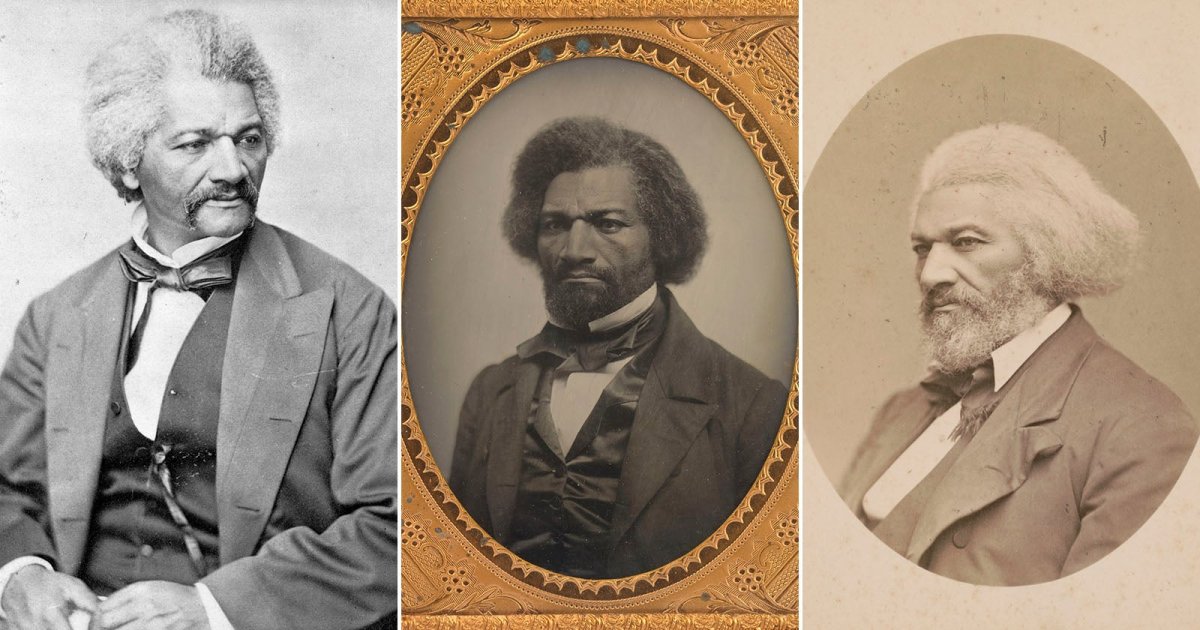
Famed abolitionist, writer, and civil rights leader Frederick Douglass was pioneering and influential in his use of photography in the 19th-century abolitionist movement. For Douglass and his peers, the camera was a potent weapon in the fight for the rights and freedoms of Black Americans.
“Frederick Douglass was the most photographed person in America in the 19th century, bar anyone,” Lonnie Bunch, Secretary of the Smithsonian Institution, tells Nancy Giles on CBS News Sunday Morning.
“Frederick Douglass knew that any image would be deconstructed, so everything about Frederick Douglass says, ‘I’m middle class, I’m educated, I’m equal, I’m worthy,'” Bunch continues.
Douglass was born enslaved on February 14, 1818, and made his daring and dangerous escape from slavery in Maryland in 1838. Douglass taught himself to read and write, and his autobiographies about his life as an enslaved person remain among the most important texts in American history. But it wasn’t just his writing that made Douglass such an important figure in American history.
“He recognized photography was an accurate medium that accurately represented African Americans in a time when there were all kinds of racist caricatures,” explains Harvard University professor John Stauffer.
Stauffer, along with co-authors Celeste-Marie Bernier and Zoe Trodd, wrote an illustrated biography of Douglass, Picturing Frederick Douglass, that features more than 160 photographs of Douglass and analyzes the importance photography played for Douglass and the broader abolitionist movement.
While 160 photographs may not sound like a huge number to people today, these photos were all taken between 1841, when photography was at its very beginnings, and 1895. During that period, a photograph was a significant undertaking that required substantial time and cost.
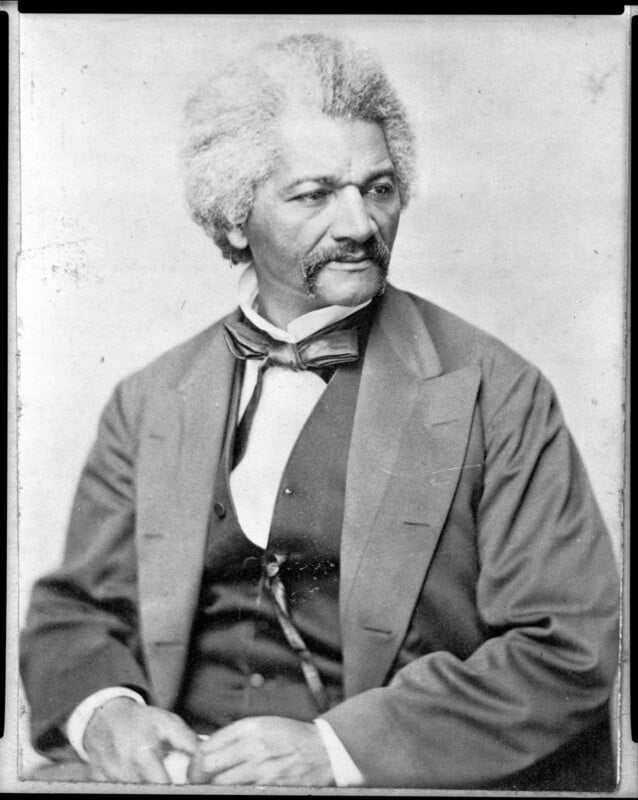 Frederick Douglass, albumen print, c. 1870. Photographer: George Francis Schreiber. | Library of Congress Prints and Photographs Division Washington, D.C. 20540 USA
As Stauffer and his co-authors explain in their book, Douglass was completely and utterly convinced of the power photography had to combat racism and give marginalized people some of the power back that society had stolen from them.
As the authors describe, Douglass viewed photography as “the great ‘democratic art’ that would finally assert Black humanity in place of the slave ‘thing’ and at the same time counter the blackface minstrelsy caricatures that had come to define the public perception of what it meant to be Black.”
As a result of Douglass’ long-standing commitment to photography, historians believe it is next to impossible to disentangle the abolitionist’s legacy from his portrait gallery.
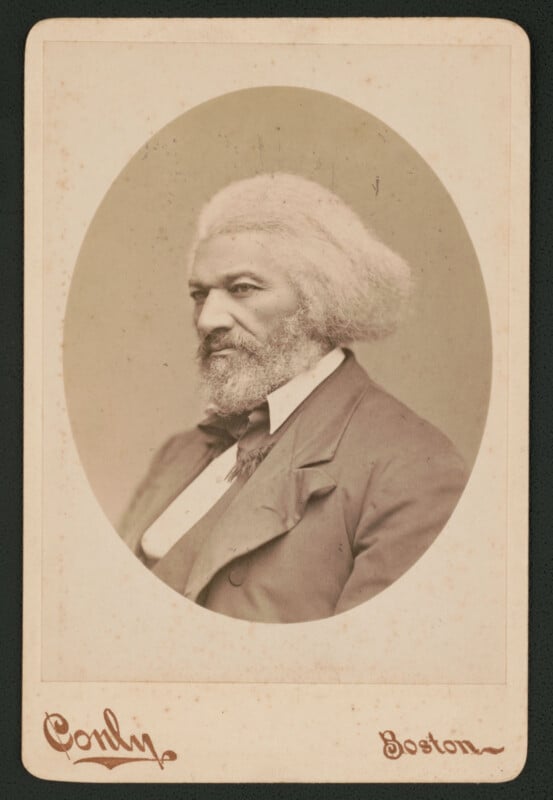 Frederick Douglass, photographed by George Kendall (G.K.) Warren, c. 1876. This is an albumen print created between 1884 and 1890. | Library of Congress Prints and Photographs Division Washington, D.C. 20540 USA
“Douglass’ image, its circulation, spoke to the humanity of this individual, and then it’s supplemented by the images of those who have been brutalized by slavery,” says Ann Shumard, Senior Curator of Photographs at the Smithsonian’s National Portrait Gallery. “And the combination of the two is very effective.”
Shumard then showed off an ambrotype of Douglass captured in 1856. The quarter-plate ambrotype is the piece of glass that was inside the camera. As Shumard says, it is “utterly unique.” This one-of-a-kind portrait was donated to the National Portrait Gallery by a very generous anonymous donor, and the photographer remains unknown.
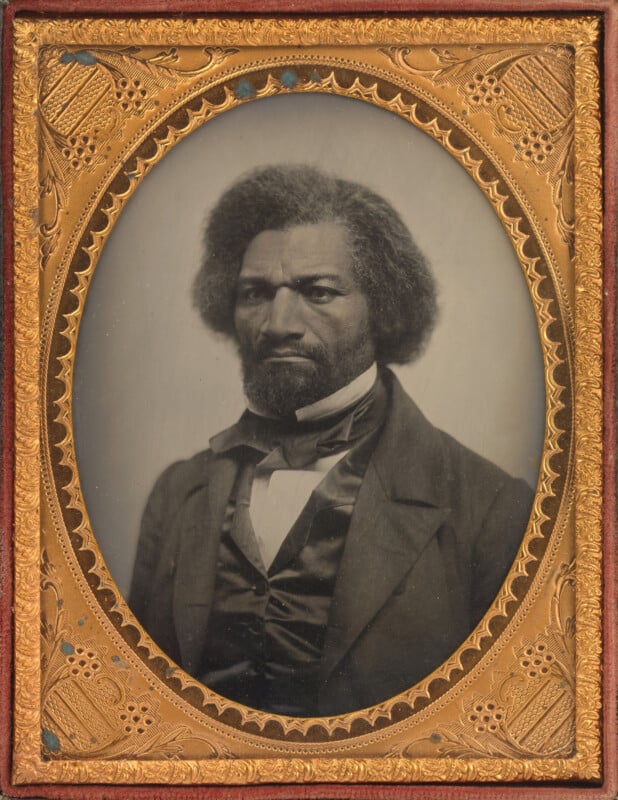 Frederick Douglass (1818-1895), quarter-plate ambrotype, c. 1856. Photographer unknown. | National Portrait Gallery, Smithsonian Institution; acquired through the generosity of an anonymous donor
“Poets, prophets and reformers are all picture-makers — and this ability is the secret of their power and of their achievements. They see what ought to be by the reflection of what is, and endeavor to remove the contradiction,” Douglass said of photography in 1861, four years before President Abraham Lincoln signed the 13th Amendment to abolish slavery.
As Professor Stauffer has said elsewhere, Douglass loved photography, not just for its power, but for its art.
“Man [humans] are the only picture-making animals in the world. They alone of all the inhabitants of earth has the capacity and passion for pictures,” Douglass said.
Bunch emphasizes Douglass’ artistic talents across multiple media.
“He used writing, he used photography, he used speeches, everything he did in order to move the country forward. He expected more of America than most Americans did,” Bunch concludes.
What's Your Reaction?
 Like
0
Like
0
 Dislike
0
Dislike
0
 Love
0
Love
0
 Funny
0
Funny
0
 Wow
0
Wow
0
 Sad
0
Sad
0
 Angry
0
Angry
0











Comments (0)