

Schrödinger's backup: not actually recovered until you try to restore IT
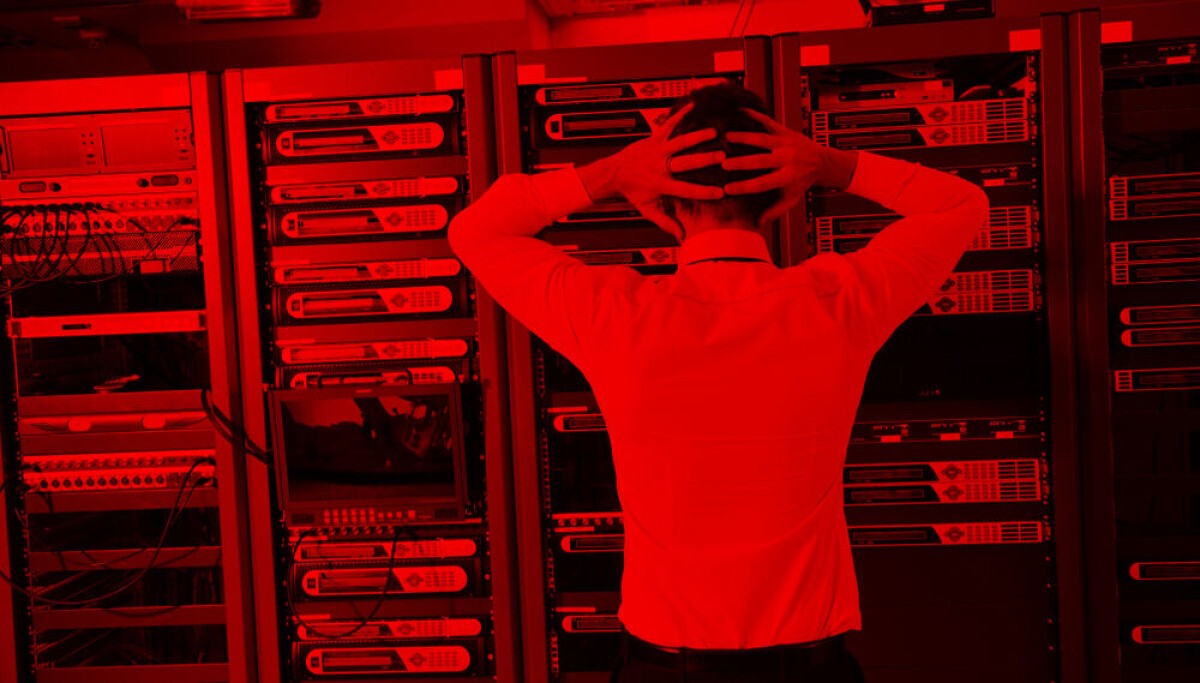
Schrödinger's Cat, the famous 1935 thought experiment, imagines a cat that, for reasons rooted in quantum physics we need not dwell on here, is simultaneously alive and dead.
In a landscape of relentless cyberattacks and mounting infrastructural complexity, a routine backup task can appear finished, with every box ticked and every check made. The job is not actually done, however, until it has been verified as fully ready for recovery in the event of cyber disaster. A task that looks sorted can turn out, under scrutiny, to be anything but.
A backup can be logged as 'complete' once data has been copied to storage, but a recoverable workload is another matter entirely. It means that when a business goes down, its workloads can be restored to their state at the point of attack with nothing lost. By the time you realize you are on the wrong side of that ambiguity, it may be too late: your data is in the hands of the bad guys, or destroyed, and this time the cat really is dead.
This is not a problem to which IT bosses and managed service provider (MSP) management are entirely oblivious. Most organizations recognize to some degree that their backup may not be 100 percent watertight. Cybersecurity management specialist Kaseya recently partnered with 1105 Media to survey 200 IT professionals about the realities shaping cyber resilience planning. Some 53 percent were no more than 'somewhat confident' in their organization's ability to fully recover from a ransomware attack, and admitted their backups were supported by no better than 'limited testing'. A significant proportion had even less faith in their recovery capabilities, while only 15 percent were 'very confident' they could get back on track with no loss.
Verify and survive
Understanding what a verified backup means, and what role verification plays in the recovery challenge weighing on so many IT leaders, is where any sensible resilience plan begins. Backups are vital but they do not guarantee recovery on their own. What matters is confirming that a backup job will hold up in a disaster. Verification is the process of proving that backed-up data is complete, uncorrupted, and fully restorable in an emergency, offering evidence that recovery is possible during a critical outage, hardware failure or ransomware attack. It is essential whether you run an IT department or an MSP responsible for client protection: unless you can prove clients are protected, there is every chance they are not.
"Backup isn't done and entrustable until you've gone in and made sure that the application actually works and can be brought back to the recovery environment," explains Brent Torre, GM of cyber resilience at Kaseya. "Historically, it's just taken too much time and resource for a lot of people to even attempt that. And where they have been verifying, they haven't been doing it regularly enough to ensure real protection."
Not all approaches to verification are of equal value. IT departments still relying on intermittent manual verification are operating on blind trust: warnings thrown up by the process can be misread, failures overlooked, and the result is a dangerous mix of false negatives that waste time and false positives that expose the organization to real risk.
Manual screenshot verification is a proven way to squander a security budget , tying up highly qualified staff on needless work and pulling their expertise away from where it is genuinely needed. Nobody wants seasoned engineers spending hours reviewing screenshots, second-guessing outputs and trying to determine whether a backup worked.
Where static verification methods once had a place, today's complex IT ecosystems have made them redundant. Across an estate spanning in-house systems, SaaS and cloud endpoints, basic verification cannot cope, picking up only surface-level signals and lacking the design to operate at scale.
At scale, the inefficiencies of manual verification multiply and response times slow to a crawl. A minor inefficiency can quietly become a serious bottleneck without anyone noticing, and legacy methods can create the illusion that everything is working perfectly while catastrophe waits around the corner.
As Torre points out, light-touch checking is unlikely to satisfy the ever-increasing regulatory burden around recovery and resilience. "Some compliance frameworks explicitly state that you must test recovery on a frequent basis," he says. "It's becoming more important than ever that organisations are able to do that."
Let AI handle the heat
The emerging gold standard is AI-powered screenshot verification, which replaces the best-efforts manual checking of overstretched human teams. It works by automatically booting up virtualized backups, capturing a screenshot and analyzing the image to confirm the backup ran correctly.
Where rigid, rule-based checks fall short, context-aware visual AI combined with OCR accurately identifies login screens, dashboards and maintenance states, and evaluates every element with precision. The result is 99.9 percent verification accuracy and sharply reduced false positives, alongside far greater confidence in every backup.
This is welcome news for IT managers facing budget shortfalls and a drought of experienced talent, and it is what MSPs need as they try to make the economics of recovery stack up. Remove the manual effort and the constant checking of false alarms, and the gains mount quickly. Human teams are free for higher-value work, SLA confidence rises, customer trust improves, and environments can scale without ballooning overheads. AI-powered verification is no longer a maybe for today's MSPs; it is the only route forward that makes sense on the P&L.
The good news is that AI-powered screenshot verification does not require major up-front investment or deep internal expertise. Datto, the cybersecurity and data protection outfit owned by Kaseya, has built the latest verification technology directly into its business continuity and disaster recovery (BCDR) platform, so that deployment stays simple and disruption to existing workflows is minimal.
This kind of AI-powered screenshot verification is designed to strip uncertainty out of the process and give IT teams confidence that backed-up data is complete and recoverable. The ideal solution does so at scale, and without adding complexity, by working within the workflows already in place.
With Datto there is the further option of integrating remote monitoring and management (RMM) with the BCDR product, which enables proactive remediation through automated deployments, the merging of backup health with endpoint alerts, and virtual restores launched directly from a single management console.
"It's key to have context and visibility into the backup estate through your RMM so you know that you are up to date on patching, on antivirus definitions and backups," says Torre. "With all of that integrated within the RMM solution, you have the ability to understand your risk profile across the fleet in terms of protection. You know in the event that something needs to be recovered. And you can start a backup-initiated recovery directly from the RMM platform."
The gold standard to aim for, he concludes, is continuous validation and automated remediation, not the ability to look in now and again to see what is going on. The perfect verification solution , he adds, should be 'impossibly easy to use', requiring humans to exert zero cognitive effort on backup beyond deploying a new client and initiating a recovery.
By giving yourself the means to distinguish between a completed backup job and a recoverable workload, you have set yourself apart from the kind of IT manager or MSP who only spots a problem after something has gone wrong.
By deploying AI-powered verification, you stop treating backup as a probability and start treating it as a proof. You know what you have. Then when something goes wrong, and it will, that certainty is the only thing standing between a fast recovery and a very long night.
MSPs looking to unify backup and security into a single resilience practice can start with the When Backup Meets Security in the MSP Stack whitepaper.
Sponsored by Datto.
What's Your Reaction?
 Like
0
Like
0
 Dislike
0
Dislike
0
 Love
0
Love
0
 Funny
0
Funny
0
 Wow
0
Wow
0
 Sad
0
Sad
0
 Angry
0
Angry
0






Comments (0)