

Scientists synchronize 105,000 nano-oscillators in just 45 nanoseconds — paving the way for a highly efficient and fast alternative to transistors
 (Image credit: Getty Images)
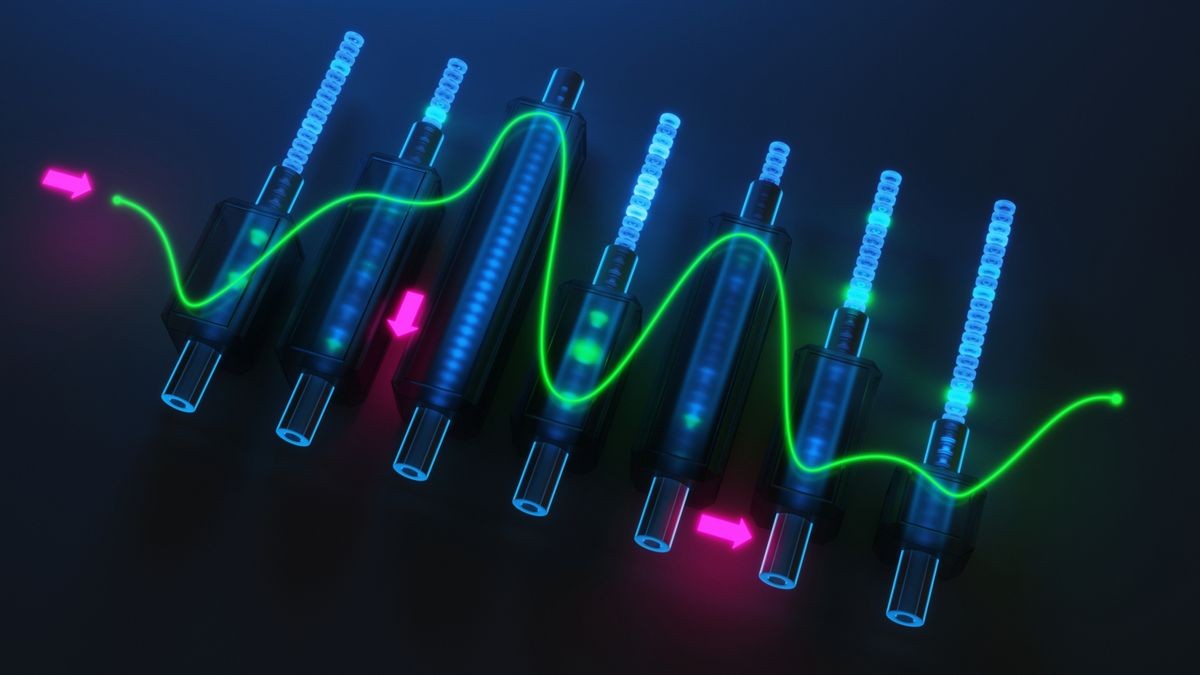
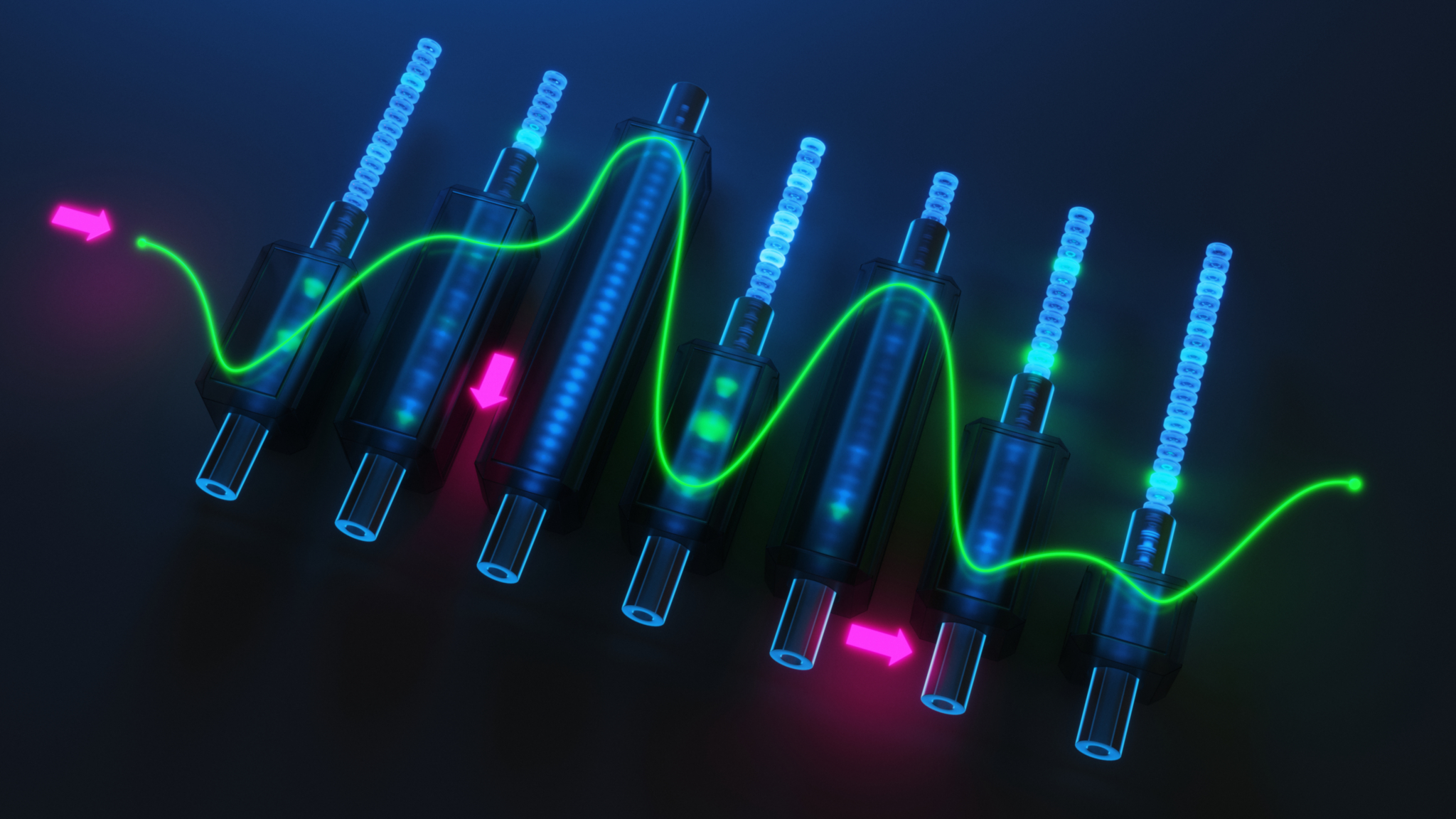
"Oscillator-based computing" is a term that doesn't make many headlines, but this area of computation is evolving and showing promise. The latest impressive development comes from an experiment in which boffins managed to synchronize 105,000 nano-oscillators in just 45 nanoseconds, reportedly using very little energy.
Go deeper with TH Premium: CPU
In layman's terms, the entire grid of tiny magnets, once perturbed, synchronized itself entirely within 45 ns, all just using the magnets' inherent spin — think of ripples on a water surface. Each oscillator measures 10-20 nm across, and the 105,000-count result is nearly a 1000x upgrade over the previous demonstration with 64 oscillators, proving that the technology can be scaled. In this new experiment, synchronization time barely increased with additional oscillators: it was 10 ns with 100 oscillators and rose only to 45 ns at 105,000.
What this means for computing is that grids can solve certain classes of problems that lend themselves to representation via propagating waves, directly or indirectly. Broadly speaking, most anything involving waves, statistics, approximation, and pattern recognition is eligible. The article mentions Ising machines and reservoir computing as being implementable by oscillator grids. At some point, the grids could become programmable by manipulating the oscillators' frequencies, phases, and coupling strengths. The result is then read by measuring how the grid settles into a synchronized state.
Going from there, practical applications include high-speed communication networks, financial and scientific modeling, real-time data analytics, and even AI acceleration. The research paper specifically notes that the grids could operate at tens of GHz and spend comparatively little energy doing so. The 45-nanosecond figure for the oscillator grid to stabilize would be roughly analogous to the time it would take a regular CPU to perform one calculation across an entire matrix.
Unlike quantum computing, which requires extensive and difficult error correction to maintain coherence, the oscillator array produces an exceedingly clear signal once it settles. The quality factor of the oscillator experiment was over one million, meaning the resulting wave frequency was well-defined and easy to read — think of the exact pitch carried by a tuning fork. To get the full details, be sure to read the research paper here.

Follow Tom's Hardware on Google News, or add us as a preferred source, to get our latest news, analysis, & reviews in your feeds.
Get Tom's Hardware's best news and in-depth reviews, straight to your inbox.
Bruno Ferreira is a contributing writer for Tom's Hardware. He has decades of experience with PC hardware and assorted sundries, alongside a career as a developer. He's obsessed with detail and has a tendency to ramble on the topics he loves. When not doing that, he's usually playing games, or at live music shows and festivals.
What's Your Reaction?
 Like
0
Like
0
 Dislike
0
Dislike
0
 Love
0
Love
0
 Funny
0
Funny
0
 Wow
0
Wow
0
 Sad
0
Sad
0
 Angry
0
Angry
0








Comments (0)