

Slicing and Dicing ‘Dexter’ from the Writers’ Room to the Editing Room
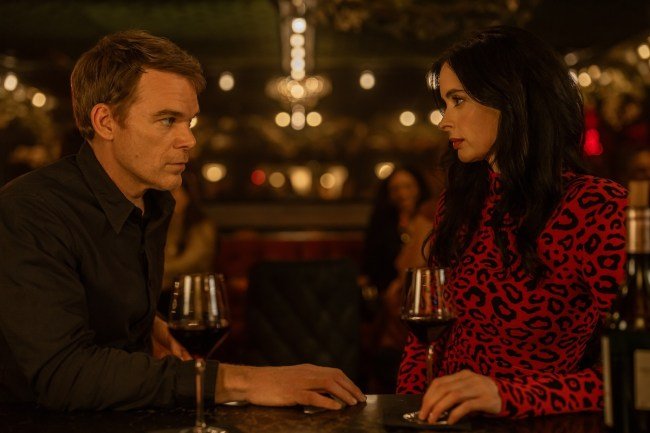
When the Showtime series “Dexter” premiered in the fall of 2006, it introduced a new kind of anti-hero to television: a serial killer (Michael C. Hall) driven by horrific impulses that he tried to put to a positive use by targeting violent criminals. Although Tony Soprano had opened the door for morally ambiguous protagonists on “The Sopranos,” and “Mad Men” and “Breaking Bad” would soon follow, there was an intimacy to the viewer’s connection to Dexter Morgan that came from the series’ effective use of first-person voice-over narration.
That narration has remained a constant through 20 years of “Dexter,” from the original series’ eight-season run to Dexter’s return in 2021 with “Dexter: New Blood” and the 2024 prequel series “Dexter: Original Sin.” It’s an integral part of the franchise’s most recent and most ambitious iteration, “Dexter: Resurrection,” which premiered on Paramount+ and Showtime last July, and according to series creator Clyde Phillips, it’s the key to the show’s unique cocktail of humor, horror, and pathos.


“The voice-over makes Dexter’s insecurities and vulnerabilities relatable,” Phillips told IndieWire, noting that the narration is in a constant state of flux throughout not only writing and shooting but editing. “Sometimes [editor] Perri [Frank] and I will be watching the show and see an opportunity for a joke. I’ll pick up my iPhone and record a line — I can do Michael’s voice — and send it to an assistant editor to cut in. She’ll send it to Michael, and if Michael likes it, it’s in the picture the next morning.”
Sometimes the additions in post are more elaborate than a simple joke or two; as Phillips said, “Working on the show never ends until it airs.” For a scene in the season’s second episode, for example, Phillips looked at a cut and felt a scene with Dexter talking to his deceased father wasn’t landing. “It was fine, but it wasn’t enough. But because we were shooting and editing at the same time, I wrote a scene continuing the voice-over, and director Marcos Siega and Michael did it with Marcos’ camera moving 360 degrees one way and Michael moving 360 degrees the other way. It was very dynamic.”
According to editor Perri Frank, there’s a lot of fluidity in the editing room thanks to the fact that all the season’s scripts are written ahead of time, which means that sometimes scenes can be borrowed from one episode and moved to another with a full awareness of how it will work in the overall storyline. In addition to the restructuring, there’s also a delicate balance when it comes to striking the right tone. “The emotional component has become a much bigger part of the show,” Frank said, referring to the relationship between Dexter and his son Harrison (Jack Alcott) that has taken center stage in “Resurrections.”
“Sometimes we’ll realize that a joke is taking away from that emotional component and pull it back,” Frank continued. “Or it will become so emotional that we need to lighten the moment up.” Finding the right balance between tones was made exponentially more challenging on “Resurrections” thanks to the premise that Dexter was posing as a different serial killer to infiltrate a kind of serial killer supergroup overseen by a sociopathic billionaire (Peter Dinklage). That meant not only more extreme shifts between horror, humor, and heart, but a larger number of characters and subplots to service.
“It’s doubly complicated, because on the old show, Dexter’s whole MO was blending in,” Phillips said. “Now he’s got to blend in as somebody else.”
Phillips noted that getting a top-notch cast on board to play the all-star serial killer society (the ensemble includes Uma Thurman, Eric Stonestreet, Krysten Ritter, David Dastmalchian, and more) was an added benefit of having the scripts written ahead of time. “Beforehand, I can show the actors the whole year, and they can trust us that it doesn’t fall apart in episode 9 or 10.”
Knowing how the mystery ends is key each season for Phillips and executive producer Scott Reynolds, and part of how Phillips has managed to keep the show propulsive and involving. It also gives the writers a target to aim for that they can hit in any myriad number of ways. “When Scott Reynolds and I open up the writing room, we have what we call an ‘NPO’ board, which stands for No Particular Order,” Phillips said. “It’s scenes we’d like to see. We know the ending, and we write a bible that’s around 17 pages of headlines — who the bad guy is, what’s the relationship between Dexter and Harrison, is there a woman in the story — and then we have to figure out where the scenes from the NPO board go.”
Throughout the process from writing to post, Phillips encourages his collaborators to try new things, even if they sometimes seem crazy. “There’s a saying around here: ‘Everyone who touches the script needs to make it better,'” Phillips said. “Sometimes we’ll write, plan, and shoot a scene and not use it because it’s taking us in the wrong direction. Sometimes I’ll say something like, ‘Why don’t we roll the film backwards?’ Turning a smile into a frown, or a frown into a smile. Cranking it back like they would have in the old days.” Sometimes, Phillips acknowledges that the big swings don’t land with everyone, as when Dexter became a more passive character in “New Blood.”
“There was an abstinence period there, and I could feel the audience sitting back a little bit,” Phillips said. “You tune in to a serial killer show with Michael C. Hall to see him kill people. So we learned our lesson there, even though some people loved ‘New Blood.'” For Phillips, continuing to push himself and his staff to keep “Dexter” fresh is not just an obligation but the fun of the job.
“If I could write two words on the wall of the writing room, they would be ‘Do better,'” Phillips said. “Last night I bumped into somebody who lives in my building who’s a very famous playwright. He said, ‘You’ve been doing this a very long time,’ and asked how it was going. ‘Do you ever get tired of it?’ And I said ‘No. I’m the luckiest guy in the world. I get to do this for a living.'”
“Dexter: Resurrection” is now streaming on Paramount+ with Showtime.
What's Your Reaction?
 Like
0
Like
0
 Dislike
0
Dislike
0
 Love
0
Love
0
 Funny
0
Funny
0
 Wow
0
Wow
0
 Sad
0
Sad
0
 Angry
0
Angry
0











Comments (0)