

Tom Hiddleston on Why John le Carré’s ‘The Night Manager’ Took a Decade to Return — and Why It Was Worth the Wait
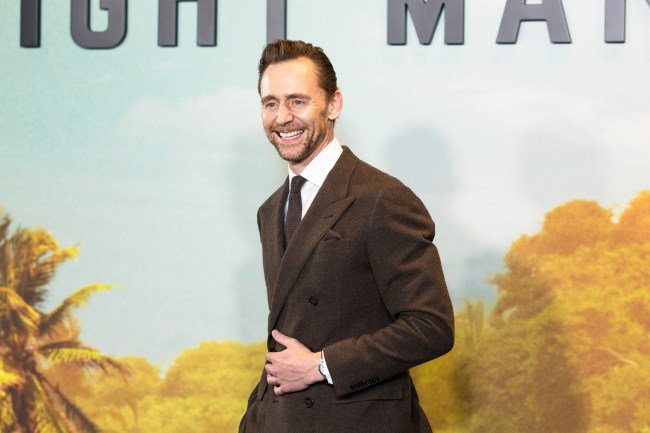
Ten years ago, the BBC adaptation of John le Carré’s 1993 bestseller “The Night Manager” hit big in the UK and North America, scoring 12 Primetime Emmy nominations and two wins. Usually such a rousing crowdpleaser swiftly generates a follow-up series reuniting many of the surviving players. Not this one.
“This was the first properly cinematic TV movie in six parts,” said producer Stephen Garrett. “We made a six-hour movie.” Because the British mystery novelist, while prolific (35 books), had never written a sequel, and was not keen for a follow-up, the filmmakers killed off several major characters, thinking this was a true limited series.


That is, until le Carré attended the February 2016 first public screening of the first two episodes of “The Night Manager” at the Berlin Film Festival. That’s when he turned to star Tom Hiddleston and said, “Perhaps we might do some more.”
“It did make us all scratch our heads and wonder and dream, which we did alongside him for a while,” said Hiddleston on a Zoom from London between rehearsals for Shakespeare’s “Much Ado About Nothing,” which launches on Halloween on Broadway. (He recalled our initial conversation about Season 1 of “The Night Manager” a decade back.)
But it wasn’t until the pandemic that writer David Farr woke up from a dream with a character in his head. It was Teddy Dos Santos (Diego Calva), the estranged Colombian son of ruthless arms dealer Richard Roper (Hugh Laurie), who supposedly died at the end of Season 1.
Of course he’s back in Season 2. Oddly enough, the original novel was set in Colombia, and Farr saw a way to advance the story in that setting, bringing an older and slightly wiser but still fearless Jonathan Pine (Hiddleston) back into the mix. “The world is older, and I am older by ten years,” said Hiddleston. “I knew that going in, and I wanted us to lean into it.”
 Tom Hiddleston in ‘The Night Manager’des willie
In North London, Hiddleston lived not far from le Carré (nee David Cornwall), and over the years they’d go to dinner and talk about where “The Night Manager” might go. After the author died in December 2020 at age 89, the team assembled at the memorial service, where his sons Simon and Stephen Cornwall passed on one of his dying wishes: “You must do more ‘The Night Manager.'”
So Farr went ahead with his idea. Given that le Carré’s writing, especially “The Perfect Spy,” often dealt with his unreliable father, Farr pursued that theme in Season 2, teasing Pine’s layered feelings for Roper, and Teddy’s yearning to be accepted and validated by his untrustworthy parent. “My simple oath to myself was: ‘I’m going to write a character that at the beginning is so frightening and dangerous, and by the end you’re going to be in love with him,'” said Farr. “And you need an actor who can shoulder that comfortably, which Diego totally can.”
As for Pine, he has obviously matured. “There’s a different quality to him now,” said Farr. “I loved him in the first one because he was so almost puppyish at times, and yet so manipulative [which] Tom was very good at. But this one is much sadder. It’s more melancholic, and there’s way more political depth, because the world’s gotten much nastier since we made the first one.”
Pine has been quietly serving in the intelligence community all this time, in various guises. “He can’t go back,” said Hiddleston. “Once he’s seen behind the curtain, you can’t go back to the other side, a world of illusions, a world of dreams. He needs to be part of the world reality as it really is.”
And over the past decade, the world has been heading in Roper’s direction. The centerpiece scene in Season 2 is the Episode 5 hilltop meeting between Pine and Roper. They’ve been apart, much like Michael Mann’s “Heat,” for four episodes, and then the two planets finally collide. The two men are mutually obsessed with each other, drawn together by a gravitational force. “They reflect each other,” said Hiddleston. “There’s such mutual affection. They need each other in order to define each other and find their identity. The dragon slayer knows who he is by the presence of the dragon.”
But at root their differences are profound. They filmed the intense 15-page scene in an hour or so. Pine is reckless but patriotic. He creates chaos. But the former soldier has integrity at his core, said Hiddleston, “Le Carré, the man I got to know in the last decade of his life, was a patriot in that sense, and a man or woman who loves his country is allowed to be furious with it, and in fact, it’s an essential part of the dialogue if you feel that the boat is heading in the wrong direction, or that those who are driving the boat don’t have the best intentions.”
Roper, on the other hand, believes “that’s all nonsense,” said Hiddleston. “He believes the world is rotten, and that becoming a man is actually acknowledging that. And then you learn how to celebrate that rottenness. There’s a cynicism in Roper that Pine feels is anathema to everything he stands for. Roper, someone who’s been a recipient of all the privileges of the accident of his birth, born into a wealthy family with a good education, with so many freedoms that not every human being possesses on this earth, abuses those privileges to make money and profit from the sale of weapons, with no care for who might be affected or killed or whose lives might be taken by those weapons. There’s a profound moral red line between them.”
 Tom Hiddleston, Camila Morrone, and Diego Calva in ‘The Night Manager’des willie
Le Carré poured his “relentless yearning to understand the world into Pine,” said Hiddleston. “It rubbed off on me a bit. It’s an Achilles heel for Pine. He’s so desperate to know the truth that sometimes he can get lost in the maze and at great risk to himself and those he loves or cares about. The closer he is to death and risk, the more he feels alive.”
For le Carré, said Hiddleston, “There is no center to a human being. This is all rooted in an uncertainty about belonging and about trust. Being off-stage is boring and risk is attractive. So this distinction between character and personality, there’s something malleable about the face that one presents to the world, which is always about seduction rather than intimacy, and about performance rather than truth.”
Farr thinks Pine is driven by forces of which he is not conscious. “There’s a slight sense of an erotic pull in him and that makes him intoxicating as a character,” said Farr. “But also dangerous as a character. This bit of him that can’t quite stop himself looking in someone’s eye and getting them to fall in love with him, which happens with Teddy. That all comes out of a profound loneliness. Pine is a mixture of masculine and feminine. He listens, he’s a good listener, he’s a great listener, which is not true of your more traditional, Bondian hero.”
And “The Night Manager” also explores a very British sense of identity. “There’s so many parallels between being a spy and being an actor, although, of course, the stakes aren’t as high,” said Hiddleston. “I don’t have to stay in character like a spy does. I lean heavily on the discipline of shedding character and going home at the end of the day to real relationships, which I hold dear, and which keep me tethered to my ordinary reality. This spy doesn’t have that, but his outlook, his sense of duty, his sense of courage I find incredibly inspiring.”
In this season, Pine gets entangled in three deadly relationships, not just Roper but Teddy and alluring Miami broker Roxana (Camila Morrone), with whom there is a magnetic attraction. “She’s attracted to him,” said Farr, who was inspired by Hitchcock’s “Notorious.” “And he’s attracted to her, but they’re both players, they both know they’re playing each other. And that’s what makes it sexy.”
It’s all about seduction, said Hiddleston. “Intimacy is almost an accidental byproduct of the necessary seduction in order to betray an opposing agent. You have to draw someone into your confidence, and that is a process of seduction where lines can get blurred.”
Playing these layers was not easy. “There’s something about this character, and there’s something about this material, and this role, and these stories, which is unlike any other that I’ve ever had,” he said. “The stitching of the stories is so intricate. That’s the algebra of the formula of the thriller, and I have to know those beats so well, and then inhabit them in the present tense and inhabit the jeopardy: what if I don’t know the passcode? What if I don’t find anything in the briefcase? And these details have to matter. He is in quite extraordinary danger, risking himself at an almost unfathomable level. The body keeps the score. I’m recreating the adrenaline within myself that he would be feeling. It is a cerebral thing, in terms of making sure that my imagined reality is as detailed as possible, and then it’s a physical thing of trying to recreate that sense of danger within myself. If I say the wrong thing, do the wrong thing, I’m a dead man.”
 Tom Hiddleston in ‘The Night Manager’Des Willie/AMC
As Hiddleston recounts the experience of the shoot, he said it made him feel “incredibly alive because it felt so heightened. I felt those stakes, and those are the stakes you have to play. You want the audience to be on the edge of their seats. I try to quite literally accelerate my heart rate. It might be by just sprinting back and forth before a take or or doing something physical to literally make my heart beat faster, and then walk into a scene and try to hide it from my scene partner, and it creates an extraordinary tension. It makes me feel slightly panicked in the way that Pine would be feeling.”
Garrett gives Hiddleston credit for somehow revealing what’s inside Pine’s head. “Spies are compelling in novels, because, of course, the novels can go inside their heads and tell us what they’re thinking,” he said. “When we see them on screens, they’re blank canvases and by definition, they’ve got no friends, no family, they’ve got no one to confide in. If they talk to anybody, they’re lying. ‘Why is Pine doing this?’ is the question we’re asking over and over again. And how do we communicate that to the audience? And I don’t know an actor other than Tom who can communicate with silence and stillness and those amazing eyes a complexity and a turmoil that is plausible and carries meaning and emotional value.”
Shooting the series was an ongoing puzzle for the producers and new director Georgi Banks-Davies, replacing Emmy winner Susanne Bier. They shot in four countries across six months completely out of sequence, cross-boarded. “There’s one sequence when Tom is going to meet the private detective in Medellin,” said Garrett. “The sequence is put together from footage that we shot in Medellin, Barcelona, and the Canary Islands. It’s a completely seamless minute.”
In the end, said Garrett, “like fine wine, we’ve benefited from the gap. It made it more plausible and real that those people could come together again with all that time having passed. If we’d had it oven-ready and been out again in 18 months, it would have been less potent.”
Next up: Season 3 is in the works. It starts where the last season ends, as Pine lies bleeding in the jungle, alone. “It’s a game that Roper won,” said Hiddleston. “He has very little in the tank, and nobody to come and rescue him. It’s an exciting place to begin.”
“The Night Manager” is streaming on Prime Video.
What's Your Reaction?
 Like
0
Like
0
 Dislike
0
Dislike
0
 Love
0
Love
0
 Funny
0
Funny
0
 Wow
0
Wow
0
 Sad
0
Sad
0
 Angry
0
Angry
0







Comments (0)