

The Best Case for Competition in Streaming? Netflix’s ‘Michael Jackson: The Verdict’ — Opinion
Walking down Hollywood Boulevard in Los Angeles this past weekend, you could see as many tourists stopping to pose with Michael Jackson‘s Walk of Fame star as you could hear locals darkly joking about the late musician’s long history of child sexual abuse allegations.
The contrast was striking, but not particularly surprising. Jackson has occupied a uniquely contested place in American pop culture since well before his death in 2009, and right now, two very different narratives surrounding his memory are playing out onscreen simultaneously.
At the box office, there’s “Michael,” Lionsgate’s revisionist biopic, which has grossed more than $888 million worldwide since its April 24 release. Directed by Antoine Fuqua and starring Jackson’s nephew, Jaafar Jackson, the controversial blockbuster was made with the full support of Jackson’s estate and omits many of the sordid details surrounding his past.


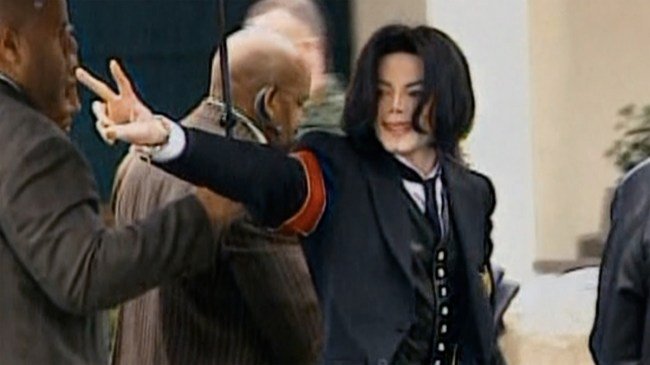
“Michael” the movie finally arrives on VOD today, but beating it to the punch is Netflix‘s “Michael Jackson: The Verdict,” which debuted on June 3 and is still trending on the streaming platform.
The three-part docuseries from showrunner David Herman uses Jackson’s 2005 criminal trial as a jumping-off point for a broader examination of the various allegations and legal battles surrounding Jackson that were left out of or minimized in the recent theatrical film.
Spurring significant debate and even some ridiculous conspiracy theories online, the tension between these two competing projects won’t just shape how many people remember Jackson. Lionsgate and Netflix are also offering a revealing case study in how essential pieces of information can actually survive a disrupted media ecosystem through market capitalism.
 Jaafar Jackson in ‘Michael’ (2026) ©Lions Gate/Courtesy Everett Collection
Over the past several years, American audiences have become increasingly concerned about censorship and creative interference. Those fears have largely centered around politics and network news, where corporate ownership can impact which true stories are told, softened, or omitted from the day’s headlines altogether. The same concerns apply to modern entertainment journalism and are only amplified when discussing performers who are both enormously profitable and deeply polarizing.
That’s what makes the timing of “Michael Jackson: The Verdict” so fascinating. Regardless of Netflix’s explicit motivations for releasing the docuseries so soon after Lionsgate’s “Michael,” the streamer has effectively provided a high-profile alternative to Jackson’s life story that more fully represents his complex legacy as it stands today.
It’s a win for objective truth and the course-correcting power of supply and demand. But it’s also alarming to realize that basic economic principles may continue to prove critical avenues for information access amid uncertain times for western democracy.
When it comes to thorny human-interest stories, especially those that implicate or undermine major Hollywood moneymakers, a company’s bottom line can be a far better safeguard than its so-called “corporate virtue.”
After all, Netflix didn’t release “Michael Jackson: The Verdict” because it was morally obligated to undercut Lionsgate’s payday. The docuseries exists because of a wide consumer base that’s been underserved in recent memory, and there’s no better way to boycott a movie than to stay home and watch a show instead.
 Jaafar Jackson in ‘Michael’ (2026) ©Lions Gate/Courtesy Everett Collection
How Did the “Michael” Biopic Just… Skip the Allegations?
Long before “Michael” became a financial sensation at Lionsgate, insider reporting revealed that the production had been forced into significant rewrites due to legal complications involving one of the most contentious chapters in Jackson’s history.
According to multiple sources, an earlier version of the “Michael” screenplay explicitly disputed the molestation accusations made against Jackson by then 13-year-old Jordan Chandler, whose family reached a civil settlement with Jackson in 1994. Because of a provision in the agreement, the filmmakers behind “Michael” found themselves scrambling to reshape a studio tentpole already deep in production without its would-be villain through reshoots that took 22 days and cost $15 million.
Not long ago, that was the sort of behind-the-scenes drama that could fuel Hollywood news outlets for months, and possibly even tank a movie’s performance long-term. Here, it hardly mattered as “Michael” became a global smash regardless of whether it was fiction or fact.
Of course, many cinephiles weren’t looking for a historical document in the first place. Whether they had made up their minds about Jackson years ago or simply never understood the severity of his purported wrongdoing, Lionsgate’s crowd-pleaser succeeded not by searching for fresh answers but by pedaling the same sense of warm spectacle that made Jackson famous. Spinning songs that most folks love and leaning more into Jackson’s triumphant public moments as a global talent, “Michael” ultimately looked like any other biopic from the outside.
That’s partly because many modern docudramas function less as responsible examinations of real people than they do exercises in brand management. Whether the subject is a musician, athlete, politician, or tech executive, projects made with the blessing of families and corporate stakeholders frequently face the same challenge: How do you balance historical complexity against the commercial value of a carefully maintained public image?
 ‘Michael’ (2026)©Lions Gate/Courtesy Everett Collection
In that sense, a closer comparison might actually be Ezra Edelman’s still-unreleased documentary “The Book of Prince,” which was ultimately shelved after disputes with Prince’s estate. Unlike “Bohemian Rhapsody” or “Elvis,” the controversy wasn’t about a finished film that got details wrong. Edelman’s reported nine-hour consideration of Prince never reached the public, despite widespread industry anticipation of the project and the filmmaker’s impressive track record on “O.J.: Made in America.” In that instance, even Netflix proved unwilling or unable to overcome the obstacles standing between its subscribers and a prickly portrait of a beloved icon.
Considering the money still being made off of Jackson, his estate was never going to be an impartial observer in a movie about his life. But if one of the great pleasures of listening to music is the illusion that it lets us know the artist more intimately, then the aggressive sanitizing of Jackson in death makes the absence of his legal history impossible to ignore.
That’s why honest reporting around the making and marketing of “Michael” has been so vital. Audiences don’t need every biopic to function as a courtroom transcript, but they do need access to competing accounts when filmmakers and rights holders start improperly shaping historical memory. The question raised by Lionsgate’s film wasn’t whether viewers should reject it outright, but where they could turn for a more imperfect portrait of Jackson. For years, the answer to that question was obvious.
What Happened to “Leaving Neverland”?
One of the most influential projects about the allegations against Jackson quietly vanished from streaming in 2024, despite leaving an enormous cultural footprint during its original run on HBO. Directed by Dan Reed, 2019’s “Leaving Neverland” became an immediate cultural flashpoint by presenting detailed allegations from Jackson’s now-adult accusers, Wade Robson and James Safechuck.
The two-part documentary sparked fierce debate about Jackson’s legacy upon release, reigniting decades-old conversations that many institutions in music, entertainment, and celebrity media had spent years avoiding. Whether viewers found Robson and Safechuck persuasive or not, “Leaving Neverland” remains essential programming for anyone who wants to understand what multiple children and adult witnesses said happened between underage boys and Jackson at his California ranch in the ’90s.

But by the time Lionsgate’s “Michael” arrived in theaters this year, audiences could no longer legally stream the documentary on HBO in the U.S. The sudden disappearance of “Leaving Neverland” generated copious speculation online, with some theorists interpreting the move as hard evidence of corporate America once again bailing out the reputation of a rich dead guy. Many suspected influence from Jackson’s estate, and others still pointed to the changing priorities of a newly consolidated media landscape, where controversial projects may struggle to find homes.
In all likelihood, the reality is less dramatic but equally revealing.
As IndieWire’s Brian Welk previously reported, the fate of “Leaving Neverland” appears directly tied to a complicated web of licensing arrangements, legal disputes, and business considerations that have followed the documentary for years. “Leaving Neverland” wasn’t necessarily removed because HBO or Warner Bros. executives wanted to suppress it, but because it was just easier to stop distributing it.
That distinction matters, although the outcome is effectively the same for most Americans. Just as Lionsgate’s estate-backed biopic introduced a new generation of moviegoers to an overly flattering version of Jackson’s story, one of the most significant counterpoints to that narrative became substantially harder to access. That created the perfect opportunity for Netflix to enter the Jackson conversation in a way that feels justified and newsworthy.
 Netflix’s ‘Michael Jackson: The Verdict’ — Episode 1
How “Michael Jackson: The Verdict” Leaves Room to Grow
Rather than simply acting as a prosecutorial counter to Lionsgate’s “Michael,” David Herman and director Nick Green’s “Michael Jackson: The Verdict” makes a visible effort to examine Jackson’s 2005 criminal trial from multiple perspectives. Lawyers, investigators, and experts on both sides are given space to explain their current and former positions, while several jurors reflect on how they viewed the evidence and ultimately reached a not-guilty verdict.
The result isn’t an exhaustive portrait of Jackson, but it is a more robust one. And “Michael Jackson: The Verdict” provides something increasingly rare in the modern media ecosystem as a project built with room for uncertainty, contradiction, and critical thought. Even without testimony from Wade Robson and James Safechuck (who did later appear in “Leaving Neverland 2,” which is currently available on YouTube), the Netflix series presents facts many of Jackson’s defenders may still find hard to dismiss.
Revisiting allegations surrounding Neverland Ranch while examining the physical evidence introduced during criminal proceedings, the docuseries invites audiences to inspect facts that “Michael” baldly avoids. From Jackson’s place on theater marquees and streaming carousels, to his impressively divisive Walk of Fame star, neither his music nor his influence is going away anytime soon. Millions still listen to Jackson’s songs, and even enjoying him as an artist, continue to debate what they think really happened with the deceased superstar and those kids behind the gates of Neverland Ranch.
What Netflix’s contribution demonstrates is that the latter conversation cannot simply be edited out of existence. Jackson’s fame is too immense, and the allegations too consequential. For better or worse, both are part of his legacy — and you can stream either right now.
“Michael Jackson: The Verdict” is streaming on Netflix.
“Michael” is available to rent or purchase on PVOD.
What's Your Reaction?
 Like
0
Like
0
 Dislike
0
Dislike
0
 Love
0
Love
0
 Funny
0
Funny
0
 Wow
0
Wow
0
 Sad
0
Sad
0
 Angry
0
Angry
0







Comments (0)