

SMI's PCIe 6.0 SSD controller for consumer SSDs coming next year, but severe NAND shortages will get even worse in 2027 as AI data centers swallow supply — An interview with Silicon Motion's SVP Nelson Duann
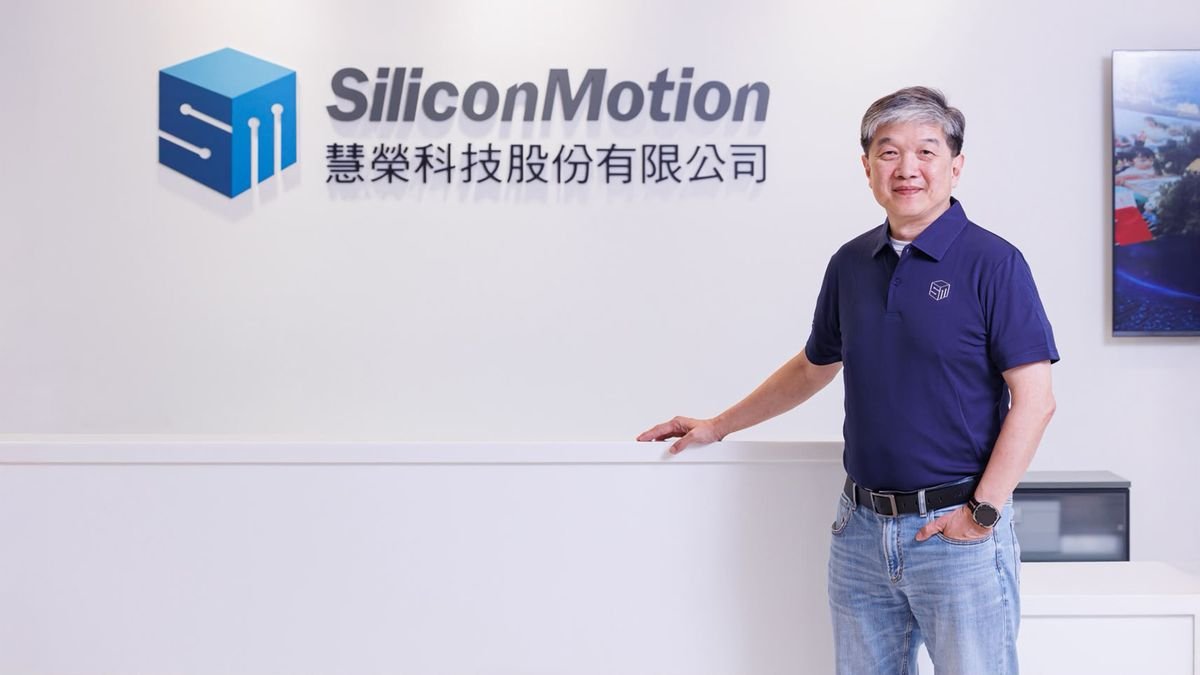
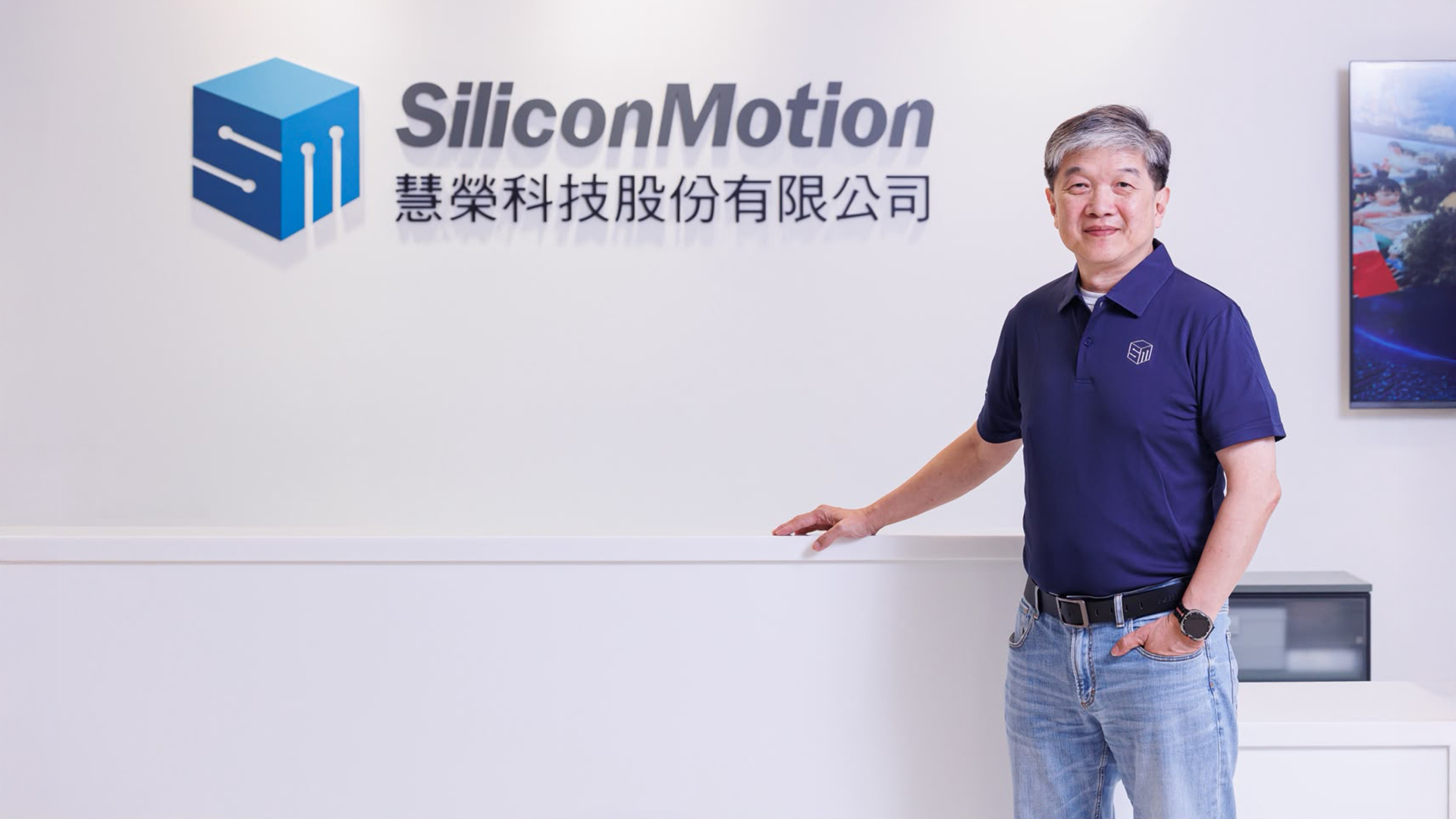 (Image credit: SMI)
The storage market in general, and the SSD market in particular, has changed structurally in a matter of several quarters due to overwhelming demand for storage devices from the AI sector. As a result of the rapid price increase, demand for solid-state drives and other memory-based PC components dropped in retail in the first quarter. But as paradoxical as it might seem, shipments of SSD controllers increased in Q1 2026 so significantly that both Silicon Motion and its rival Phison posted record Q1 results. This happened not only because these companies increased sales of their data center and enterprise-grade controllers to hyperscalers and server makers, but also because they increased sales of all types of products, both to SSD producers and NAND manufacturers.
At Computex 2026, we sat down with Nelson Duann, Senior VP of Client & Automotive Storage Business at Silicon Motion, to find out how the company's business is going amid the ongoing structural market change and what to expect from SMI on the client storage front in the coming years.
We must say, Nelson Duann is a valuable speaker with an interesting background and a rather unique view on the market and technology development. He has been with SMI since 2007 and has led Silicon Motion's Client & Automotive Storage business since late 2023, when the company was reorganized into two business units and assigned new general managers for each. Duann is responsible for product strategy, OEM engagement, and program execution across these segments. Before assuming his current role, he headed marketing and R&D efforts for mobile storage products and played a significant role in expanding the company's SSD controller and mobile storage businesses into leading positions in their respective markets. Before Silicon Motion, Duann worked at Sun Microsystems on UltraSPARC processor development projects.
Without further ado, let's get to talking.
A rough time the industry, a good time for SMI
Anton Shilov: It has been a rough year for the industry in general, and memory-related segments of the industry in particular, so far. Yet, here we are, your first quarter sales were $342.1 million, up 23% quarter-over-quarter and 105% year-over-years, with sales of SSD controllers up 40% to 45% year-over-year. How did you manage to achieve that? At least on your side of the business.
Nelson Duann: There were two main drivers behind the growth of our business unit in the first quarter.
The first was our Ferri product line, where we sell complete storage solutions rather than just controllers. As NAND prices increased, the prices of those solutions rose as well. We performed particularly well in data center boot drives. On the automotive side, many NAND suppliers have made automotive a low-priority market despite strong demand from carmakers. Ferri is one of the few products that can still ensure supply, so we benefited both from higher NAND ASPs and from having inventory available to serve customers.
Get Tom's Hardware's best news and in-depth reviews, straight to your inbox.
The second driver was our controller business. Sales of our high-end controllers, including PCIe Gen4 and PCIe Gen5 SSD controllers as well as UFS 3.1 and UFS 4.1 controllers, were very strong and contributed significantly to revenue growth.
We also started to see some contribution from our enterprise business. Volumes were still relatively small in the first quarter, but enterprise SSD controller programs are beginning to ramp and helped build momentum.
On the client side, demand for high-end controllers increased because NAND suppliers are allocating more NAND to data center products and less to the consumer market. As a result, PC makers have increasingly turned to module makers for SSD supply. While we do not sell SSDs ourselves, most module makers use our controllers, so as their shipments to PC OEMs increased, our controller shipments and revenue increased as well.
Anton Shilov: So memory makers are still supplying PC OEMs directly, but at lower volumes?
Nelson Duann: Yes. They are still supplying them, but allocations to the client market have been reduced significantly. Most NAND is now being directed to the data center segment.
Companies such as Lenovo, HP, Dell, Asus, and Acer cannot always obtain enough NAND from memory manufacturers. As a result, they increasingly turn to module makers for SSD supply. Those module makers build PCIe Gen4 and PCIe Gen5 SSDs, and because most of them use our controllers, that trend benefits our controller business.
Anton Shilov: So, NAND price increases have not really hurt your controller business; you have actually managed to sell more controllers than a year ago.
Nelson Duann: More than a year ago, and more than in the previous quarter, but primarily in the high-end segment. The low-end market has been affected because consumer demand is weaker. NAND has become a valuable resource, so PC makers prefer to allocate available supply to higher-priced products. As a result, demand for high-end SSDs has increased, and those products use controllers with higher ASPs. Growth in the high-end segment has more than compensated for weakness in the low-end market, which is why our controller revenue continues to grow.
Anton Shilov: So NAND shortages have actually helped you.
Nelson Duann: I would not say we are enjoying the shortages, but we have certainly benefited from them.
Anton Shilov: What do you expect to happen in the second half of the year?
Nelson Duann: I think supply will remain very tight. In fact, we met with NAND suppliers this morning, and they told us that the current shortage is only the beginning. They believe 2027 will be even worse.
For the second half of this year, I expect conditions to remain largely unchanged. Supply will stay constrained. You will hear analysts talk about declining PC demand and lower PC shipments, but demand itself has not disappeared. Apple continues to gain share in both PCs and smartphones, which shows that people are still buying devices. The problem is not demand; the problem is supply.
Many PC and smartphone makers cannot obtain enough components to ship the volumes they want. Because NAND and DRAM have become such valuable resources, suppliers are prioritizing higher-end products with higher ASPs and better margins.
I expect this situation to continue through the second half of the year. Looking into next year, NAND makers are quite pessimistic. They believe supply constraints will worsen because cloud service providers and data center operators continue to increase their demand. As a result, NAND suppliers are directing more of their output toward the data center market.
They still want to support consumer devices and automotive applications, but those allocations are relatively small and do not materially change the overall supply picture.
Anton Shilov: So the additional SSD controllers you sold in the first quarter were mostly sold to module makers rather than directly to OEMs.
Nelson Duann: Let me explain that in more detail. The retail SSD market has almost disappeared. The controllers we sell to module makers are now largely ending up in SSDs that are shipped to PC OEMs. The reason is that OEMs cannot obtain enough NAND directly from memory manufacturers, so they are increasingly sourcing SSDs from module makers instead.
In the past, most module makers focused on the retail market. Since late last year and into this year, that has changed. OEM demand has become much stronger, and module makers are now supplying a significant portion of their production directly to PC manufacturers.
As a result, most of the controllers we sell to module makers ultimately end up in systems built by PC OEMs.
Anton Shilov: One advantage Silicon Motion has is that you work with all six NAND manufacturers and also supply controllers to some of them. Given the current shortages, have shipments of controllers to NAND makers declined?
Nelson Duann: Unit shipments to NAND makers have declined. However, those companies are increasingly focused on higher-end products, so the mix has shifted toward premium controllers with higher ASPs. As a result, while controller volumes are lower, the higher ASPs have largely offset the decline in unit shipments. Consequently, our controller revenue has continued to grow.
Anton Shilov: One quick question. When you ship controllers to NAND makers, are they standard Silicon Motion products, or are they customized for specific SSDs?
Nelson Duann: NAND makers are no longer very active in the retail SSD market because NAND supply is limited. Most of the SSDs they build today are shipped to PC OEMs, and many of those drives use our controllers.
The controller hardware itself is generally not customized. What changes from customer to customer is the firmware. Every PC maker has different requirements, so NAND suppliers or SSD makers may ask us for firmware modifications tailored to a particular OEM. The controller ASIC remains the same; the customization is primarily done at the firmware level.
Anton Shilov: So the differentiation happens mostly through firmware tuning rather than hardware changes?
Nelson Duann: Correct.
Mobile Storage
Anton Shilov: Since you mentioned that the retail market has weakened considerably, can you provide a breakdown of your SSD, UFS, and eMMC controller business?
Nelson Duann: We group UFS and eMMC together and treat SSD controllers as a separate category. In the first quarter, the split was almost even. UFS and eMMC combined accounted for roughly 52%, while SSD controllers represented about 48%.
The reason is simple: smartphone volumes are still higher than notebook volumes. On a unit basis, mobile storage controllers ship in larger quantities than SSD controllers. We expect a similar mix going forward.
Anton Shilov: What is the split between UFS and eMMC today?
Nelson Duann: That is a good question. If we look at revenue, UFS generates more revenue than eMMC. However, in terms of unit shipments, eMMC volumes are still higher. The reason is simple: eMMC carries a much lower ASP. So while UFS contributes more revenue, eMMC still ships in larger quantities.
Anton Shilov: So eMMC still refuses to disappear.
Nelson Duann: Yes, that is true.
Anton Shilov: I assume that is because eMMC is used not only in smartphones, but also in a wide range of other devices.
Nelson Duann: Exactly. It’s widely used in IoT devices, automotive applications, and many other embedded products. That’s why eMMC will remain around for a long time. It has a very long tail.
Anton Shilov: Since your sales have been growing, can you comment on your market share in client SSD controllers?
Nelson Duann: In client SSD controllers, our worldwide market share is approaching 30% to 32%. For mobile storage, combining UFS and eMMC controllers, we estimate our share of the Android smartphone market at around 25% to 26%.
Anton Shilov: That is a significant share.
Allocation priorities
Nelson Duann: It is. And we expect it to grow further. NAND suppliers are allocating less memory to PCs and smartphones, which forces device makers to seek alternative sources of supply. Many turn to module makers, and we have a very strong position in that ecosystem.
As long as module makers continue to gain business, demand for our controllers should benefit as well, even though we do not manufacture SSDs or storage devices ourselves.
Anton Shilov: So the smartphone market is behaving somewhat like the PC market: device makers cannot get enough supply directly from NAND vendors and therefore have to turn to module makers?
Nelson Duann: Let me explain the allocation priorities in more detail. For NAND suppliers, the first priority is clearly the data center. The second priority is smartphones, because NAND is often supplied together with Low Power DRAM. The third priority is PCs, and the fourth is automotive.
Because of that priority order, smartphones are in a better supply position than PCs. However, supply is still not sufficient because the majority of NAND output is going to data centers. The data center segment may receive 70% to 80% of total allocation, leaving only 20% to 30% for smartphones, PCs, automotive, and everything else. As a result, even smartphone shipments could decline this year because of NAND and memory supply constraints, perhaps by 15% to 20% compared with last year.
Anton Shilov: Especially at the low end.
Nelson Duann: Yes. The low-end [smartphone] segment is largely gone, while the high-end segment continues to grow. PCs will probably decline more sharply in unit terms than smartphones because PCs face a more severe supply shortage.
There is one uncertainty, however: China is a different market. China has domestic NAND and DRAM makers, and their strategy is not the same as that of foreign memory suppliers. Because they receive government support, they also have a responsibility to help maintain the health of the local market.
Foreign suppliers generally follow the highest-return opportunities and can allocate most of their supply to data centers. Chinese suppliers cannot do that in the same way because the government can provide guidance and encourage them to support certain local industries.
Anton Shilov: So PC makers in China can get more stable NAND supply?
Nelson Duann: Yes, and DRAM as well. Most Android smartphone makers are now in China, and China is also home to Lenovo, one of the world's largest PC makers. Lenovo still has supply issues, but compared with HP, Dell, Asus, and Acer, its situation is less severe because it has support from local memory suppliers.
Anton Shilov: Is there any chance NAND supply will increase meaningfully in 2027 and help ease the shortage?
Nelson Duann: Bit supply will increase, but not enough to match demand. Demand could increase by around 100%, while bit growth will not come close to that level.
DRAM and NAND output will increase somewhat because of technology migrations rather than major increases in fab output. New fabs are being built, but they will not begin meaningful production until late next year or early 2028.
Suppliers can get some bit growth by moving to newer NAND generations, but demand is growing faster. As a result, the shortage will not improve next year. It will get worse.
Anton Shilov: Given high memory prices, undersupply, and limited ways to bring supply and demand into balance, what is the best strategy for a non-memory company like Silicon Motion on the client side? Do you adopt new 3D NAND types as quickly as possible, or slow client investments and focus more on data centers?
Nelson Duann: We have several strategies. First, we have to follow NAND vendors very closely and make sure our controllers support each new NAND generation quickly. Once NAND suppliers move to a new generation, they cut older generations quickly, so our controllers must be ready as soon as new NAND reaches the market.
Second, we need to encourage customers to move toward higher-end products. That is where the revenue and margins are, both for us and for our customers.
Third, as NAND becomes more expensive, customers may reduce capacity per device to manage cost. For example, a product that used to ship with 128GB may move to 64GB. But each device still needs a controller, so lower capacity per unit can increase controller demand.
Fourth, we need to continue advancing our technology. Nvidia's recent AI PC direction shows that the PC paradigm is changing. These systems need much more efficient data movement to feed their processors.
From my point of view, the market is moving beyond the traditional PC toward what we call a Personal Agentic AI machine. A system with 128GB of DRAM is not a conventional PC anymore. Today's PCs typically have 16GB or 32GB of DRAM.
To support this shift, storage architecture and performance need to improve significantly. That is why we introduced our new PCIe Gen5 DRAM-less controller with much higher random I/O performance. For AI workloads, when DRAM is not enough for KV cache, data needs to spill over to storage, which makes random I/O extremely important.
We are already re-engineering our architecture for this shift. Personal Agentic AI systems are expensive today, but costs should come down over time as the whole ecosystem redesigns storage and data-transfer architectures.
New NAND types support
Anton Shilov: Do you also expand the list of NAND types supported by existing controllers to address supply constraints?
Nelson Duann: Yes. We are known for supporting all major NAND types available on the market, including MLC, TLC, and QLC, and we will continue to expand support.
You never know which NAND type or supplier will have better availability. The more NAND types our controllers support, the more flexibility our customers have when dealing with supply shortages. We will continue to invest. In addition to supporting upcoming NAND generations, we are also looking at PCIe Gen6. PCIe Gen5 is the mainstream today, but the data center and enterprise markets are already moving toward Gen6.
Anton Shilov: The only platforms with PCIe Gen6 support right now are AMD's EPYC 'Venice' and Nvidia's Vera CPUs. Intel's Xeon does not support PCIe Gen6 yet.
Nelson Duann: Not yet. But in the data center, do not forget Nvidia. Nvidia is also pushing very hard for PCIe Gen6 because its [GPUs] are data-hungry monsters. PCIe Gen6 storage is not being driven only by AMD. Nvidia is also pushing the storage ecosystem to move to Gen6.
On the PC side, Gen6 is not here yet. PCs are still on Gen5, but we are preparing now. Controller development takes years, so we cannot wait until Gen6 CPUs arrive. That would be too late. We always start preparing several years in advance for new technologies and new interface chips.
Arm is a default choice for now, but RISC-V is being considered
Anton Shilov: With the SM2524XT, you support a 4.8 GT/s NAND interface.
Nelson Duann: Yes, on the NAND side. More NAND makers are moving to 4.8 GT/s interfaces, so that is important. Faster NAND also enables more efficient AI-oriented storage architectures, including KV-cache offload. Those workloads rely on faster interfaces and more efficient data transfer. That is what we are preparing for in the second half of this year and next year.
Anton Shilov: The SM2524XT has four CPU cores. Why did you move from three cores to four?
Nelson Duann: The previous SM2504XT had three cores. We moved to four cores to improve random I/O performance. Random I/O benefits from several things. First, a faster NAND interface. Second, SCA technology. Third, more controller compute power. With random I/O, addressing is random, so the controller must quickly translate logical addresses to physical NAND locations. That requires fast computation. The additional CPU core helps improve random I/O performance, which is important for KV-cache offload.
Anton Shilov: Do you continue to use Arm Cortex-R cores?
Nelson Duann: Arm remains a good partner, and as long as Arm continues to support us, we will continue using Arm cores. At the same time, we are internally studying RISC-V.
For storage applications, Arm and RISC-V can both provide enough performance. The bigger issue is the toolchain. If we move from Arm to RISC-V, our R&D team needs to change toolchains. Some customers buy our controllers but develop their own firmware, and they would also have to change toolchains.
So we are evaluating RISC-V carefully. Arm remains more widely used, and the ecosystem is mature. We have not formally adopted RISC-V in client products yet, but we are doing intensive internal evaluation.
Anton Shilov: What kind of performance improvement does the SM2524XT deliver in typical client workloads?
Nelson Duann: It depends on the benchmark, but in general, we are targeting roughly a 25% increase in random performance compared with the previous generation. Sequential performance also improves by about 25%. Faster NAND is part of the reason, and the additional core also helps. But just as importantly, performance per watt has improved. It is easy to increase performance by consuming more power. The hard part is improving performance while staying within the power limits of a client PCIe drive.
Our new generation delivers more performance per watt, perhaps around 10% to 15% better than the previous generation. That is important because we need to increase performance while keeping the entire client SSD within its PCIe power envelope.
Future SSD controllers
Anton Shilov: Is SCA coming to high-end eight-channel client SSD controllers?
Nelson Duann: For PCIe Gen5, no. Our first-generation Gen5 client controller was an eight-channel DRAM-based design. But our second- and third-generation Gen5 client controllers are four-channel DRAM-less designs. Since the NAND interface is faster, we no longer need eight channels to achieve the same or better performance.
For PCIe Gen6, however, we are considering going back to eight channels on the client side. For enterprise Gen6, the plan is 16 channels.
Anton Shilov: Future SSD controllers will have to support NAND with many more layers, which means stronger ECC will be required.
Nelson Duann: Correct. LDPC technology must advance generation by generation. We have a dedicated team working on error-correction capability because it is a fundamental part of NAND flash controller design.
As NAND moves to newer technologies and higher layer counts, we need stronger ECC to maintain reliability and data integrity.
Anton Shilov: Enterprise controllers have already moved to 16KB LDPC codewords. What about client controllers?
Nelson Duann: We are considering 16KB LDPC for our next-generation client chip, probably for PCIe Gen6, but we have not made a final decision yet. We are evaluating both the advantages and the disadvantages.
The advantage is that 16KB LDPC can correct more errors, which helps support future NAND. The downside is cost, die area, and compute requirements. Another issue is that most PC hosts still issue 4KB read and write commands, while 16KB LDPC is better aligned with larger data units. That mismatch can create read-modify-write operations, increase latency, and affect QoS. Enterprise hosts have moved much more toward 16KB commands, but client PCs remain mostly 4KB. So we need to evaluate the impact on performance, latency, and QoS before making a decision.
Anton Shilov: I assume different product lines also require different LDPC designs.
Nelson Duann: Exactly. Different product lines use different LDPC designs. For mobile devices, low power is extremely important, so LDPC is tuned for power efficiency rather than maximum performance. For PCs, there is a little more power budget, so we can tune LDPC more toward performance. Enterprise SSDs have even more power headroom, so performance becomes the top priority.
It is not one LDPC design for every product. We tune LDPC differently depending on the requirements of each market.
Anton Shilov: When do you expect to offer client PCIe Gen6 controllers?
Nelson Duann: Our current plan is for the end of next year. We are not pushing client Gen6 because of Intel or AMD CPUs. We are pushing it because of Nvidia. Nvidia is moving into the client side as well, and you can sense that from its keynote. Nvidia’s processors are power-hungry and data-hungry, so our client-side PCIe Gen6 roadmap is driven by Nvidia, not Intel or AMD.
Anton Shilov: Enterprise PCIe Gen6 controllers are coming out this year, correct?
Nelson Duann: Yes, the SM8466 is coming this year. Client Gen6 is planned for next year. We are not rushing to bring client Gen6 out this year.
Anton Shilov: The client Gen6 controller is called Neptune, right?
Nelson Duann: Yes, that is our codename.
PLC NAND may not be a viable option as QLC to reach 4Tb per device
Anton Shilov: Any thoughts on PLC NAND?
Nelson Duann: So far, there is no sign of activity around PLC. NAND makers are benefiting from the current market situation, so they are not eager to move to PLC.
QLC has already reached 2Tb per die, and we hear some companies are working on 4Tb dies without moving to PLC. If you move to PLC, the capacity of a single die becomes very large and more difficult to use.
PLC could reduce cost from the memory vendor's point of view, but cost reduction is not their main concern right now. In my personal opinion, memory vendors have learned from past cycles. Previously, when shortages occurred, they rushed to increase output, which later created oversupply and hurt everyone. This time, they are much more disciplined. If NAND makers wanted to move to PLC, they would need to tell us years in advance because we would have to build controllers that can reliably read that NAND. Right now, we see no sign of such a transition.
Anton Shilov: So, for ultra-high-capacity SSDs, the industry may focus more on advanced NAND packaging than PLC.
Nelson Duann: Exactly.

Anton Shilov is a contributing writer at Tom’s Hardware. Over the past couple of decades, he has covered everything from CPUs and GPUs to supercomputers and from modern process technologies and latest fab tools to high-tech industry trends.
What's Your Reaction?
 Like
0
Like
0
 Dislike
0
Dislike
0
 Love
0
Love
0
 Funny
0
Funny
0
 Wow
0
Wow
0
 Sad
0
Sad
0
 Angry
0
Angry
0










Comments (0)