

The most important scene in Fast & Furious lasts less than a minute and Vin Diesel didn't get paid to film it

Published Jun 16, 2026, 4:47 PM EDT
A free cameo laid the foundation for one of Hollywood's biggest blockbuster franchises
 Image: Universal Pictures
Two decades ago, many fans of the Fast and Furious movies felt the franchise had run out of gas. For the third movie in the series, director Justin Lin and writer Chris Morgan abandoned the franchise's established main characters, shifted the focus to Japan, and introduced an entirely new cast led by a teenager (who looked like he was 20) learning the art of drifting. It felt like an odd detour, and critics skewered it as a desperate sequel destined for the bargain bin. They were mostly right, but looking back now, Tokyo Drift may have been the most important film the franchise ever made, and that’s largely because of a one-minute Vin Diesel cameo in its closing moments.
What immediately stands out is how vastly different Tokyo Drift feels from the films that followed. Well before the franchise evolved into globe-trotting spy thrillers and heist movies with superhuman stunts and vehicles flying into space, Lin (who went on to direct five more Fast & Furious movies) was still leaning into what made The Fast and the Furious so special. The heart of the film is drift racing itself, and Lin treats Japanese car culture with a level of enthusiasm that remains infectious today. The nail-biting street races are the main attraction, and despite the contrived setup about a troubled American teenager moving to Tokyo, the stakes are still surprisingly grounded.
Angsty Sean Boswell (Lucas Black) is so reckless behind the wheel that his mother ships him off to Tokyo to live with his Navy father to avoid potential jail time. Sean isn't out to find an omnipresent hacking device, rob a cartel drug lord, or save the world. He's just a kid trying to discover his place in a foreign car scene.
That simplicity gives Tokyo Drift its charm, and it’s something later films drop in favor of spectacle. It's a coming-of-age story wrapped inside a street-racing movie, replete with friendships, love interests, rivalries, and enough tuner culture to fill a convention center — which you can even see in person at the Peterson Automotive Museum in Los Angeles. Tokyo Drift also introduced one of the franchise's most beloved characters in Han (Sung Kang), who to this day remains effortlessly cool. Whether he's mentoring Sean on drifting, carefully navigating Tokyo's criminal underworld, or casually snacking, Han always seems to steal the limelight.
The movie's other supporting cast members help give it a distinct personality. A young Bow Wow provides comic relief as Twinkie, a self-described “army brat” driving around in an Incredible Hulk-themed 2005 Volkswagen Touran. The story's Yakuza connections, led mostly by the “Drift King” (Brian Tee), add an edge that separates it from the suburban California settings of earlier films. As the movie progresses, there's a sense that Sean has wandered into something far larger than himself, and that criminal backdrop helps make Tokyo feel dangerous without turning the movie into a full-blown action spectacle.
Tokyo Drift also stands apart from both its predecessors and successors for its strict adherence to authenticity. Rather than leaning heavily on CGI, Lin relies extensively on practical stunt driving, bringing in real-world drifting legends like Rhys Millen and "Drift King" Keiichi Tsuchiya — also known for his work on Initial D — to handle much of the action behind the wheel. The result is a series of racing sequences that still feel visceral and dangerous today, with every turn, slide, and near miss carrying a sense of weight that many later entries would abandon in favor of increasingly outrageous set pieces. It’s why, even two decades later, Tokyo Drift is often viewed as the purest racing movie in the entire franchise.
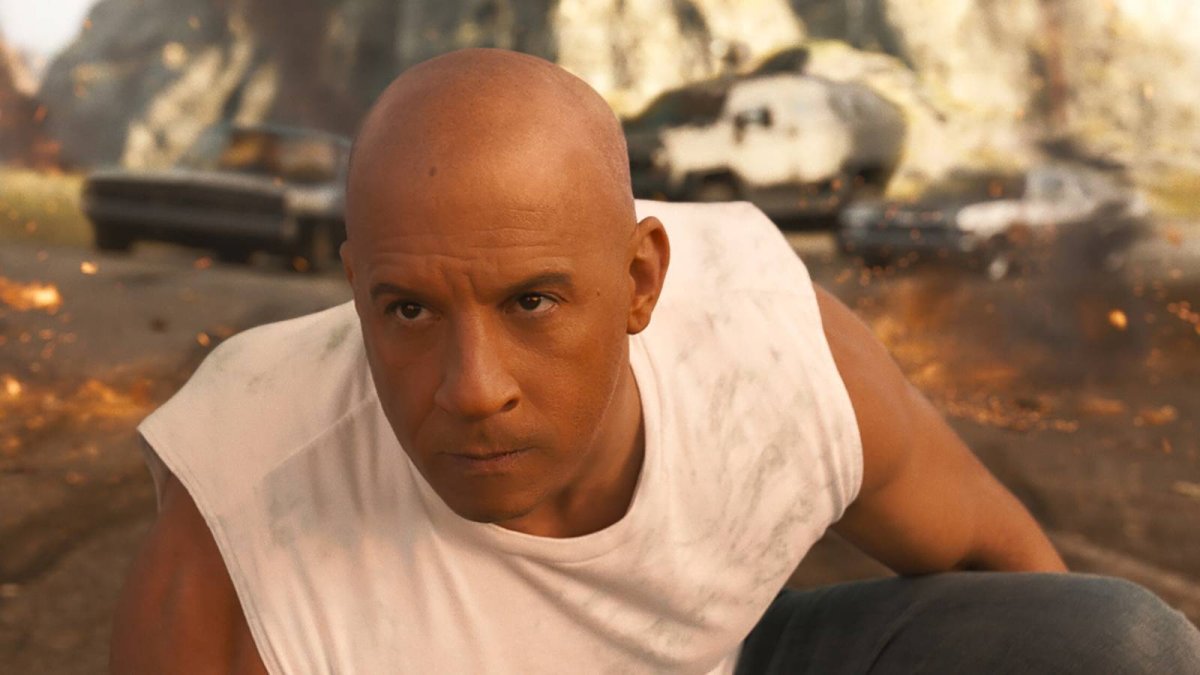
But The Fast and the Furious probably wouldn’t have become the franchise it is today without a few seconds of screen time gifted to Diesel’s Dominic Toretto at the tail end of the film. When Dom rolls up to greet Sean in his now iconic 1970 Plymouth Road Runner, it feels like a fun surprise cameo. In reality, that brief appearance would end up changing the trajectory of the entire series. Diesel reportedly filmed the scene for free, negotiating in return for ownership rights tied to the Chronicles of Riddick franchise, a story he was more eager to continue at the time.
On paper, it was a business deal focused on another property entirely. The irony is that the cameo ended up becoming the narrative glue that held the future of Fast & Furious together for the next 20 years. Without that scene, Tokyo Drift might have remained a standalone experiment. Instead, Dom's appearance connected Sean's story to the larger franchise and transformed Han into a character whose legacy would ripple through multiple sequels. The series would soon reunite its original cast, bring back familiar faces, and eventually become a multi-billion dollar juggernaut. By the time Fast Five arrived (also directed by Lin), the transformation was complete.
 Image: Universal Pictures
That's what makes Tokyo Drift such a fascinating movie to revisit 20 years later. It's both the end of an era and the beginning of another. The film represents the final gasp of street racing culture that fueled the Fast & Furious franchise for three whole films, yet its closing moment provides the foundation for everything the franchise would later become.
For a movie that spent years being treated like the franchise's awkward middle child, that's an incredible legacy. Tokyo Drift not only survived the test of time but somehow drifted its way into becoming the most important entry in the entire series. Turns out the troubled kid from Alabama really did end up changing the world, but not in the way anyone expected.
What's Your Reaction?
 Like
0
Like
0
 Dislike
0
Dislike
0
 Love
0
Love
0
 Funny
0
Funny
0
 Wow
0
Wow
0
 Sad
0
Sad
0
 Angry
0
Angry
0






Comments (0)