

‘The Only Living Pickpocket in New York’ Added a Secret Extra Shoot Day to Break Some Location Rules
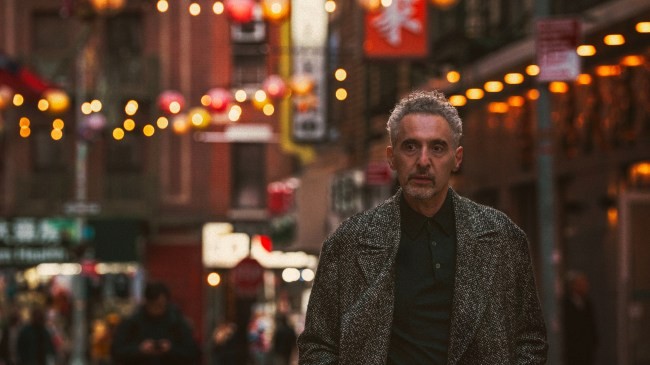
As the title promises, writer-director Noah Segan‘s “The Only Living Pickpocket in New York” is a kind of dual character study, a love letter to both its protagonist (played by John Turturro in a career-best performance) and the city in which he lives. It has become a cliché to say that the setting is a character in a movie, but in “The Only Living Pickpocket” it really is — the city lives and breathes and adds texture to the story and depth and definition to the characters in the way that it does in the best films of Martin Scorsese, Spike Lee, and Nicole Holofcener.
Ironically, shooting in the city was the first battle Segan and the producers had to fight. “ It’s called ‘The Only Living Pickpocket in New York,’ and we had this huge debate about rebates and maybe going to Serbia or Bosnia or whatever,” producer Leopold Hughes told IndieWire. “I was really proud that we stuck to our guns on that and made them [shoot in New York].” That said, Hughes, who is British, quickly learned that shooting in New York was a very unique experience.


“I’d never shot in New York before,” Hughes said. “We were a Tier One movie [referring to the IATSE union tiers for low-budget, independent films], and I have never had a video village just in a live road where there are trucks, and then a guy comes up saying, ‘I’m gonna shoot everybody.’ And I’m like, Okay, should we do something about this?’ And everyone’s like, ‘Don’t worry about that guy.’ Weirdly, it was a very freeing experience, because in England, there is no way we would’ve ever been able to do this.”
According to producer Katie McNeill, the key to shooting in New York is finding like-minded individuals, both in terms of cast and crew, who understand what it takes to get a movie made. “Like, instead of spending money on trailers that are going to be so far from where we’re shooting that you’re going to spend no time in them, let’s get a little scrappier and find ways to put more of that money on the screen,” McNeill said. “The secret to working in New York at this budget level is working with casts that are like, ‘I’m okay. I’m buying into the idea that I don’t need a fancy trailer.”
Segan and his producers credited executive producer Johnny Holland with setting the tone. “It’s a very New York tone, where we really went for forgiveness over permission,” Segan said. “ Even to the degree of saying to people, ‘Listen, thank you for agreeing to act in this movie. You don’t have a trailer.’ That’s the cost of doing a movie like this, and it’s the fun of doing a movie like this.” The director added that it’s not enough to merely have a “no jerks” policy to get the job done in New York — you have to have a “we are having a great time” policy.
“Like, what will make this fun?” Segan said. “And when you have a problem, how do you solve it by laughing? How do you solve it with positivity? You just want to create an environment where people want to show up for work the next day. And everybody needs something different. Once you’re in production, the job is about, what do people need every day? You get sort of granular and ask, what does this person need? What does that person need? And you just start running around as a unit to try to accomplish that.”
Although “The Only Living Pickpocket in New York” technically had a 25-day shooting schedule, the producers added a 26th day that yielded many of the film‘s most quintessentially New York images. “We knew there were certain shots we wanted to get that were going to add a lot of scale to the film,” McNeill said. “But if we tried to get them early in our shoot, we would run into the possibility that If we got in trouble, all of our permits would be pulled, and we wouldn’t be able to do the other work that we needed.”
The filmmakers therefore decided that if they were going to break any rules, they would break them all on the last day — a plan that required cooperation from Turturro, who was more than game. “You have a contract with an actor a certain period of time,” McNeill said. “But as we were getting closer and closer to the end of the schedule, John said, ‘If you need more from me I’m here. Whatever you need.’ And we were like, ‘Let’s just spend a day running around the New York subway system.'”

“One time two cops got on the subway when we were shooting with no permit,” Segan said. “It’s not even like we couldn’t afford it, you can’t get a permit to shoot on a subway. You just have to do it and pray and hope.” When the cops got on the train and saw Turturro there with the crew, Segan and McNeill looked at each other worriedly, figuring they had pushed their luck too far. “They walk toward us, and the train stops, and they get out and they leave. As the doors are closing, one turns to the other and says, ‘Yeah, I told you it was him.'”
The key, according to McNeill, was keeping a small footprint. “We had maybe 10 people working that day,” she said. “There are certain things that you can only capture if you don’t have a giant production machine. Luckily, John couldn’t have been happier to make a film this way — it was probably the most exhilarating day he ever had on a film set because he was getting away with something.” The producers also discovered that Turturro’s status as a beloved New York actor went a long way when it came to getting the local authorities on board with stealing shots.
“There’s a shot where he comes out of the police station, and we weren’t allowed to go in there,” Hughes said. “John just walked in and said, ‘Hey guys, we’re gonna shoot something. We’re gonna come in and out.’ And the cops were like, ‘Oh yeah, get in here. Sign the book.’ There were so many times where I thought, there’s no way they’re going to let us do this, and they just said, ‘Great, yeah, do whatever you want.’ That’s the beauty of John.”
A Sony Pictures Classics release, “The Only Living Pickpocket in New York” is currently playing in theaters.
What's Your Reaction?
 Like
0
 Dislike
0
 Love
0
 Funny
0
 Wow
0
 Sad
0
 Angry
0










Comments (0)