

What 15 Years of Mentoring Photographers Taught Me About Photography Itself
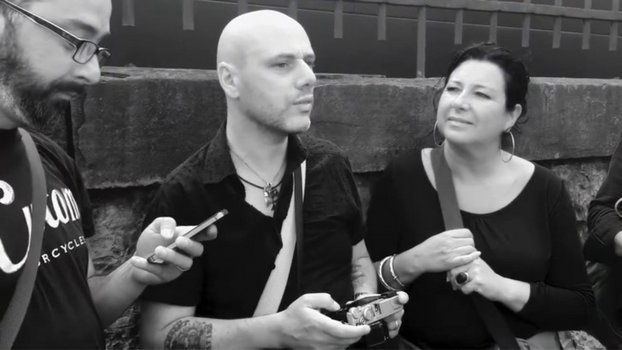
There's something people often misunderstand about photography workshops. They think workshops exist to improve technique.
And yes, technique matters. Of course it does. Understanding timing, framing, light, anticipation, and editing—all of these things are essential. But after more than fifteen years leading street photography workshops, I've realized that the technical aspect is actually the least interesting part of the experience. The real transformation happens elsewhere.
I started mentoring photographers in 2011. Since then, I've worked with participants from all over the world, with completely different lives, cultures, personalities, and levels of experience. Some arrived with expensive cameras, others with years of practice behind them. Other photographers arrived insecure, almost apologizing for not feeling "good enough," or with the classic fear of photographing strangers on the street.
But after a few hours together in the streets, something curious always happens: the camera slowly stops being the center of attention.
People begin arriving obsessed with settings, sharpness, focal lengths, autofocus performance, or whether their work is "professional enough." Then, little by little, the conversation shifts. We start talking about fear, patience, observation, empathy, and presence. We talk about the difficulty of approaching life with genuine curiosity instead of simply trying to collect images. This is where photography becomes something deeper than visual production.
A good workshop should not simply teach people how to take photographs. You can learn technical information anywhere now. YouTube is full of tutorials. Social media is full of advice. Cameras are increasingly automated anyway. Garry Winogrand said that seeing is more critical than technical skill. He argued that technique can be learned over a lifetime, but understanding how to "see" and compose a photograph is the true, essential skill for a photographer.
What photographers are lacking today is not information. It's awareness—real awareness, the kind that forces you to rethink why you photograph in the first place.
Street photography especially can easily become predatory if there isn't reflection behind it. Too many people approach the street as hunters searching for trophies: interesting faces, weird situations, viral moments. Everything becomes consumption, even human life itself.
But photography changes completely when you begin approaching it from a more humanist perspective. When you stop asking, "How can I get a strong shot?" and start asking, "What does it mean to truly observe another human being?" that shift changes not only the photographs, but also the photographer.
Honestly, this is something workshops have taught me as much as participants, because mentorship is never a one-way process. I don't believe in the idea of the mentor as some untouchable figure distributing wisdom from above. The best workshops feel more like shared experiences between people trying to understand photography together through direct contact with the world. As a photo coach, I consider myself essentially a facilitator. That is because people who are not professionals don't have all the time I have to photograph every day. But I also don't forget that there was a time when I was exactly where they are now. We are all photographers when we decide to take up a camera and start documenting the world around us. Sure, we are at different experience levels, but we are all photographers, and that is the reason I don't like to call the photographers attending my workshops "students."
Indeed, I learn constantly from participants—their doubts, their insecurities, their ways of seeing, even their resistance. Their questions are often an opportunity to think and maybe change my mind about some aspects. Sometimes a participant asks a question that forces me to rethink assumptions I've carried for years. Sometimes someone with very little technical experience notices emotional subtleties that more experienced photographers completely miss.
That exchange is what gives workshops their value—not authority, not performance, not the illusion of mastery. Exchange. And maybe that matters now more than ever.
Photography today risks becoming disconnected from life itself. Everything is optimized for visibility, speed, engagement, and personal branding. Photographers are under constant pressure to produce, publish, and impress. The result is that many people stop experiencing photography as something reflective and start experiencing it as content manufacturing.
Workshops can interrupt that rhythm—not because they offer magical answers, but because they create temporary spaces where photography becomes slower, more observational, and more human again. People walk together, talk together, question themselves, edit images collectively, disagree, and reflect. That process creates a different level of consciousness around photography. A deeper one.
The best workshops are not motivational events. They are not tourism disguised as education either—at least, they shouldn't be. A truly meaningful workshop leaves participants slightly unsettled in a productive way. It pushes them to reconsider not only how they photograph, but also how they look at people, at cities, at everyday life, and ultimately at themselves. If you ask me, I prefer the one-to-one formula, and when it's a group, I prefer it to be a small group.
Because photography is never only about photographs. And after all these years, this may be the most important thing I've learned: a camera is not simply a tool for documenting the world. Sometimes it becomes a tool for learning how to exist inside the world more attentively.
While I know there are several photographers who have thanked me over the years, it's up to me to thank them. I am the professional photographer I am today, and also the human being I am, thanks to them.
What's Your Reaction?
 Like
0
Like
0
 Dislike
0
Dislike
0
 Love
0
Love
0
 Funny
0
Funny
0
 Wow
0
Wow
0
 Sad
0
Sad
0
 Angry
0
Angry
0











Comments (0)