

What Is a Leaf Shutter vs. a Focal Plane Shutter?

Almost every camera has a shutter, the mechanism that controls how long light hits the sensor, but not all shutters work the same way. Among mechanical shutters, there are two main designs, the leaf shutter and the focal plane shutter, and the difference between them is not trivia. It determines how fast you can sync a flash, how quiet your camera is, how big and expensive your lenses get, and which kind of photography each system is best suited to. If you have ever wondered why a small fixed-lens camera can do something your big mirrorless body cannot, the shutter is often the reason. There are electronic shutter modes too, which we will come to, but the mechanical pair is where the story starts.
The Focal Plane Shutter: In the Body
The focal plane shutter is the one in almost every interchangeable-lens camera you have handled, nearly every DSLR and most interchangeable-lens mirrorless bodies. It sits in the camera body, right in front of the sensor, the focal plane that gives the design its name.
It works with two curtains. When you press the shutter, a first curtain opens to begin the exposure, and a second curtain follows to end it. At slower shutter speeds, the first curtain fully opens, the whole sensor sits exposed for a moment, and then the second curtain closes. But at fast shutter speeds, the two curtains do not both fully open. Instead they chase each other across the sensor as a moving slit, exposing the frame strip by strip rather than all at once. This is the crucial detail, because it is the source of the focal plane shutter's main limitation.
The advantages are real and are why the design dominates. Because the shutter lives in the body, the lenses do not need their own shutters, which keeps lenses simpler, smaller, and cheaper. And because the curtains can move extremely fast, focal plane shutters reach very high top speeds, commonly 1/8,000 of a second and beyond, which helps when shooting wide open in bright light or freezing fast motion.
The Leaf Shutter: In the Lens
A leaf shutter works completely differently and lives somewhere else: inside the lens, usually right next to the aperture. It is built from a set of overlapping blades, much like the aperture diaphragm, that spring open from the center to start the exposure and close back to the center to end it.
The defining characteristic is that a leaf shutter exposes the whole frame simultaneously rather than as a traveling slit. The blades open, the whole sensor is illuminated together rather than sequentially, and the blades close. The blades do still take a moment to open and close, so at the very fastest speeds the opening is not perfectly instantaneous, but there is no slit scanning across the frame. That single fact is responsible for the leaf shutter's signature advantage, which we will get to in a moment.
https://www.youtube.com/watch?v=CNIk__uzjUg
Because the shutter is part of the optical assembly, interchangeable-lens leaf-shutter systems need a shutter in each lens; fixed-lens cameras can use one shutter permanently paired with the built-in lens. This is why you most often find leaf shutters in two places: high-end medium format systems where each lens carries its own shutter, and fixed-lens compact cameras where one leaf shutter is permanently paired with the built-in lens.
The Big Difference: Flash Sync
Here is the practical payoff that photographers care about most, and it follows directly from how each shutter exposes the frame.
A flash fires in a single, extremely brief burst of light. For that burst to light your whole image evenly, the entire sensor has to be uncovered at the instant the flash fires. With a leaf shutter, that is rarely a problem, because the whole frame is exposed together rather than through a slit. A leaf shutter can therefore synchronize with flash all the way up to its mechanical maximum, subject to the flash's duration and trigger timing cooperating. One subtlety worth knowing: at the very fastest leaf-shutter speeds, the blades can close before the flash has finished dumping its energy, clipping the tail of the burst and costing you some effective flash power. So it is not quite "full power at any speed," but you avoid the much larger efficiency penalty that the focal plane workaround imposes.
A focal plane shutter cannot do this at high speeds. Remember that above a certain speed it exposes the frame as a moving slit, so at any given instant only a strip of the sensor is uncovered. If a flash fired during that, it would light only the strip, leaving the rest of the frame dark. This is why conventional focal-plane-shutter cameras have a flash sync speed, typically somewhere around 1/200 to 1/250 of a second, which is the fastest speed at which the whole sensor is briefly open at once. Try to use flash faster than that, and you get a black band across your frame where the curtain blocked the light.
This matters enormously for anyone mixing flash with bright ambient light, the classic example being outdoor portraits in sunlight where you want to use flash to fill shadows while keeping a wide aperture. A leaf shutter handles this effortlessly. A focal plane camera forces you into workarounds.
The Other Advantages of Leaf Shutters
Flash sync is the headline, but leaf shutters bring two more benefits worth knowing.
They are extremely quiet. The small blades opening and closing make far less noise than two curtains slapping across a sensor, which makes leaf shutter cameras well suited to street photography, weddings, theaters, and anywhere a loud shutter would intrude.
They produce almost no vibration. The tiny, balanced blade movement creates very little of the mechanical shock that a focal plane shutter can introduce, which in some situations means slightly sharper images at certain shutter speeds. That being said, electronic shutters are getting better and better, and this is less of an issue these days.
The Tradeoffs That Keep Leaf Shutters Niche
If leaf shutters are so good, why is your camera almost certainly using a focal plane shutter? Because the leaf design has real disadvantages.
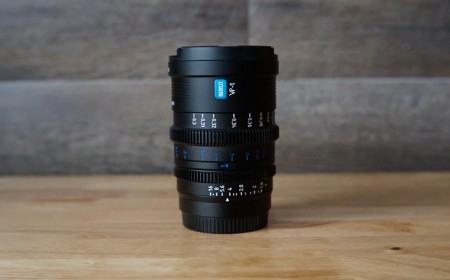
The biggest is cost and size. Putting a shutter mechanism inside every lens makes each lens more complex, larger, and more expensive to build. A system where every lens contains its own precision shutter is fundamentally pricier than one where a single shutter sits in the body, which is a major reason leaf shutter systems cluster at the high end. This is part of why shuttered medium format lenses cost what they do. (Cinema lenses are expensive for unrelated reasons, optical coverage, matched sets, focus throw, and calibration, and generally do not contain leaf shutters at all, so they are a separate story.)
The second is top speed. Leaf shutters are mechanically limited in how fast they can close. Older and large-format designs often maxed out around 1/500 of a second, and even modern high-end leaf shutters top out lower than focal plane shutters do: many Hasselblad XCD lenses sync up to 1/2000 of a second, with some newer models reaching 1/4000, where focal plane shutters routinely hit 1/8000 and faster. This can be a problem when you want to shoot a fast lens wide open in bright light, which is why leaf shutter shooters sometimes reach for a neutral density filter to cut the light instead. It is also why the maximum speed on these lenses is often aperture-dependent, falling as you open up.
How Photographers Work Around the Focal Plane Limit
Since most photographers are stuck with a focal plane shutter, the industry has built workarounds for its flash sync limit.
The main one is high-speed sync, or HSS, a mode where the flash fires not as one burst but as a rapid series of pulses that effectively light the frame as the slit travels across it. This lets a focal plane camera use flash above its normal sync speed, at a real cost: HSS dramatically reduces the flash's effective power, so you need more light, closer, to get the same exposure. It works, but it is less efficient than a leaf shutter's normal single-burst sync, which is exactly the tradeoff that tempts some flash-heavy photographers toward leaf shutter systems.
It is worth clearing up a related point, because it is easy to assume a faster sync speed means sharper motion. In standard flash photography, though not in HSS, it is the flash's duration, often a few thousandths of a second or shorter, that freezes the action, not the camera's shutter speed, especially in dim conditions where the flash provides most of the light. HSS is the exception: because it pulses the flash to behave like a continuous light across the moving slit, the shutter speed does the freezing there, just as it would under ambient light. Outside of HSS, a higher sync speed mostly buys you control over the ambient exposure, letting you darken a bright background or shoot a wide aperture in sun, rather than freezing the subject more sharply. The two effects get conflated constantly.
The Missing Link: The Electronic Rolling Shutter
Before global shutter, there is one more shutter type to place, because most modern mirrorless cameras offer it and some, like the Nikon Z8 and Z9, have dropped the mechanical shutter entirely in its favor. The standard electronic shutter has no moving parts at all; the camera starts and ends the exposure electronically as the sensor is scanned line by line. The catch is that it usually reads the sensor row by row, from top to bottom, which means it behaves a lot like a focal plane shutter's moving slit, only digital.
That line-by-line readout has three consequences. First, if the readout is slow, fast motion or fast panning can produce rolling-shutter distortion, the skew or wobble you sometimes see in video and in stills of quick action. Second, the same scanning makes electronic shutters especially prone to banding under artificial light: because LEDs and fluorescent tubes pulse at frequencies the eye cannot see, and the sensor reads each row at a slightly different moment, you can get ugly dark horizontal bands marching across the frame indoors. Mechanical shutters reduce this problem, especially at slower speeds, though they can still show some flicker banding of their own, while global shutters address it more directly by exposing the whole frame together. Third, and most relevant here, the slow readout gives electronic shutters a poor flash sync speed, often worse than a mechanical focal plane shutter, and many cameras disable flash entirely in electronic mode. So while the electronic shutter is silent and vibration-free, it inherits and sometimes worsens the focal plane shutter's flash limitation. That is exactly the problem the global shutter was built to solve.
There is also a common hybrid worth naming, since you have likely seen it in your menus: the electronic first-curtain shutter, or EFCS. It starts the exposure electronically and ends it with the mechanical second curtain, which cuts the vibration of a fully mechanical shutter while keeping much of the normal focal-plane flash-sync behavior. It has one well-known quirk, though: because the electronic first curtain at the sensor and the mechanical second curtain sit on slightly different physical planes, shooting EFCS at very fast shutter speeds with a wide aperture can truncate bokeh, chopping the edges off out-of-focus highlights and causing uneven exposure. For most shooting it is a useful middle ground rather than a fourth category, but that is the situation where you turn it off.
There is a newer development worth understanding, because it scrambles this whole comparison. A global shutter is a fully electronic sensor that exposes every pixel over the same interval, with no mechanical curtains and no moving slit at all. In effect, it behaves like a leaf shutter's whole-frame-together exposure, but electronically and at any speed.
The Sony a9 III was the first full frame interchangeable-lens stills camera built around a global shutter, and with compatible flash equipment it can sync throughout the camera's supported shutter-speed range, up to an extraordinary 1/80,000 of a second, while also eliminating the rolling-shutter distortion that plagues ordinary electronic shutters. For flash photographers, this delivers the leaf shutter's key advantage without putting a shutter in every lens. It is not a free win: global shutter sensors currently involve tradeoffs in cost and image quality, and Sony's fine print still matters, since reaching the fastest speeds near maximum aperture depends on enabling the camera's exposure-value expansion setting, and Sony warns that image quality, flash brightness, and color consistency can vary at the extremes. But it points toward a future where the leaf shutter's flash advantage is no longer unique to leaf shutters.
Which One Do You Actually Have?
For most people reading this, the answer is a focal plane shutter, since that is what nearly every interchangeable-lens camera uses. But leaf shutters are closer to hand than you might think. Premium fixed-lens compacts like the Fujifilm X100VI and Ricoh GR-series cameras use lens shutters, which is a large part of why street and documentary photographers prize them: quiet operation and high flash-sync speeds within their mechanical lens-shutter limits, all in a pocketable body. Note that on cameras with a separate ultra-fast electronic shutter mode, such as the X100VI, the leaf-shutter flash advantage applies to the mechanical lens shutter, not the electronic shutter, which on many bodies will not fire flash at all. At the other end of the market, the Hasselblad X2D II 100C system relies on XCD lenses with built-in leaf shutters, the body itself does not hold the shutter, for exactly the flash advantage studio and commercial shooters depend on, while the Fujifilm GFX100 II takes the opposite approach with a focal plane shutter in the body, trading flash sync, limited to 1/125 of a second with the mechanical shutter, for cheaper, simpler lenses.
The practical takeaway: you do not choose a shutter type in isolation, you choose it as part of a system. If you shoot a lot of flash in bright light, a leaf shutter or a global shutter is a genuine advantage worth paying for. If you want maximum shutter speed, the widest lens selection, and the lowest cost, the focal plane shutter your camera almost certainly already has is the practical winner, and high-speed sync covers most of the flash gap when you need it.
Understanding your shutter is part of understanding your whole camera, and if you want to build that foundation, Fstoppers has tutorials worth your time. Photography 101 covers the fundamentals of how your camera works from the ground up, and The Well-Rounded Photographer: 8 Instructors Teach 8 Genres of Photography spans the range of genres where these tradeoffs play out differently. And since flash is where shutter type matters most, Fundamentals of Lighting is the place to learn the flash and sync-speed principles this comparison touches on.
What's Your Reaction?
 Like
0
Like
0
 Dislike
0
Dislike
0
 Love
0
Love
0
 Funny
0
Funny
0
 Wow
0
Wow
0
 Sad
0
Sad
0
 Angry
0
Angry
0











Comments (0)