

Which High-Resolution Full-Frame Camera Has the Best Sensor?
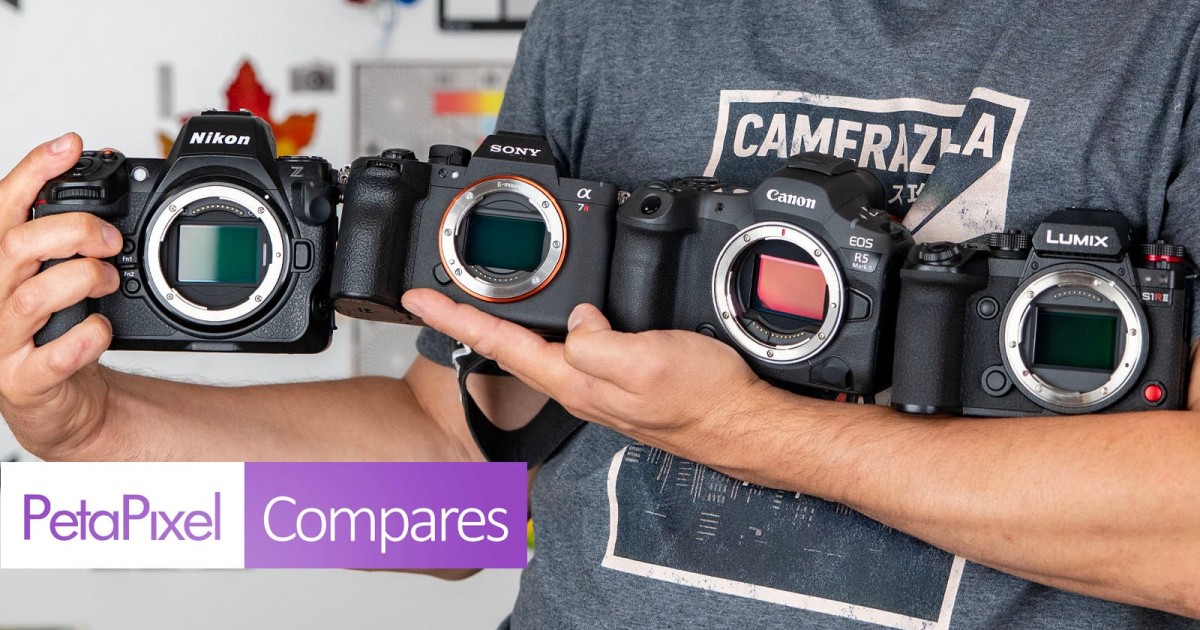
The mid-range sensor market is very competitive, especially because the vast majority of potential buyers will be acquiring one eventually. But what about the high-end market? The costs go up, but so do the megapixels, and the sensors at this stage will be the pinnacle of technology from each of the manufacturers. If you are looking for the best of the best, this sensor showdown is exactly what you need to know.
The Champions of the Industry
Before we let these titans battle it out, we need to know the specifics.
The Nikon Z8 is the oldest of the group, but this camera still holds its own and is much-loved by its users. It also features one of the most advanced 45-megapixel sensors around and is the only competitor to completely eschew the need for a mechanical shutter. It uses a fully stacked sensor with insanely fast readout speeds and plenty of resolution as well, and at just under $3,700, it is on the lower end of the price spectrum.
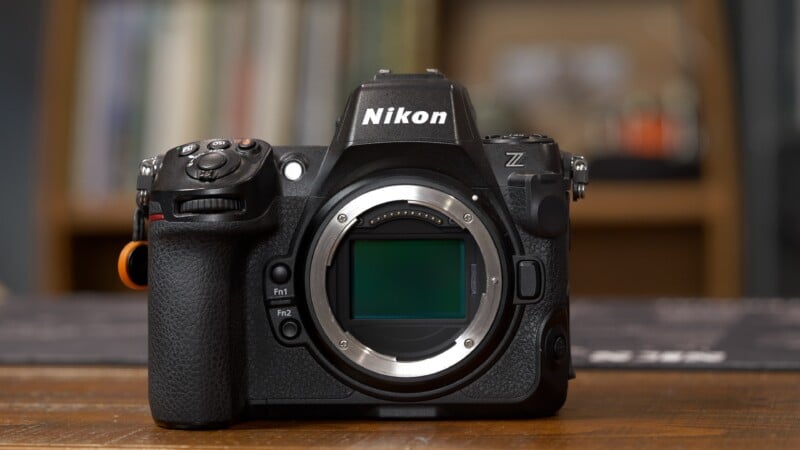 The Nikon Z8 is an oldie, but a goodie.
The Panasonic S1R II features a powerful, almost 45-megapixel sensor housed within an incredibly rugged chassis. This is a camera intended for high-end landscape and studio work, with incredible video capabilities adding to its overall versatility. The S1R II also represents excellent value for the dollar, with the lowest price of the bunch hovering at around the $3,000 mark.
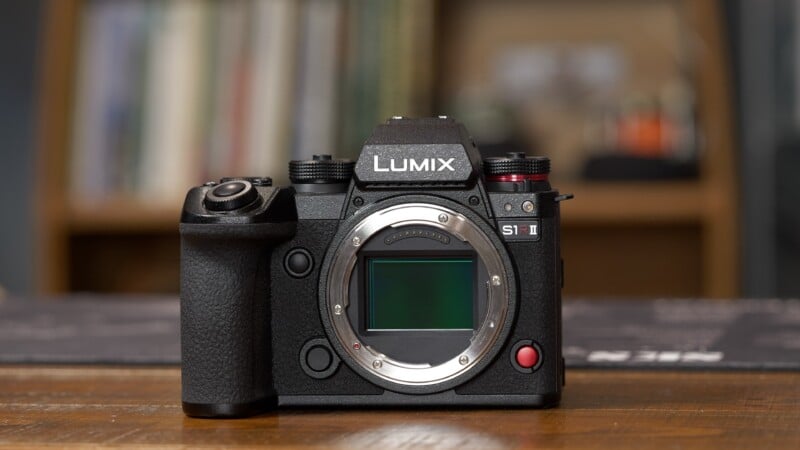 Panasonic made the S1R II to handle big prints and cropping.
Canon stunned the world with its latest iteration of the R5 series, with the Mark II featuring a brand new 45-megapixel stacked sensor made by Canon. As a company, Canon has made huge advancements in sensor technology in only the past couple of years, and the R5 Mark II is easily its most capable all-around camera design. The R5 Mark II has blisteringly fast autofocus performance and burst rates to handle any kind of action photography situation, and it comes in at $4,000.
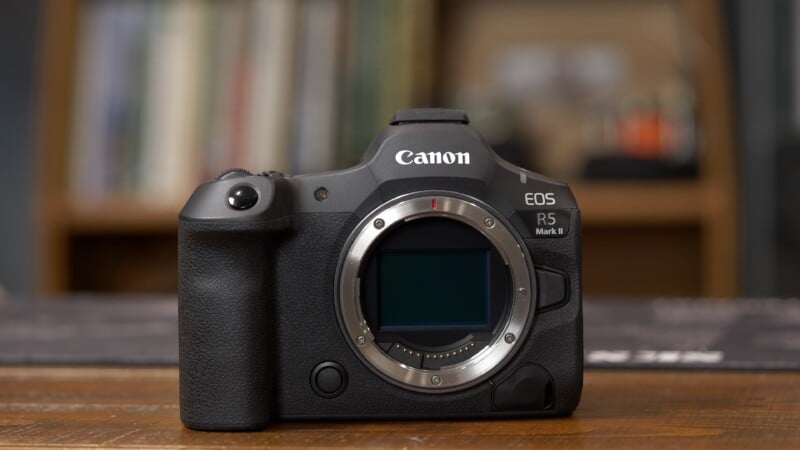 The Canon EOS R5 Mark II stole all the limelight from the EOS 1R.
Finally, we have the newest kid on the block. Sony has released the a7R VI, which has proven itself to be a do-it-all camera. Its predecessor was a great image maker, but it lacked the versatility to handle action-based photography pursuits. However, this latest version comes out of the gates with a new stacked 66-megapixel sensor, which easily dwarfs the competition in terms of resolution and allows the a7R VI to handle much faster wildlife, sports, and action pursuits without compromise. The entry price is the highest of the bunch, though, with a $4,500 price tag putting a solid dent in the budget.
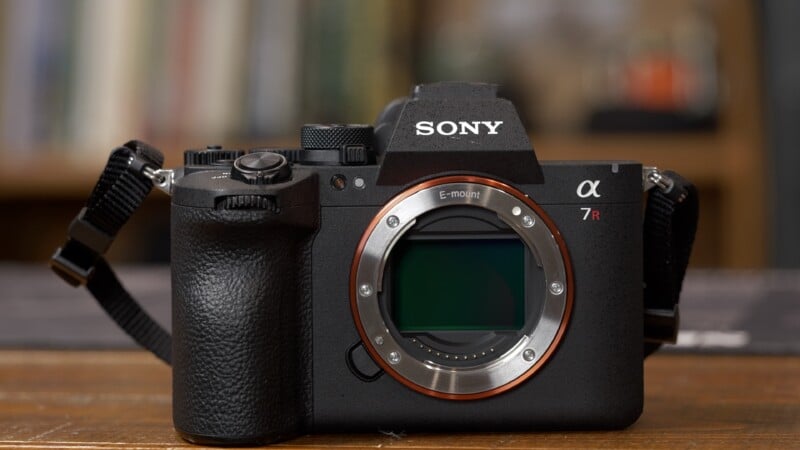 The latest Sony a7R VI makes up for any shortcomings of the camera that came before it.
Resolution
Let’s start this battle with the category that these cameras are famous for: Resolution. Of course, any practical comparison in this regard is going to be dependent on factors like lens choice, stabilization, shutter speeds, and technique. However, we can still get a good idea of how much detail each camera can capture, and it goes without saying that any of the choices will produce images full of detail.
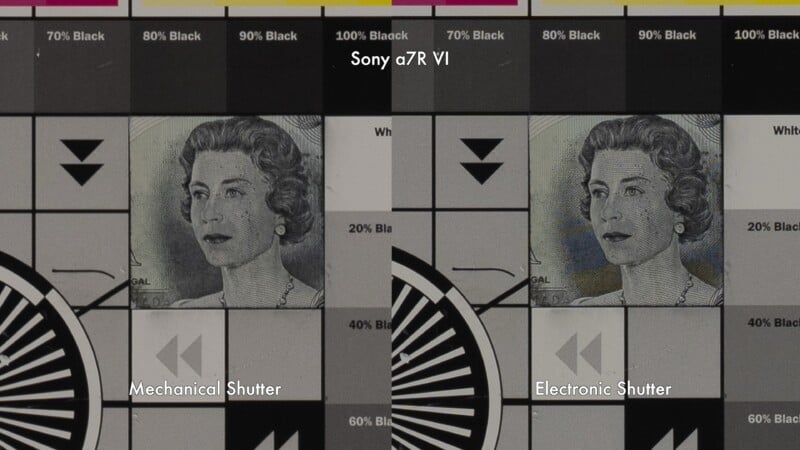 Using an electronic shutter can help with micro blur.
In our particular testing, the Panasonic S1R II delivered a slightly less refined example of resolution, but this is probably down to the differences between the lenses. It is also the only camera that is capable of making genuinely useful high-resolution images by stacking multiple images together, because it can do all of this stacking within the camera and doesn’t rely on a cumbersome workflow after the fact. Both the Canon and Nikon cameras will deliver comparable results in terms of overall usable detail, with plenty of room to crop the image or make big prints, regardless of which brand you choose.
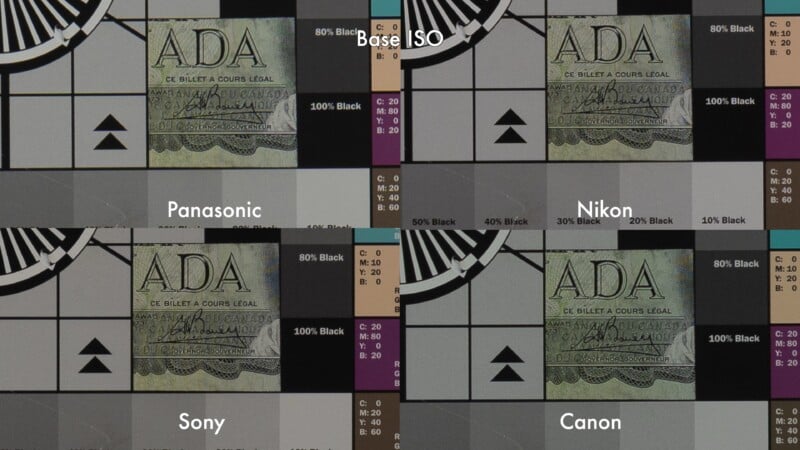 All four cameras produce excellent results, but the Sony is clearly king.
The clear winner is going to be the Sony a7R VI with twenty more megapixels available than any of its competitors. You could substantially crop into your image and still be on a level playing field with the competition. Sony has plenty of lens options that will harness this raw detail, so the resolution king for the foreseeable future belongs to the a7R VI.
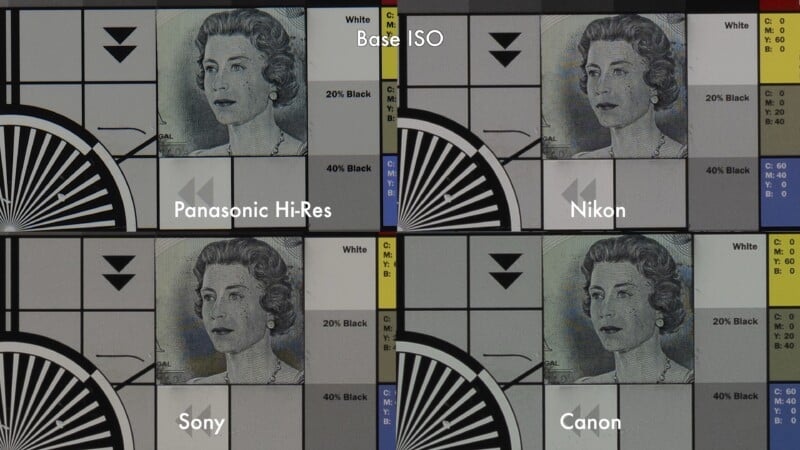 Don’t forget that Panasonic has a usable high-res mode, which makes a difference.
Sensor Readout Speeds
So we have established that all of these competitors are capable of taking sharp images, but some of them are also better suited for fast action and sports. Using an electronic shutter is a great way to boost burst rates and get more shots on target. However, if the sensor can’t scan fast enough, you end up with rolling-shutter issues and even slower autofocus performance. How fast a sensor can read out across the wafer has many ramifications for video, shooting speed, and the ability to stack images together. In general, a scan speed of 10ms or faster will avoid most rolling shutter issues.
As great as Panasonic is at making beautiful shots, it is slow at scanning in electronic shutter mode. With a readout speed of roughly 37ms, the S1R II is not ideal for electronic shutter usage. The Sony a7R VI makes a big improvement over its predecessor, but that was a low bar to begin with. Clocking out at about 19.5ms, the Sony is still going to show distortion in its shots. Canon makes a strong showing with a time of about 6.5ms, and this means that shooting in electronic shutter mode in order to achieve astoundingly fast burst rates is totally doable. Nikon still takes the overall win, though, with a readout speed time of about 3.7ms. This incredibly fast timing is why the Z8 can avoid the need for a mechanical shutter altogether.
High ISO
Modern sensors are amazing in low-light situations, but when push comes to shove, some will do slightly better than others. It is important to understand that all four cameras deliver such excellent image quality at the 6400 ISO setting that we tested, as to be roughly equivalent in practical terms.
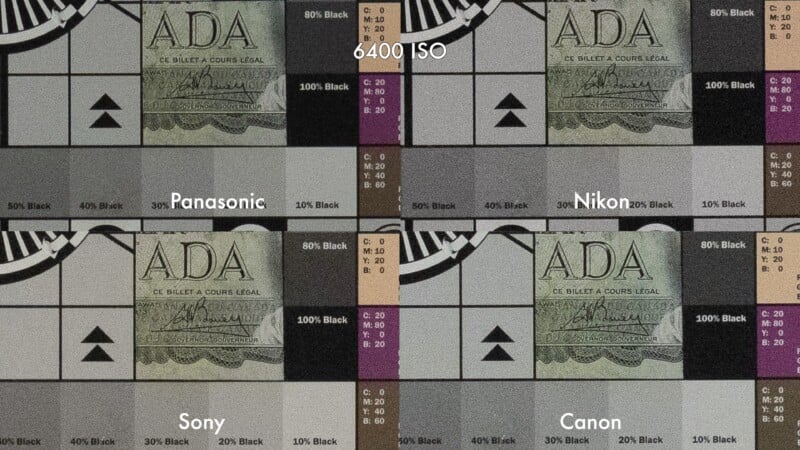 At 6400 ISO, all the cameras will be noisy but some are better than others.
All of the roughly 45-megapixel cameras turned out similar results to each other, but it is worth noting that the Panasonic bakes in some pretty aggressive noise reduction at higher ISO settings. This results in slightly cleaner but also slightly softer results than the other cameras. The Sony a7R VI still takes the lead position because, although the noise looks similar to that of the other cameras, it does so when magnified to an equivalent level. Those extra megapixels mean that the noise and loss of detail associated with higher ISO levels are smaller and less obtrusive when viewed as an entire picture. This means you can crop in much tighter if needed and still get a similar look to the noise levels.
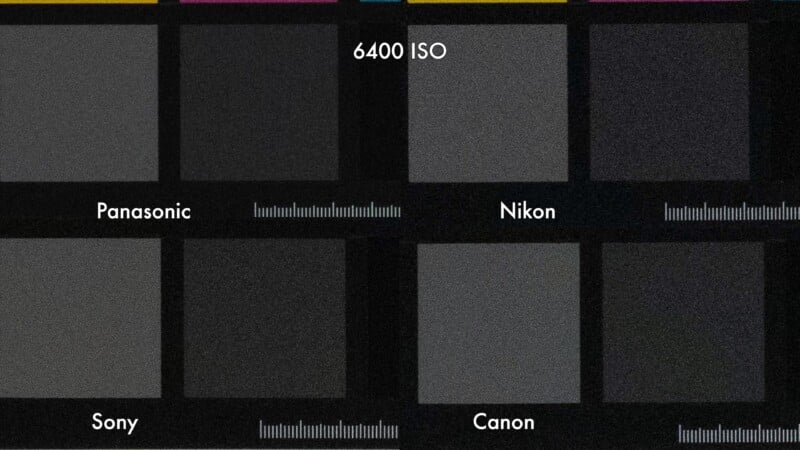 You can see the strongest levels of noise in the darker shadows.
Dynamic Range
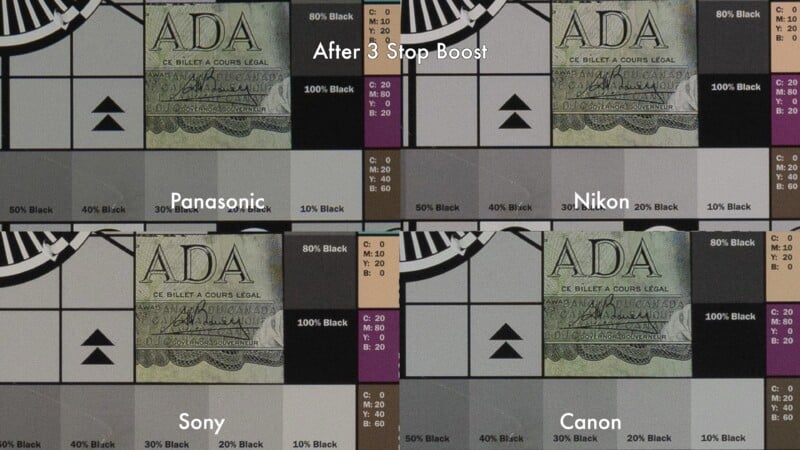
Dynamic range is essentially the full spectrum of exposure from the darkest shadows to the brightest highlights that can be captured in one exposure. For our test, we shot all the cameras at the lowest ISO possible and severely underexposed the images. We then boost the exposure in post and see what results we get in the shadows. This allows us to mostly just see the overall shadow detail and noise floor of each camera, but it is still a useful metric. We also refer to the excellent dynamic range tests by Bill Klaff on the Photons to Photos website to get the whole picture.
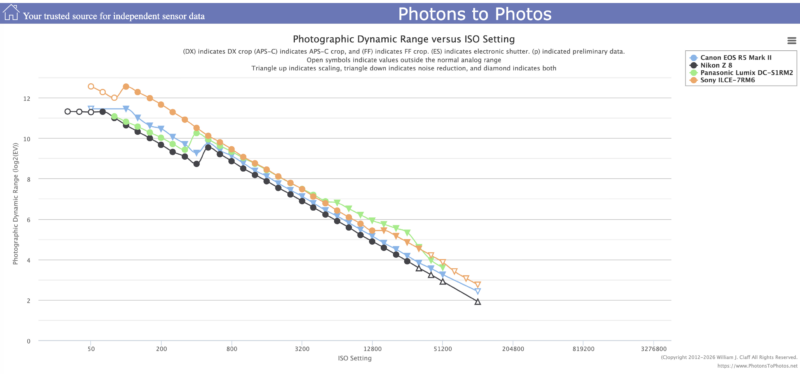 Sony has a DR advantage at lower ISO settings.
The Panasonic turns out an excellent result but tends to lack a little detail after the exposure push, but it has an excellent overall ability to capture both light and dark tones at the same time. Both the Nikon and Canon have a similar look, but the Nikon tends to have slightly less noise without having to resort to any noise reduction baked in. The Canon does deliver more dynamic range than the Nikon, but it has to apply that noise reduction to do so, which hurts a little in the detail department. The Sony sensor is again delivering a great combination of resolution, detail, and low noise. More importantly, the Sony sensor seems to be stacking two exposures together to optimize range across the exposure spectrum. It can do this thanks to a strong processor unit and a faster scanning sensor. At higher ISO settings, the playing field levels, but otherwise, the Sony is delivering the best results.
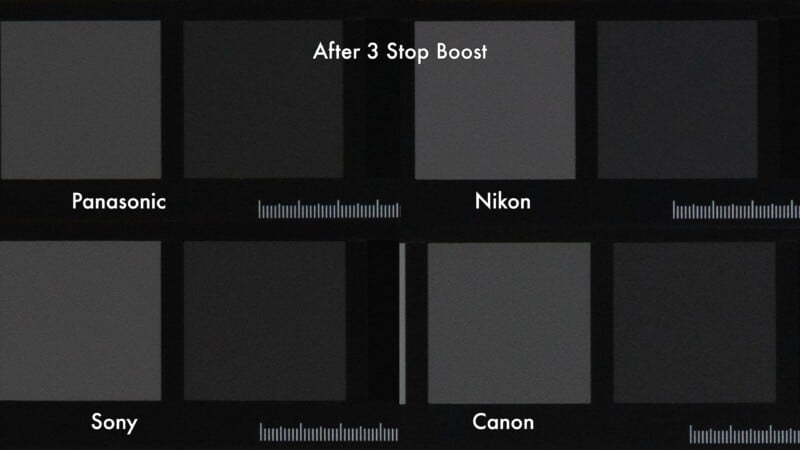 We boosted the files of heavily underexposed images to test DR.
We Are Spoiled
The photographic industry has reached a point where every brand of camera will take high-resolution images that you can be proud of. The differences in overall result are very minor in practical terms, and a true and complete evaluation of a camera’s functionality has to take into account far more than just image quality nowadays. However, if anything is clear to see from these tests, it is that Sony is enjoying a marked benefit when it comes to dynamic range and overall resolution. It doesn’t look like that factor will change anytime soon, either.
 No matter how you compare all four cameras, the image quality is outstanding from each one.
Regardless of whether you would require that extra detail or not, it’s definitely a good time to be shopping for a high-resolution camera body. I would recommend taking a hard look at features and specs beyond the sensors when deciding between all four of these competitors. Some are better than others for certain kinds of photography, but universally, they all create astoundingly good images.
What's Your Reaction?
 Like
0
Like
0
 Dislike
0
Dislike
0
 Love
0
Love
0
 Funny
0
Funny
0
 Wow
0
Wow
0
 Sad
0
Sad
0
 Angry
0
Angry
0











Comments (0)