

5 Book Series More Brutal Than Game Of Thrones (& Actually Finished)


Published Jul 11, 2026, 6:00 AM EDT
Tom is a Senior Staff Writer at Screen Rant, with expertise covering everything from hilarious sitcoms to jaw-dropping sci-fi epics.
Initially he was an Updates writer, though before long he found his way to the TV and movies team. He now spends his days keeping Screen Rant readers informed about the TV shows of yesteryear, whether it's recommending hidden gems that may have been missed by genre fans or deep diving into ways your favorite shows have (or haven't) stood the test of time.
Tom is based in the UK and when he's not writing about TV shows, he's watching them. He's also an avid horror fiction writer, gamer, and has a Dungeons and Dragons habit that he tries (and fails) to keep in check.
Sign in to your ScreenRant account
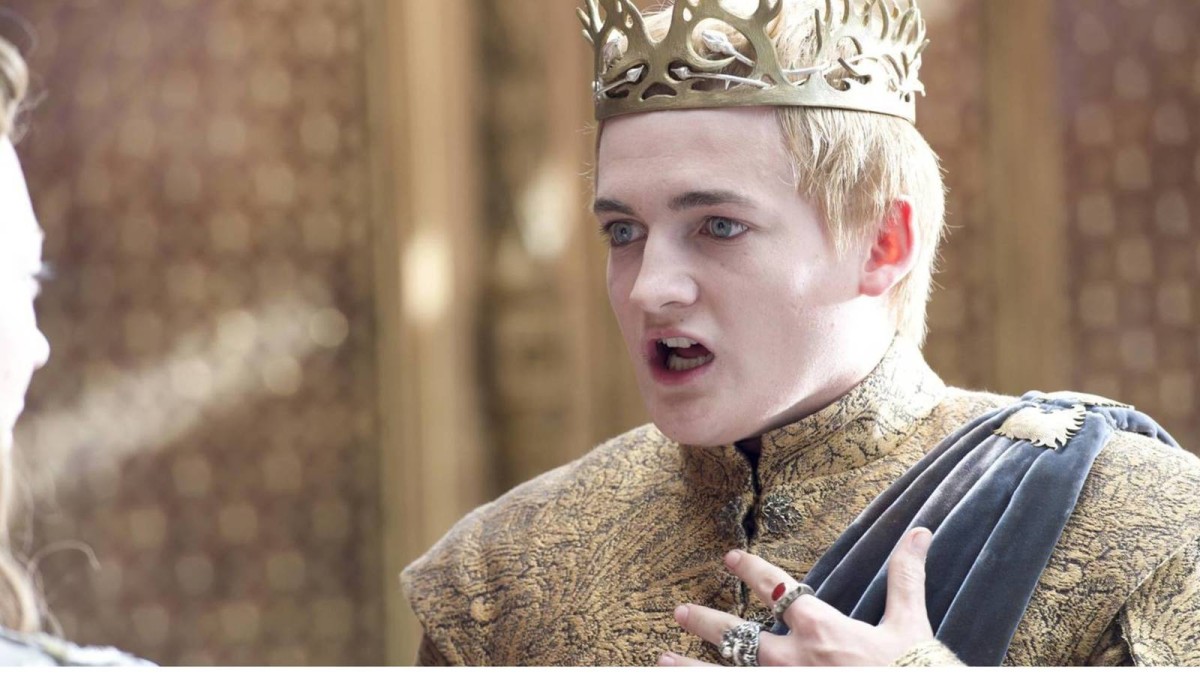
Even before the release of HBO's Game of Thrones, George R.R. Martin's A Song of Ice and Fire novels were notorious for their darkness and brutality. Martin injected a level of violence and despair into his work the fantasy genre had rarely seen, and fans couldn't get enough of it. Shocking deaths, visceral moments of torture, and the constant threat of annihilation made a deliciously grim cocktail readers found addictive.
However, while the A Song of Ice and Fire novels are just as dark, if not darker, than the Game of Thrones TV show, but they're far from the most brutal works of fantasy literature out there. Several fantasy series make Westeros look relatively tame by comparison, delving into genocide, institutionalized oppression, and profound philosophical despair. Better still, unlike George R.R. Martin's unfinished saga, every one of these series has a proper ending.
The Broken Earth Trilogy By N.K. Jemisin (2015-2017)

Written by N.K. Jemisin and starting with 2015’s The Fifth Season, The Broken Earth trilogy has a truly unique setting. It takes place on a continent constantly devastated by catastrophic geological disasters known as Seasons. Humanity survives through a rigid social caste structure designed to endure these apocalyptic events, and at the center of the story are orogenes, individuals capable of manipulating seismic energy. Rather than being celebrated, however, these gifted people are feared and enslaved.
This slavery is a key source of inherent brutality in The Broken Earth trilogy. In Westeros, slavery largely exists in Essos but is opposed in the rest of the world. In The Broken Earth, however, the oppression of orogenes is the foundation of civilization itself. The level of cruelty is difficult to stomach, and it’s all sanctioned and institutionalized. Children born with these abilities are hunted and separated from their families to serve a regime built on abuse and coercion, and their trauma drives the narrative.
This systemic violence is made all the darker due to how hopeless the plight of characters like Essun and Damaya feels. No safe kingdoms are waiting beyond the horizon and no victories can permanently change the status quo. If anything, the trilogy's emotional devastation often hits even harder than its violence because it depicts suffering that has become normalized by society. The result is a despair-filled fantasy epic that makes even the darkest moments of Game of Thrones seem like cozy reading.
The First Law Trilogy By Joe Abercrombie (2006-2008)

Kicking off with 2006’s The Blade Itself, Joe Abercrombie's The First Law trilogy initially appears to revolve around familiar fantasy archetypes: a barbarian warrior, a powerful wizard, and a nobleman destined for greatness. However, within a few pages it dismantles any expectations its premise may leave. Every character is deeply flawed, and every institution, no matter how noble its purpose seems on the surface, is corrupt. In addition to its violence, it’s this inherent nihilism that makes The First Law trilogy a far darker fantasy series than ASOIAF.
A Song of Ice and Fire is ultimately about heroes in a corrupt kingdom striving to make a difference, but The First Law abandons the idea that virtue can meaningfully change the world. Martin's novels are brutal, but they still contain genuinely honorable figures trying to improve society. Abercrombie's universe is defined by cyclical trauma and systemic corruption. The powerful remain powerful, and the vulnerable continue to suffer regardless of who wins.
No character illustrates this better than Sand dan Glokta, a former war hero turned crippled inquisitor and torturer. Through his perspective, readers experience the ugly mechanics of state-sanctioned cruelty through a lens of constant pain and physical degradation. The trilogy's violence is so routine that, by the end, readers will almost be desensitized to it. Combined with Abercrombie's deeply cynical worldview, The First Law stands as one of fantasy's defining grimdark works and one of the few series that can genuinely make Westeros appear lighthearted and hopeful by comparison.
The Prince Of Nothing Trilogy By R. Scott Bakker (2003-2006)

The premise of R. Scott Bakker's The Prince of Nothing trilogy makes it immediately clear that it’s going to be a dark read. It follows several factions as they become entangled in a holy war and an approaching apocalyptic threat. With this setup, it takes ASOIAF’s fascination with military campaigns and warring kingdoms and puts one of the bleakest and most intellectually devastating spins on it that literary fantasy has ever produced.
A key aspect that separates The Prince of Nothing trilogy from A Song of Ice and Fire is its complete rejection of hope. George R.R. Martin balances his darkest moments with humor and occasional acts of heroism. From the opening chapters of the first book, 2003’s The Darkness That Comes Before, onwards, Bakker offers no such comfort. His world is dominated by religious fanaticism and is rife with psychological manipulation and systematic brainwashing. Violence is not simply a consequence of political ambition in the world of Eärwa. It is woven into the very fabric of existence.
The battles in The Prince of Nothing books are horrifyingly brutal, but its true darkness lies in its ideas. Bakker constantly questions whether free will exists and whether humanity is capable of escaping its own destructive impulses. Genocide and mass suffering occur on an almost unimaginable scale, creating a sense of overwhelming despair that few fantasy series can match. The Prince of Nothing doesn't merely rival the brutality of Game of Thrones, it makes the Seven Kingdoms look merciful.
The Poppy War Trilogy By R.F. Kuang (2018-2020)

A blend of fantasy and real-world history, R.F. Kuang's The Poppy War trilogy is set in the fictional Nikkara Empire, which is heavily based on 20th-century China. The narrative centers on Rin, a war orphan who escapes poverty by earning a place at an elite military academy. What begins as a coming-of-age fantasy quickly transforms into something far darker, as Rin discovers her connection to ancient gods and becomes embroiled in a devastating conflict.
Unlike A Song of Ice and Fire, whose conflicts draw inspiration from medieval history, The Poppy War directly incorporates some of the worst atrocities of the twentieth century, such as the Rape of Nanking. The series mirrors events from the Second Sino-Japanese War, including fictionalized versions of chemical warfare and genocide. The violence is both graphic and impossible to separate from real-world suffering, making it feel far more immediate than the horrors of Westeros.
Not only is The Poppy War trilogy incredibly violent, but Rin's gradual moral collapse is heartbreaking. While Martin's characters often walk a line between heroism and villainy, R.F. Kuang has crafted a protagonist who becomes both victim and perpetrator. Rin's trauma leads to addiction and increasingly catastrophic decisions that create a relentlessly bleak portrait of war. Every triumph comes at a horrific cost, and every act of vengeance only deepens the cycle of suffering. Few fantasy series depict the human consequences of war with such devastating honesty, even ASOIAF.
The Broken Empire Trilogy By Mark Lawrence (2011-2013)

Renowned fantasy and sci-fi author Mark Lawrence's The Broken Empire trilogy begins with 2011’s Prince of Thorns, which follows Jorg Ancrath, a young prince who abandons courtly life to lead a violent band of outlaws. The premise initially sounds similar to many grimdark fantasies, but Jorg is unlike almost any protagonist in modern fantasy. He is intelligent, charismatic, and utterly ruthless, pursuing power through cruelty and manipulation with almost no regard for morality. Essentially, The Broken Empire is what Game of Thrones would be if Joffrey Baratheon was the protagonist.
The Broken Empire trilogy feels especially bleak compared to ASOIAF because, unlike George R.R. Martin, Mark Lawrence offers no moral counterbalances. Characters such as Jon Snow, Brienne of Tarth, and even Jaime Lannister ultimately strive to become better people. Jorg is the main narrative voice in Broken Empire, and he actively embraces brutality and frequently chooses the darkest possible path to achieve his goals. The result is a story where the “hero” himself is one of the most frightening figures in the narrative.
The world around Jorg is equally merciless, with nearly every character in The Broken Empire trilogy driven by greed or revenge. There is little romanticism to be found in Lawrence's setting. It is a filthy, lawless landscape where survival often requires abandoning morality altogether. For readers who thought A Song of Ice and Fire was unforgiving, The Broken Empire pushes grimdark fantasy into even bleaker territory.
What's Your Reaction?
 Like
0
Like
0
 Dislike
0
Dislike
0
 Love
0
Love
0
 Funny
0
Funny
0
 Wow
0
Wow
0
 Sad
0
Sad
0
 Angry
0
Angry
0







Comments (0)