

After being sidelined, Boeing's Starliner to get starring role in NASA's spaceflight plans
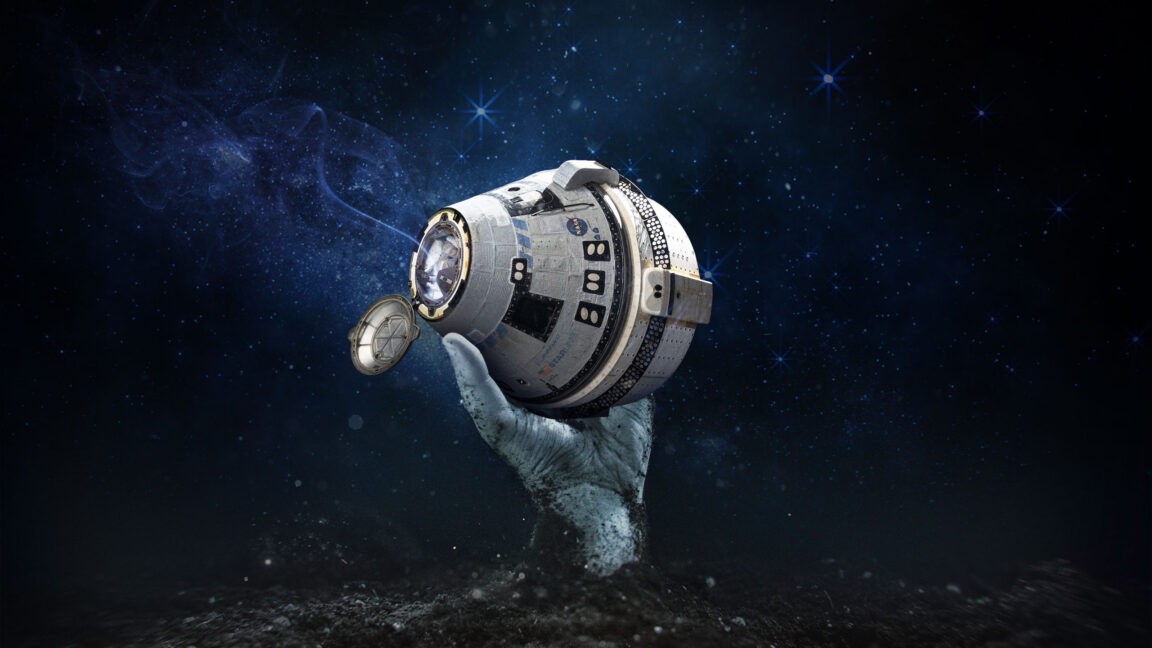
“They should fly their capsule. The government paid a lot of money for that.”
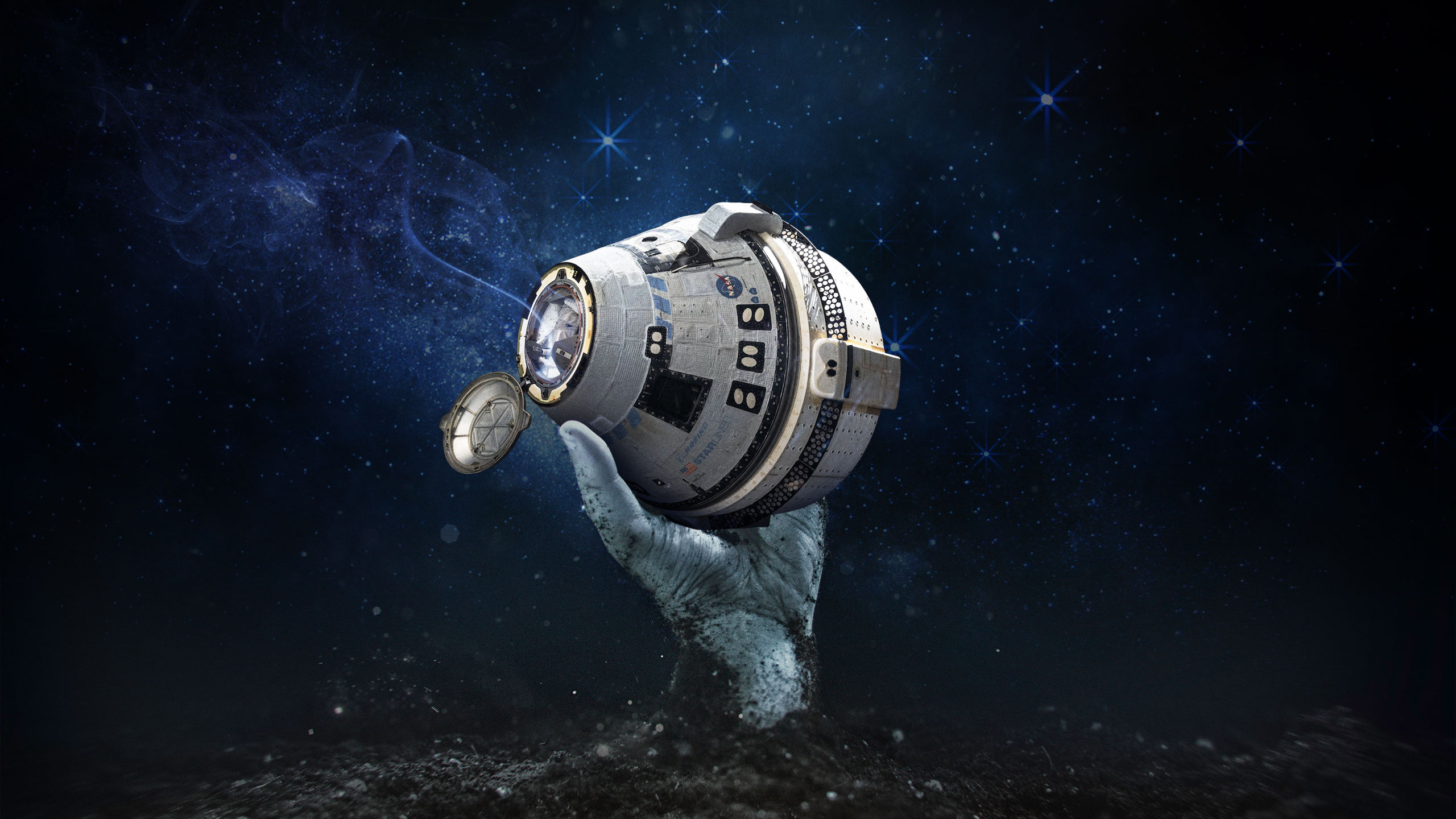
Starliner is getting a helping hand from NASA. Credit: Aurich Lawson | Getty Images
Starliner is getting a helping hand from NASA. Credit: Aurich Lawson | Getty Images
As it contemplates a future without access to SpaceX’s Crew Dragon spacecraft, NASA will make some key moves to ensure that Boeing’s Starliner spacecraft, which has a decidedly checkered record in spaceflight to date, is safer and can continue flying after its Atlas V rocket retires.
Multiple sources confirmed to Ars that as early as next week, NASA will announce that it will order two additional Starliner crewed missions from Boeing, pay some of the costs to fix the spacecraft’s thruster issues, and provide support to certify the spacecraft’s launch on a new rocket.
NASA is taking these steps after SpaceX made clear in discussions with space agency officials in recent months that it intends to retire the Crew Dragon vehicle by 2030, if not before. Crew Dragon is presently the only operational spacecraft NASA has available for routine astronaut missions to low-Earth orbit.
SpaceX would not commit to flying Dragon longer
After long signaling it privately, SpaceX has begun to publicly confirm its intentions to wind down the Dragon program, a remarkable move given that the vehicle began flying humans just six years ago. However, the company is seeking to pivot toward its much larger Starship rocket, with the intent of launching its more lucrative Starlink satellites and a new megaconstellation focused on orbital data centers.
This week, on the All-In Podcast, SpaceX President and Chief Operating Officer Gwynne Shotwell was asked if the company would respond to demand for Crew Dragon and keep flying the vehicle “for some time.”
Shotwell would not commit to that. “We’re not retiring it today, for sure,” she replied. Then Shotwell suggested that Boeing should really step up and deliver. “There is another provider,” she said. “Boeing has been paid, I think, probably more than we have been paid to develop their human capsule. So we’re just gonna let them have some business. They should fly their capsule. The government paid a lot of money for that.”
NASA did, indeed, pay a lot for the Commercial Crew program. Dating to 2010, for development and certification of their vehicles, NASA has paid SpaceX approximately $3.1 billion and Boeing $5.1 billion. SpaceX has been the critical provider. With Dragon, the company has launched 13 crewed missions to the International Space Station for NASA, with its next one set for October. All flights to date have been successful.
Starliner has really struggled
By contrast, Boeing has struggled mightily to bring the more expensive Starliner vehicle into service for NASA. Starliner experienced numerous issues on uncrewed test flights in 2019 and 2022; most seriously, thruster issues nearly led to the catastrophic loss of two astronauts during the spacecraft’s first crew test flight in June 2024. As a result, in February, NASA formally classified the 2024 flight of Starliner as a “Type A” mishap. The NASA astronauts on this flight, Butch Wilmore and Suni Williams, ultimately had to be returned safely to Earth on a Crew Dragon vehicle.
As part of this review, new NASA Administrator Jared Isaacman said the space agency also shared some of the blame for the near-disaster.
“Starliner has design and engineering deficiencies that must be corrected, but the most troubling failure revealed by this investigation is not hardware,” Isaacman wrote in a letter to the NASA workforce at the time. “It is decision-making and leadership that, if left unchecked, could create a culture incompatible with human spaceflight.”
NASA released a 311-page report detailing the findings of an investigative team that looked into the mistakes made by both Boeing and NASA. But despite all of this, half a year later, NASA is returning to Boeing to take a central role in its human spaceflight program.
The Commercial Crew program was developed as a fixed-price program, which means that after receiving an agreed-upon payment from NASA, the private companies are responsible for delivering crew-capable spacecraft through NASA’s rigorous certification process. Because of its ongoing challenges with Starliner, Boeing has already taken in excess of $2 billion in charges.
But Ars now understands the space agency will provide some funding—it’s not clear how much—to Boeing to resolve the propulsion system issues experienced by the spacecraft in its last two flights. Critically, NASA will also help pay to certify an additional launch vehicle for Starliner. The Atlas V rocket, assembled by United Launch Alliance but which inconveniently uses Russian engines, is near retirement. There are six rockets left—one of which will be used for the uncrewed Starliner 1 test flight, and then five subsequent crewed missions.
There will likely be a competition for a new launch vehicle, which will almost certainly come down to United Launch Alliance’s Vulcan and Blue Origin’s New Glenn vehicles.
NASA has limited options
Why would NASA go to these lengths to keep Starliner in the game? There have been questions about Boeing’s commitment to Starliner in recent years, given its financial losses. Boeing might well have thrown in the towel. So it’s possible that NASA is meeting Boeing halfway to keep a needed spaceflight capability going. (It also helps that Boeing has excellent lobbyists.)
But NASA had limited choices given that SpaceX has repeatedly indicated that its plans to retire Dragon by 2030 are more than aspirational. Although the Dragon development program was financially backed by NASA, SpaceX has contractually fulfilled its obligations with the Dragon missions to the space agency. SpaceX can therefore do as it pleases with Dragon.
So if NASA wants to maintain a presence in low-Earth orbit, it needs a crew vehicle beyond 2030. In July, Ars wrote about how panic was setting in among companies seeking to develop private space stations in low-Earth orbit, where NASA is expected to be an anchor tenant after the end of the International Space Station. As they finalized plans for their stations, the companies were finding that SpaceX would not give them bids for crew transportation, and Boeing was not committing to a price for the 2030s, either. So they were building private space stations with no way to get people there, or back.
With this action, NASA is providing some security to private space station operators that at least one provider will be available, although the lack of competition raises some pricing concerns. Will Boeing be a considerate monopolist?
Not all bad for Blue
NASA does potentially have one other option. Although it has said little publicly, Blue Origin has had a dedicated team working on a crewed “Space Vehicle” for several years that will launch on its New Glenn rocket. According to sources familiar with the program, design work on this vehicle is well advanced along with demonstration work such as cabin pressure-vessel manufacturing, extensive parachute testing, in-house thermal protection system testing, life support systems, and more.
The space agency could have opened a new competition to Boeing, Blue Origin, and possibly other wild cards, such as The Exploration Company, for crewed missions in the 2030s. It appears the agency had no appetite for this and its associated costs, though, so soon after the Commercial Crew competition a decade ago.
Nevertheless, the potential to fly Starliner on Blue Origin’s New Glenn is real—and potentially valuable to the company beyond launch contracts.
Were Boeing to decide to fly Starliner on New Glenn, it would essentially give Blue Origin a “free” certification of its rocket for human missions, which can be a costly and time-consuming process. Boeing and NASA would also need to build a crew launch arm and other facilities for human missions, which Blue Origin could also use for its Space Vehicle in the future.
As commercial space station providers look to control costs, the more powerful New Glenn rocket may also have another benefit. It could potentially launch both a crewed spacecraft and a cargo vehicle, such as Northrop’s Cygnus, into orbit at the same time, saving launch costs. It is not clear that Vulcan would have this dual-payload capability.

Eric Berger is the senior space editor at Ars Technica, covering everything from astronomy to private space to NASA policy, and author of two books: Liftoff, about the rise of SpaceX; and Reentry, on the development of the Falcon 9 rocket and Dragon. A certified meteorologist, Eric lives in Houston.
What's Your Reaction?
 Like
0
Like
0
 Dislike
0
Dislike
0
 Love
0
Love
0
 Funny
0
Funny
0
 Wow
0
Wow
0
 Sad
0
Sad
0
 Angry
0
Angry
0








Comments (0)