

CineStill 50D Is a Perfect Slow Speed Film for Bright Summer Days
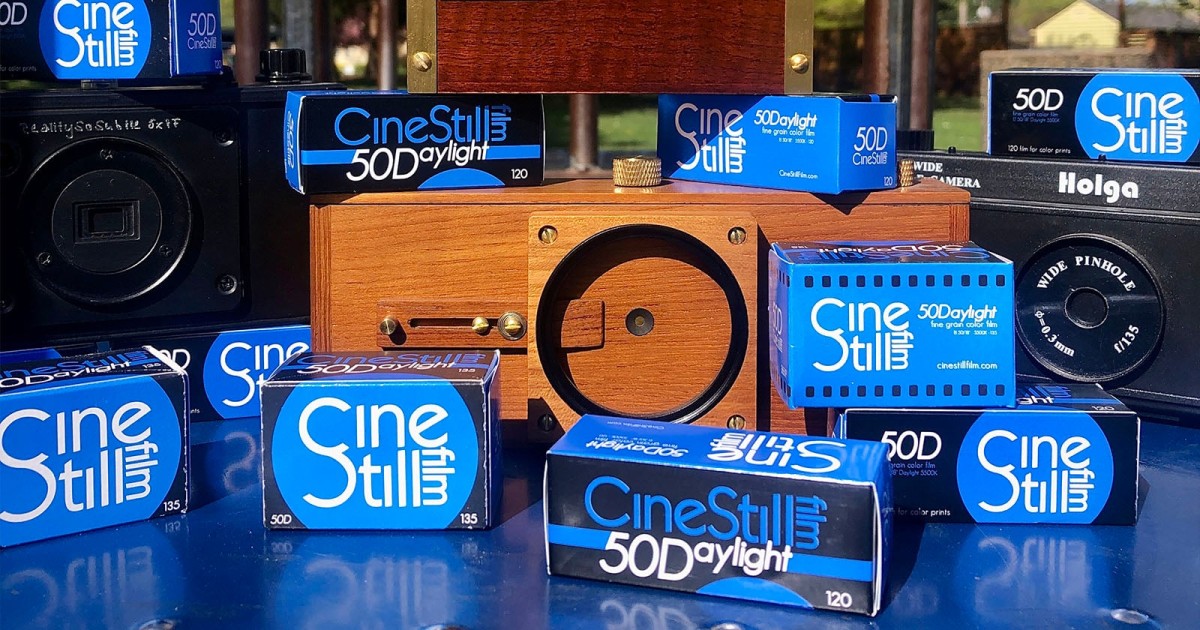
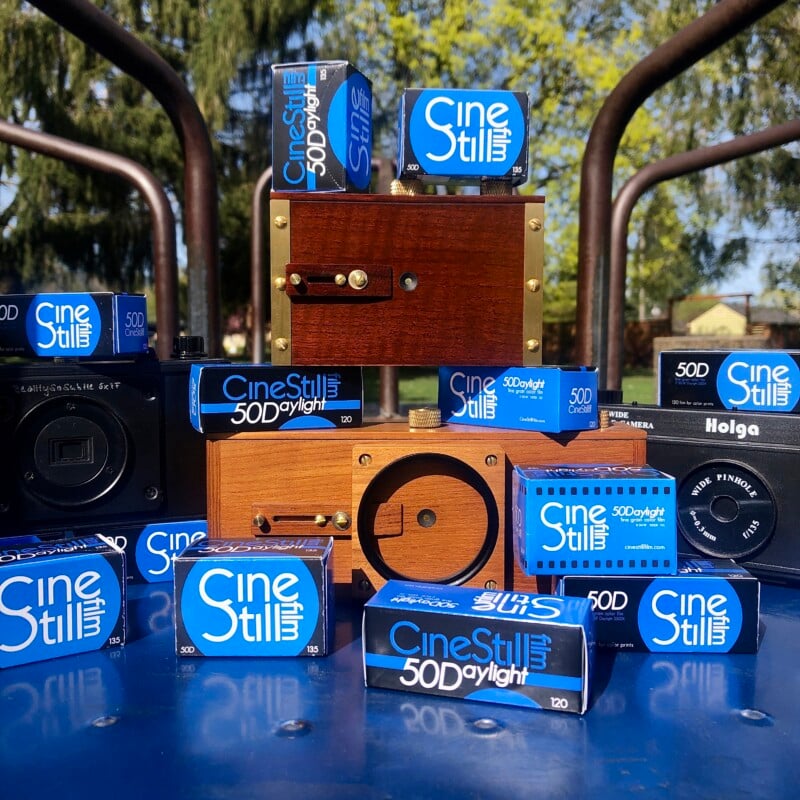
Cinestill 50D is the less popular sibling to Cinestill’s 800T and 400D emulsions. Because 50D often gets passed over in favor of those other two, we figured it would be a great film to feature on Film Friday. It is a different and lovely film in its own right and deserves a bit more attention than it receives.
Cinestill 50D is Kodak Vision3 50D (otherwise known as Kodak 5203/7203) color negative motion picture film. Cinestill acquires the Vision3 50D film from Kodak and then uses their process to remove the film’s Remjet (Removable Jet-black) layer, allowing the film to be easily processed by any lab in C-41 chemistry. We’ll get into that in a bit more detail below. The result of this “conversion” is that a lot more still photographers out there get to experiment with an emulsion that had previously been used only by motion picture photographers.
 Shot on a Canon AE-1 | Photo by Annie Buckles
So what’s the deal with Cinestill 50D and why should we be interested in this film? The quick overview is Cinestill 50D brings a bit of that cine look to your favorite still camera. The 50D emulsion is noted for a lovely pastel color palette, very fine grain and wonderful exposure latitude. The “D” in its name references the fact that it is daylight-balanced. It also produces some of the most accurate skin tones we have seen in a color negative film. In some cases we like it even better than Portra.
 Shot on a Canon AE-1 | Photo by Annie Buckles
 Shot on a Fujifilm G617 | Photo by Zeb Andrews
Look at sample images and you will see that 50D renders a softer, more pastel, color palette. Its saturation is definitely lower than Kodak Ektar and even Portra. The same is true with its contrast. It is a great film stock to use if you don’t want overly saturated colors to distract from where you want your audience paying attention. This is the film’s big selling point. If you want to produce a result that is softer in contrast, more subtle in its saturation, grab a roll of 50D and head on out.
Cinestill 50D has a few other noteworthy qualities though. Being an ISO 50 film also means it is exceptionally fine grained. While we feel like Kodak Ektar still seems a bit less grainy, Cinestill 50D is right up there, making it a great film for enlargements, especially if shot in medium format. The other feature of this film comes from having that Remjet layer removed. We’ll explain a bit more about that layer in the next paragraph, but for the moment we’ll tell you that the effect of not having that layer on this film is halation, where highlights pick up a halo-like glow to them. Light is passing through the film, reflecting off the pressure plate inside the camera and bouncing back into the emulsion, causing a diffuse, red glow around the bright areas of your composition. If you expect and plan for this, you can use Cinestill 50D to produce some interesting and unique images. Just take a look at our samples below.
 Shot on a Hasselblad 500CM | Photo by Zeb Andrews
 Shot on a Hasselblad 500CM | Photo by Zeb Andrews
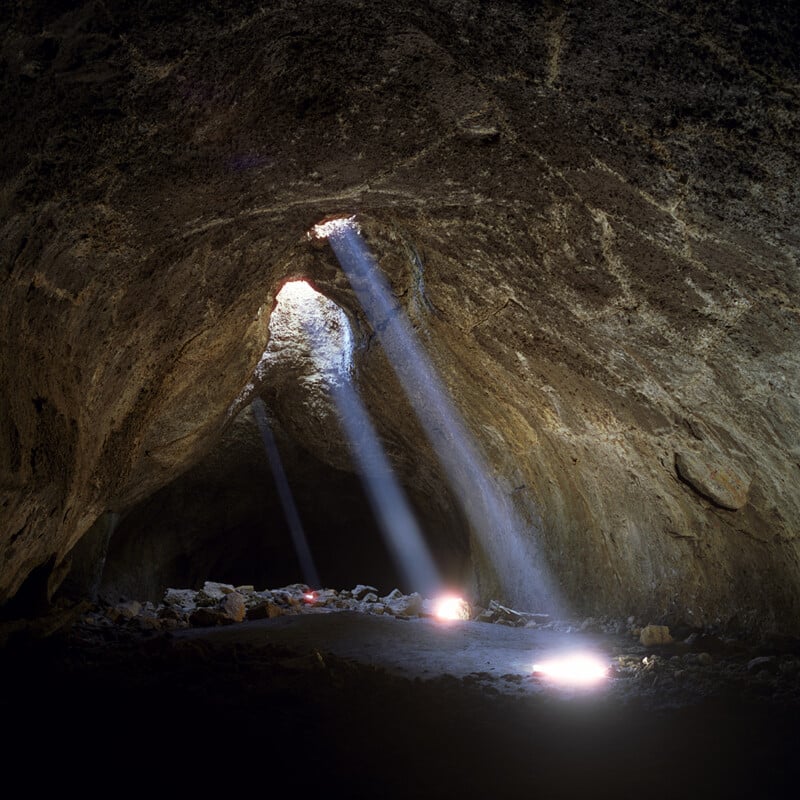 Shot on a Hasselblad 500CM | Photo by Zeb Andrews
There are a few things you should know about this Remjet layer. It is present in most motion picture films to help facilitate the passage of the film through motion picture cameras. Film in these cameras has to travel at high speeds, so the Remjet layer acts as a lubricant, reduces static electric build-up, and serves as an anti-halation layer. The Remjet layer needs to be removed during processing of the film, though.
Normally, color negative motion picture film is developed via a process called ECN2 (Eastman Color Negative 2) which includes a step for rem-jet removal. While this emulsion can be cross-processed in C-41 chemistry, most labs don’t have the ability to remove the rem-jet layer, and failing to do so can ruin the chemistry in the machine, the roll of film, and any other film passing through the machine at that time. In other words, it is bad, bad news to drop off a roll of motion picture film that still has its Remjet layer at your local lab. Please don’t do this or you will be very sorry indeed!
 Shot on a Minolta SR-T 101 | Photo by Ashley Jennings
 Shot on a Pentacon 6 TL | Photo by Zeb Andrews
Cinestill has devised a means for removing this Remjet layer and then respooling the film for easy consumption by all of us film photographers and equally easy developing by film labs (like yours truly). Even with the Remjet layer removed, 50D film is still natively meant to be processed in ECN2 chemistry. As such when it is developed in C-41 you are technically cross-processing it and the results are slightly different than if you had stuck with the originally intended process. Specifically, 50D film developed in C-41 is a bit less saturated and with lower contrast than if it had been developed ECN2. The differences are fairly slight and Cinestill has comparisons on their website if you go looking. Colors in ECN2 are a tad brighter and more vivid, but just by a bit. It is worth keeping in mind though as you have the option when shooting this film of going either the C-41 or ECN2 routes.
 Shot on a Pentacon 6 TL | Photo by Zeb Andrews
 Shot on a Pentax 67 | Photo by Zeb Andrews
 Shot on a Pentax 67 | Photo by Zeb Andrews
We should also note that this film often benefits from post-scanning color correction. Whether it is because of the effects from cross-processing it in C-41, or maybe the base of the film itself is different from other color negative C-41 films, we find that Cinestill 50D frequently scans a bit yellow and sometimes green. Likewise, we have seen a lot of examples online touting uncorrected scans that look cold and blue. Since this film is daylight balanced, it ought to produce accurate and neutral colors, but we usually have to do a bit of correction to get there after we have made our initial scans. We would encourage doing this, for once you remove that slight color cast you are rewarded with a nice color palette indeed. Of course, color is highly subjective so you are welcome to handle this film however you’d like, we just wanted to throw that out there because it sometimes gets overlooked how much impact a scanner’s initial color balancing can have and some film photographers don’t realize how much more flexibility they can enjoy with their images.
 Shot on a Pentax 645 | Photo by Zeb Andrews
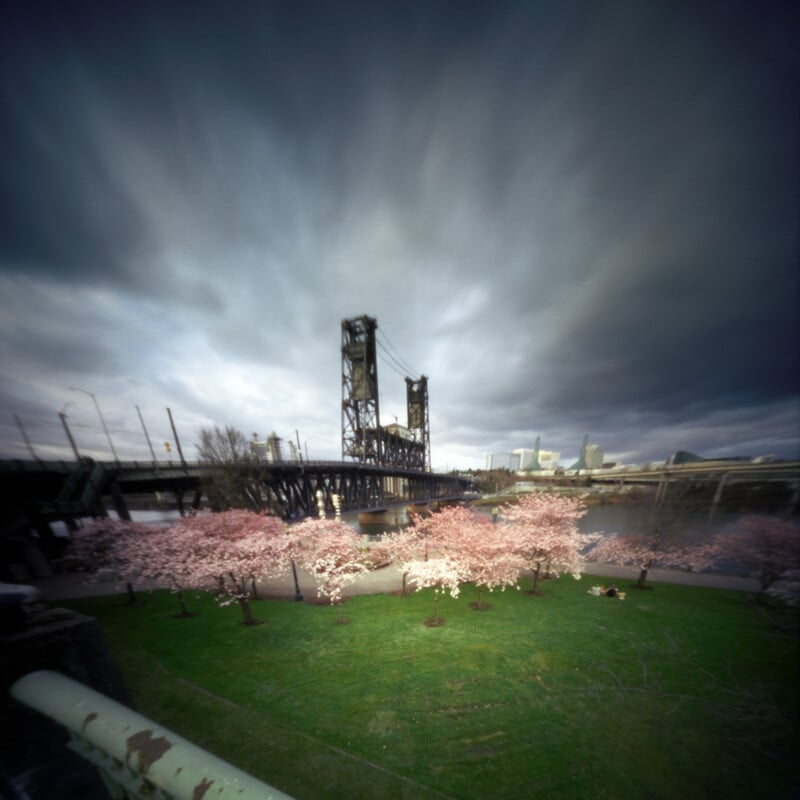 Shot on a Reality so Subtle 6×6 Pinhole Camera | Photo by Zeb Andrews
And that is our rundown of this film. To be honest, we don’t use it all that much ourselves but not for any good reason. When we find ourselves in a Cinestill mood we typically reach for the 800T. But having dedicated more time to the 50D version, we are finding that we are liking it more and more. It has proven a particularly well-suited film for pinhole cameras where its lower ISO lends itself naturally to long exposures. We have also been using it with ND filters in our other cameras and leaning into that same slow speed element of 50D. This Film Friday feature is as much motivation for us to learn this film better as it is inspiration for you!
We encourage you to try some of this film if you have not yet experimented with any of the Cinestill stock. Go find some scenes that benefit from delicate colors. Go photograph some bright highlights and get that distinct red halo. Go drag those shutter speeds and blur some motion! However you do it, go shoot some film!
This story is brought to you by Blue Moon Camera and Machine in Portland, OR. Blue Moon offers film, development services, printing, and even an ever-rotating line of film cameras and lenses. PetaPixel Members receive 10% off all lab services with Blue Moon: Join today!
Image creditsAll photos are individually credited and courtesy of Blue Moon Camera and Machine.
What's Your Reaction?
 Like
0
Like
0
 Dislike
0
Dislike
0
 Love
0
Love
0
 Funny
0
Funny
0
 Wow
0
Wow
0
 Sad
0
Sad
0
 Angry
0
Angry
0









Comments (0)