

How to Photograph People Who Hate Being Photographed
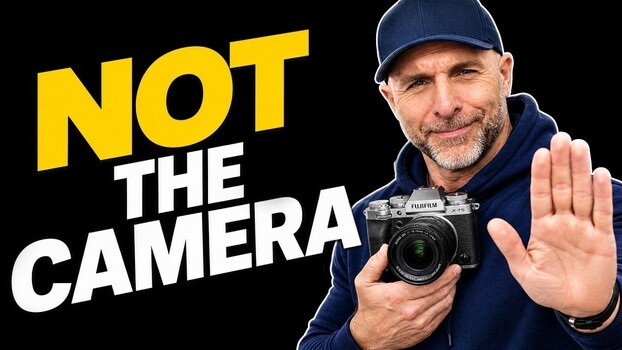
Your best portrait gear does nothing if the person sitting in front of the lens looks stiff and posed. That truth reshapes how you approach every shoot, and it costs nothing to apply.
Glyn Dewis walks through seven habits he built up through trial and error, all of them centered on the person rather than the camera. His starting point is simple: spend time with someone before you pick up any gear at all. Sometimes that means 10 or 15 minutes of conversation, sometimes a coffee beforehand just to feel comfortable in each other's company. Dewis traces the lesson back to his 39 to 45 Veterans Project, where he'd talk with people for a good while before shooting, purely because he wanted to hear their stories. When he looked at the results afterward, the pattern was clear. The more he'd talked with someone, the more they looked like themselves.
Getting a stranger to relax comes down to asking about their world, their work, their family, what they do at the weekend. Dewis points to a moment from the TV show "Surgeons at the Edge of Life," where an anesthetist calms a patient not by discussing the operation but by asking about their holidays and family. He keeps that conversation running straight through the shoot, too, with no silent "ready" moment before he presses the shutter. On a recent session with Harry Anderson, a potter in Lyme Regis, he simply asked Anderson to carry on smoothing a piece of pottery, glancing toward the camera every now and again while they kept chatting. Over-directing does the opposite, he warns. Telling someone to stand a certain way, put their hands there, or the worst offender, "look relaxed," can undo 20 minutes of ease in a single sentence.
The most useful principle here comes from outside photography entirely. Dewis references Batari's Box, a model he picked up teaching conflict management, which describes how your attitude drives your behavior, which shapes the other person's attitude and behavior, looping back around on itself. Show up stressed and that stress feeds the loop in the wrong direction, and no lighting setup pulls you out of it. Show up calm, even when you don't feel it inside, and the loop starts working in your favor. That's a technique worth carrying into any high-pressure situation where another person is reading you, from client meetings to team shoots to weddings, where nerves spread fast and quietly. His practical route to that calm is keeping the setup simple, especially the first time you photograph someone, and saving the clever lighting for a later session once you know each other. This connects to a wider shift in how a lot of working photographers now talk about their craft, where soft skills and client experience get treated as seriously as sensor specs.
Reading the person in front of you sometimes means throwing out the plan you arrived with. Dewis recalls a veteran who wore a shirt and bow tie day to day and offered, almost reluctantly, to put on his jacket and medals. He could hear that the man didn't really want to, so he photographed him as he was, and the pictures were far better for it. He also lands on a scheduling habit worth stealing: under-promise on time, over-deliver on the experience. Tell someone a shoot will take about an hour and a half, then be done in an hour. He heard stories during the Veterans Project of photographers who stayed for hours, exhausting the subject and never reading the room. Leave while people still want a bit more, not after they've had quite enough. Watch the full breakdown of all seven habits in the video above to see how Dewis puts each one into practice.
What's Your Reaction?
 Like
0
Like
0
 Dislike
0
Dislike
0
 Love
0
Love
0
 Funny
0
Funny
0
 Wow
0
Wow
0
 Sad
0
Sad
0
 Angry
0
Angry
0








Comments (0)