

I Can Forgive Doctor Who's Timeless Child, But Jodie Whittaker's Era Committed A Bigger Sin
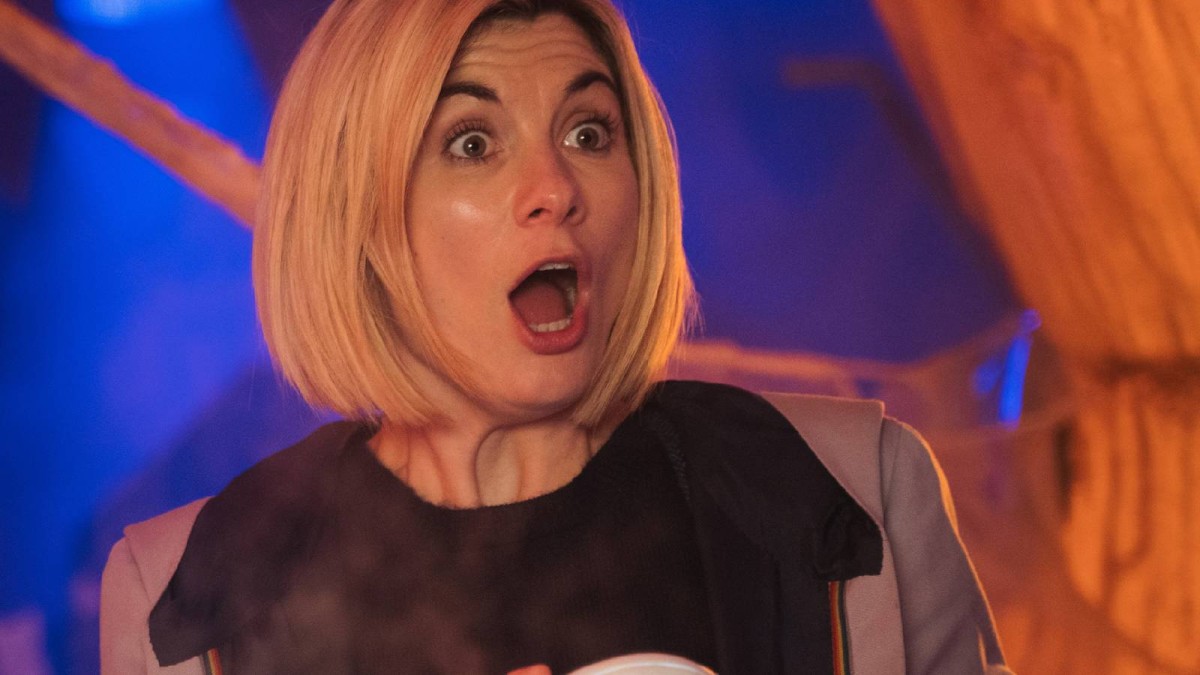
 Image via MovieStillsDB
Published Sep 10, 2026, 3:00 AM EDT
Craig began contributing to Screen Rant in 2016 and has been ranting ever since, mostly to himself in a darkened room. After previously writing for various outlets, Craig's focus turned to TV and film, where a steady upbringing of science fiction and comic books finally became useful. Craig has previously been published by sites such as Den of Geek.
Craig is an approved critic on Rotten Tomatoes.
LinkedIn: https://www.linkedin.com/in/craig-elvy-5b31a3381/
With Doctor Who fully in the doldrums at this point, it's hardly a secret that Jodie Whittaker's era isn't one of the show's most fondly-remembered periods. Not that Whittaker herself was ever anything less than brilliant, but divisive creative choices combined with an altered aesthetic and changes behind-the-scenes culminated in a period of transition that Chris Chibnall's tenure never quite came through, despite its not-always-appreciated bright spots.
It's broadly agreed that the Timeless Child was not one of those bright spots. After much build up, Doctor Who unleashed a twist that completely rewrote the show's backstory. While much has been said about the Timeless Child's problems and how Doctor Who was better off without it, Chibnall's intention to reignite The Doctor's aura of mystery is commendable. The basic idea of the Timeless Child is also simple enough to forgive, with the contention coming almost entirely from the twist's awkward execution and lack of payoff.
Whatever your opinion on the Timeless Child, at least there was a broadly decent idea behind it. Another key storyline from Jodie Whittaker's era, however, is harder to fathom.
Steven Moffat Spent His Entire Era Building Toward Gallifrey

One of the smartest tricks Doctor Who pulled with its 2005 revival was the Time War and the revelation of The Doctor as the last surviving Time Lord. The backdrop of that almighty temporal conflict not only informed The Doctor's personality during those early seasons, it successfully transformed The Doctor into some kind of mythical, godlike figure. By the time Russell T Davies handed the reins over to Steven Moffat, The Doctor had been fully reinvented as a lonely deity wandering the galaxy and trying desperately to fix his broken heart.
Wisely, Moffat recognized the 'woe is me, last of the Time Lords' shtick had a shelf life, and made plans to shockingly reintroduce Gallifrey. It's not overstating things to suggest that Steven Moffat's entire era was built around the grand return of Gallifrey. The crack in Amy's wall in episode 1 was a gateway to Gallifrey. "Silence Will Fall" was a reference to Gallifrey's return through that crack. The Doctor's name was the password to bring Gallifrey back from said crack. Trenzalore was the place where the merry crack of Gallifrey could be found.
Every long-term thread led directly to The Doctor's old planet, and the biggest stage of all was chosen for the climactic curtain-pull. The 50th anniversary, Doctor Who's biggest episode to date, with the entire story dedicated to revealing the final secrets of the Time War and how the Time Lords survived it.
The restored Gallifrey would be visited during Peter Capaldi's era, but Moffat more or less left his successor to unwrap the gift of what Doctor Who could be with Gallifrey in it again.
Gallifrey's Re-destruction Is Difficult To Understand

Doctor Who didn't just ignore Gallifrey after Steven Moffat's exit as showrunner, it destroyed the planet entirely. In fact, Doctor Who didn't just destroy Gallifrey, it destroyed Gallifrey offscreen. And a final insult: "It wasn't even your real home planet anyway."
The Timeless Child was a well-intentioned idea poorly executed, but Gallifrey's second death was an error from concept to completion. Steven Moffat's entire long-term narrative, not to mention the events of Doctor Who's big 50th anniversary, were rendered pointless, dismissed in a hand-wave because the Master had a tantrum. At the very least, Gallifrey could have collapsed due to some multi-season conflict running as a major storyline.
It's difficult to see what Doctor Who gained by killing off Gallifrey again. The Timeless Child reveal already felt massive without the destruction of The Doctor's home planet. Jodie Whittaker also never incorporated the Time Lord Victorious persona into her performance, so it's not like Doctor Who needed Thirteen to be the only Time Lord in town again for the sake of her characterization.

Release Date February 3, 2022
Network Prime Video
Showrunner Nick Santora
Directors Omar Madha, Carol Banker, Julian Holmes, Lin Oeding, M.J. Bassett, Norberto Barba, Stephen Surjik, Thomas Vincent
Writers Cait Duffy
-

-

Maria Sten
Frances Neagley
What's Your Reaction?
 Like
0
Like
0
 Dislike
0
Dislike
0
 Love
0
Love
0
 Funny
0
Funny
0
 Wow
0
Wow
0
 Sad
0
Sad
0
 Angry
0
Angry
0











Comments (0)