

Photographer’s New App Takes the Guesswork Out of Milky Way Photography


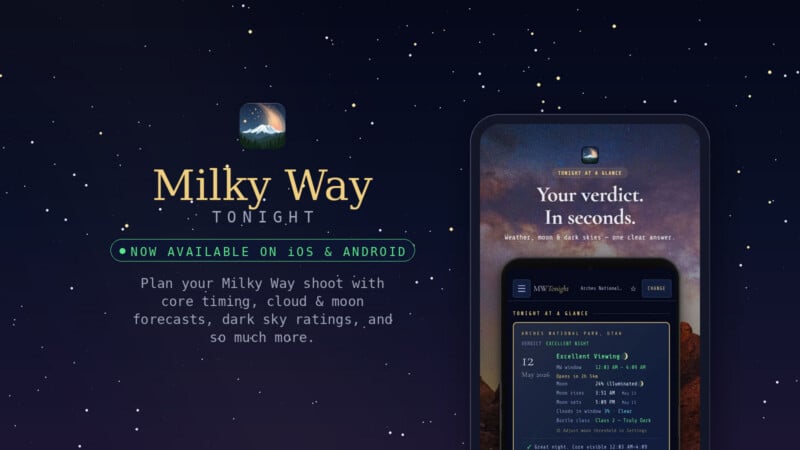
Many photographers love photographing the Milky Way, but few enjoy all the hassle that comes with it. Unpredictable seeing conditions, bad timing, and a pesky Moon are common friction points that prevent astrophotographers, especially novices, from succeeding. A new app, Milky Way Tonight for iOS and Android, is designed to streamline the entire process and take the guesswork out of Milky Way photography.
“At its core, Milky Way Tonight tells you whether or not it’s a good night to photograph the Milky Way. And if it’s not, when the next good night will be,” app creator, photographer Jack Fusco, tells PetaPixel.
Fusco says the app starts by analyzing the timing of the Milky Way core being above the horizon based on the user’s selected location. It then references the lunar phase, when the Moon rises and sets, and the hourly cloud forecast relative to the time when the Milky Way’s best shooting window is. The app then delivers a quick go/no-go verdict.
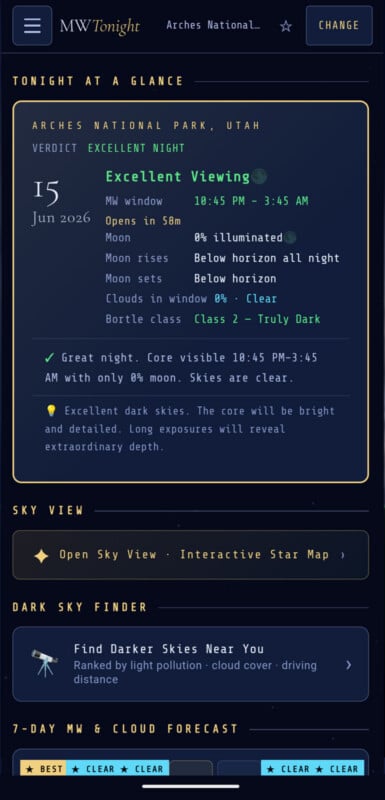
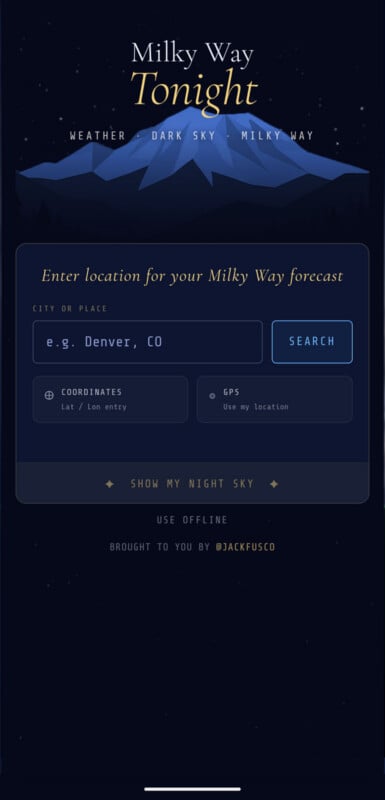
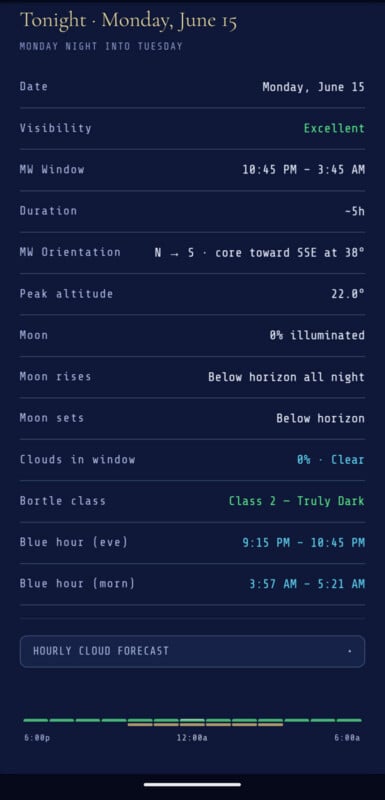
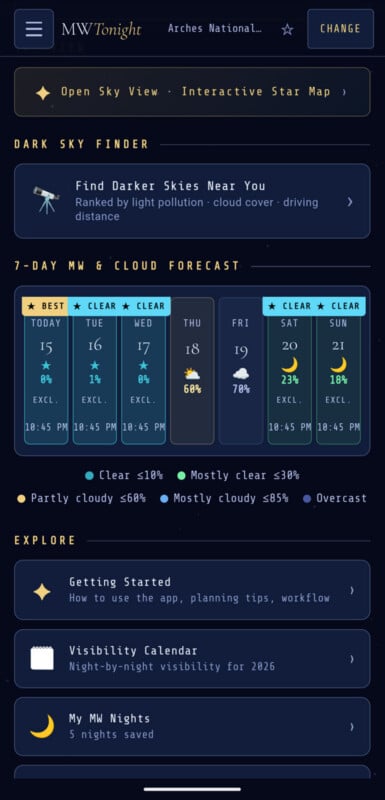
The app can also pull light pollution data for a given location using Dark Sky Finder, which can also be used to find a nearby dark area with a better cloud forecast.
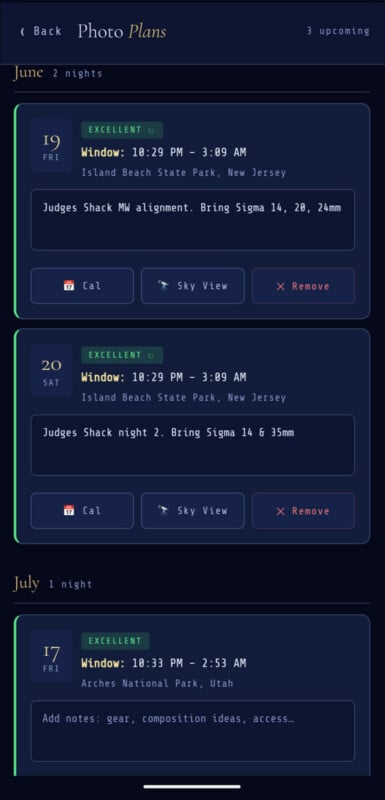
Milky Way Tonight is more than just an astro-focused weather forecasting app. Fusco has also given his app useful astrophotography tools such as a composition planner, an exposure calculator, and a monthly Milky Way visibility calendar. The app also includes an area to save Milky Way photography plans.
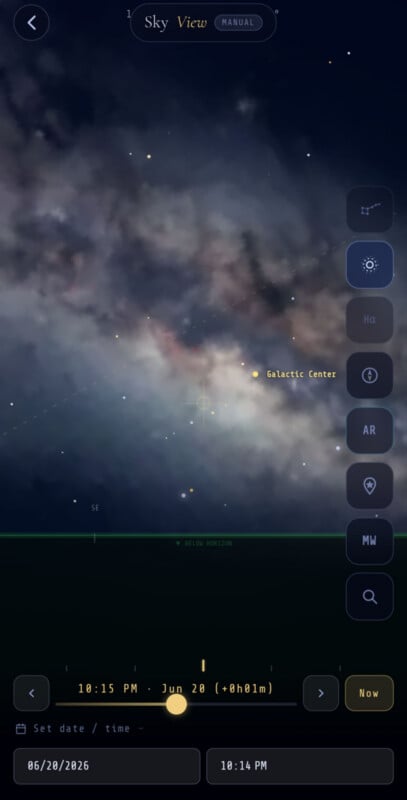
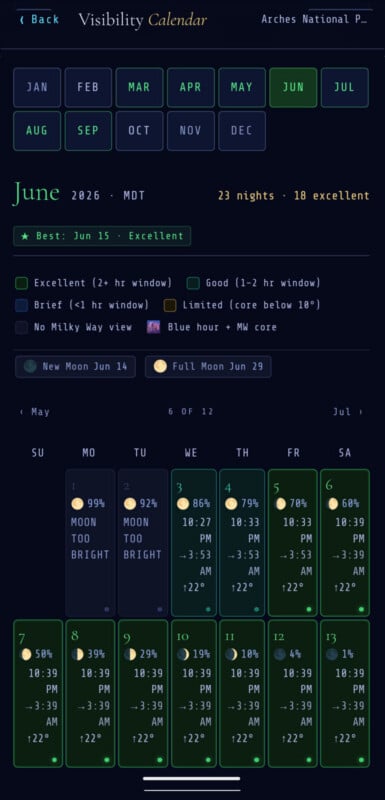

A built-in Sky View function can highlight regions of the sky with strong H-alpha emission, adding a lovely red and pink color to the night sky when using a camera modified for H-alpha. Sky View can also be used to visualize where and when the Milky Way will align with a specific composition, and users can save a reference photo in the app for future use.
“My hope, and goal, while working on this was to ensure the app stayed very easy to use and understand while giving you all the information needed,” Fusco explains. “So, while you can view all the critical info at a glance, you can tap in to get a very detailed view of all the data, too.”




Milky Way Tonight is available now on iOS and Android for a lifetime license cost of $7.99. There are no in-app subscriptions or add-ons.
The app can work very well alongside existing guides on PetaPixel about photographing the Milky Way, including this comprehensive guide written by landscape photographer Ross Schram von Haupt. A significant part of the planning process in the detailed guide involves determining the Moon phase, finding dark skies, and aligning the Milky Way for the perfect composition. These are all things that Fusco’s new app can help photographers with, both when planning at home and shooting in the field.
Image credits: Jack Fusco, Milky Way Tonight
What's Your Reaction?
 Like
0
Like
0
 Dislike
0
Dislike
0
 Love
0
Love
0
 Funny
0
Funny
0
 Wow
0
Wow
0
 Sad
0
Sad
0
 Angry
0
Angry
0











Comments (0)