

The Case for Going Back to an Old Project Instead of a New One
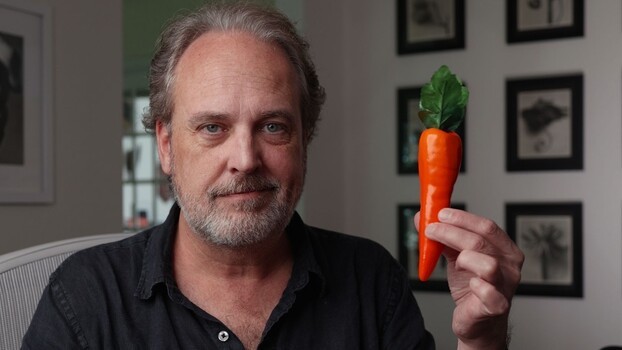
Four handmade photo books arrived in one week, and each one circled the same feeling: nostalgia, and the ache of things passing. That thread runs through this entire round of submissions, and it turns a simple show-and-tell into a quiet lesson on how personal work holds together.
Ted Forbes of The Art of Photography walks through four reader-submitted projects and pulls a working principle out of each one. Taryn Barling sent two books, "The Bunny and the Man-Child" and "Woodside Drive," both built around an empty nest and a return to a childhood home. Forbes connects her work to the Japanese concept of mono no aware, the awareness of impermanence and the bittersweet sense that stages of life inevitably pass. He points out that Barling shoots in two completely different mediums, digital in one book and archival plus instant photographs in the other, yet keeps the same voice across both. Very few people manage that.
Martin Kirchhofer's "Vintage Speed" started life years earlier as a small zine about vintage auto racing, and Forbes had suggested at the time that a bigger project was hiding inside it. Kirchhofer went back, reshot the event entirely on color film, and expanded the idea into a 104-page book. Forbes treats this as the more instructive example of the bunch: a photographer returning to a subject instead of chasing the next new thing. Revisiting an idea to dig deeper reads as a sign of maturity, a shift from shooting like a hobbyist to thinking like an artist. The zine was the seed, not the finish line.
Ally Bell's "Signal Loss" arrived in two forms, a book-zine hybrid and a tiny one-page mini zine folded from a single 8 1/2 by 11 sheet. Forbes uses the pair to make a claim worth testing on your own shelf: if an idea can't survive at small scale with only a handful of images, it probably isn't strong enough yet. He teaches this in his zine course by capping how many photos students can use early on, then loosening the limit once the core idea holds. He also cites the late Japanese photographer Eikoh Hosoe, who argued a book exists so the images aren't just dumped on a table. Sequencing, pacing, and narrative are what turn a stack of prints into a work of art.
There's a broader shift sitting underneath all of this that any photographer can put to use right now. The physical photo book and the handmade zine have quietly become the format where serious personal projects get resolved, at a moment when most images live for a few seconds on a phone screen and vanish. What Forbes keeps returning to across these four submissions is the same craft print culture rewards: the relationship between two pictures on a facing spread, and the choice of order. His point about Hadi Navid's "In Passing" makes this concrete. Navid sequenced decades of work from Iran, China, and North Korea by memory and feeling rather than by date, and Forbes notes the viewer almost never senses chronology anyway. Pairings carry the meaning. If you're sitting on years of images with no clear thread, that's the practical takeaway: stop organizing by the calendar and start organizing by how one frame speaks to the one beside it.
Forbes closes on a personal note. He's been making these mail time videos for roughly twelve years, has featured well over 500 photographers, and has kept every book, zine, and print ever sent to him. The current format, four projects twice a month, has started to feel stale to him, so he's putting it on a short hiatus to rethink what it becomes next. He's clear that he still wants to see and share your work, just in a form that feels more alive to make. One more episode in the existing format is already filmed and coming soon.
Watch the full breakdown in the video above to see all four books and hear Forbes lay out where mail time goes from here.
What's Your Reaction?
 Like
0
Like
0
 Dislike
0
Dislike
0
 Love
0
Love
0
 Funny
0
Funny
0
 Wow
0
Wow
0
 Sad
0
Sad
0
 Angry
0
Angry
0








Comments (0)