

The three biggest RAM makers have already sold all their 2027 output, report says, potentially stretching price woes into 2028
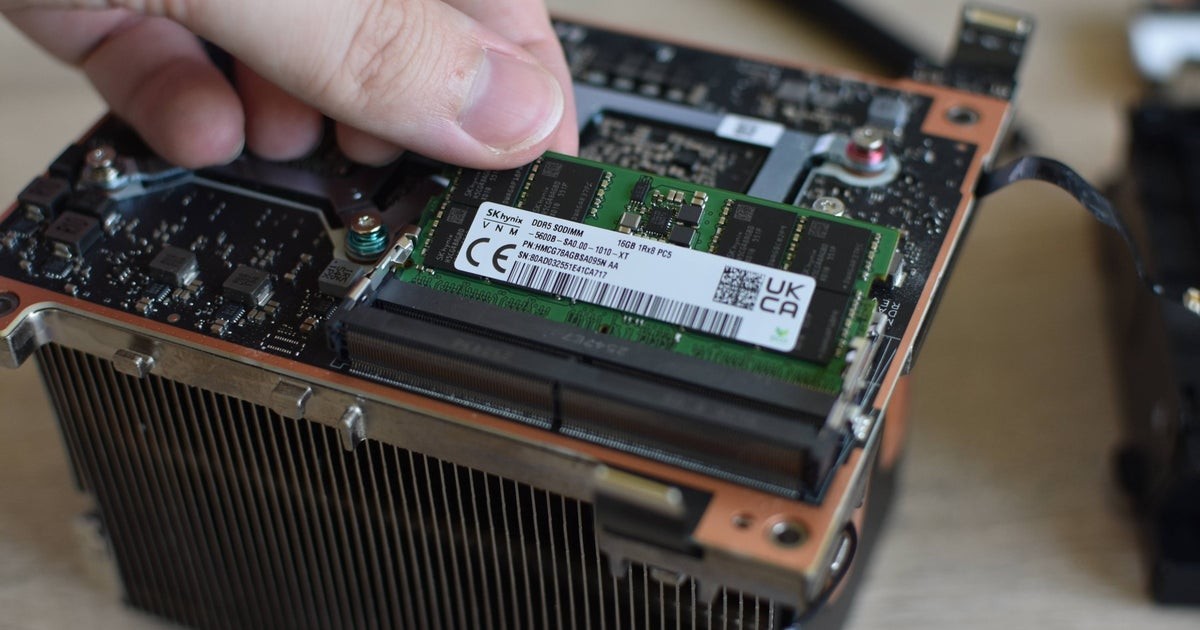
 Image credit: Rock Paper Shotgun
In today’s Demoralising But Not Remotely Surprising Hardware News, "industry insiders" are claiming that the Big Three memory makers – Samsung, Micron, and SK Hynix – have already sold not just their expected manufacturing output for 2026, but 2027 as well. The report, by Taiwanese newspaper DigiTimes and partially translated by TweakTown, effectively suggests that the large-scale supply of new RAM chips is already tapped out until 2028, likely extinguishing any lingering hopes that PC RAM, storage, and graphics cards will escape their current pricing nightmare anytime soon. Or, indeed, soonish.
This is the latest in a miserable streak of bad tidings for the ongoing components crisis. It follows Samsung’s own admission that prices will continue to rise throughout 2027, as well as remarks from Valve – whose Steam Machine and Steam Deck OLED have suffered badly from shortages and cost hikes – that the situation is primed to get worse before it gets better.
DigiTimes reports that Samsung, Micron, and SK Hynix, incidentally the three companies accused of price fixing in a recent US lawsuit, have sold out both their DRAM and HBM capacity - DRAM being the more common memory type to be found in conventional RAM modules and gaming-spec graphics cards, as well as higher-end SSDs. The article does say that NAND, storage hardware also made by all three firms, is in marginally better shape, with some 2027 output still available. This too, though, is expected to sell out before the end of this month, so even DRAMless SSDs could stay expensive for another two years. And don’t go expecting mechanical hard drives to offer an easy alternative, as they’ve also seen production selling out well in advance of the finished drives actually rolling off the line.
As we do the innately human thing of scrabbling around, excitedly pointing at longshot alternatives like they’re divinely promised saviours, many are looking to the growing Chinese manufacturing sector – particularly DRAM makers CXMT, who already have multiple fabrication facilities spun up. However, any trickle-down effect that diversified supply is likely to have on consumer PC parts will be slow at best. Only a few major PC manufacturers, namely HP, Asus, and Acer, have begun using CXMT memory, and only then in a handful of products for the Asia market.
Frankly, it’s also hard to see supply outpacing the demand of another growing field: the obscenely hardware-hungry AI industry that’s been driving these shortages to begin with. Data centres could very easily suck up those extra components just as they have with current DRAM stocks, as much as we (and plenty of the games industry) would like to see it, there’s nothing to suggest that bubble is about to pop.
What's Your Reaction?
 Like
0
Like
0
 Dislike
0
Dislike
0
 Love
0
Love
0
 Funny
0
Funny
0
 Wow
0
Wow
0
 Sad
0
Sad
0
 Angry
0
Angry
0











Comments (0)