

Why This 50mm f/1.2 Might Replace Your G Master
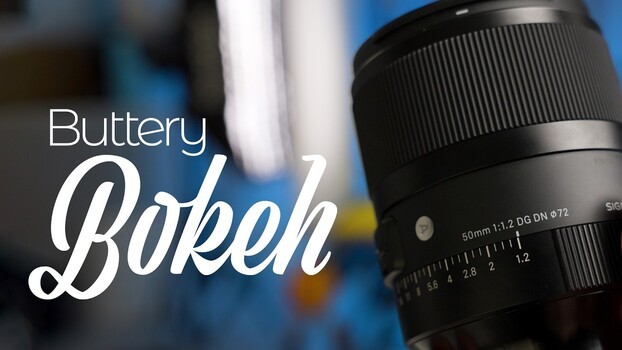
A 50mm f/1.2 with a 72mm filter thread sounds like a spec sheet mistake, yet that's exactly what Sigma built. A lens this fast usually forces a bigger front element and a heavier body, so seeing it stay compact changes the math on whether you carry a fast fifty at all.
Mark Duffy puts the new Sigma 50mm f/1.2 through real work, shooting it on paid commercial jobs and a portrait workshop rather than a lab bench. The design carries the familiar Art series layout, with an autofocus and manual focus switch, a customizable AFL button, and a de-click option for the aperture ring if you shoot video and want smooth transitions. There's also an aperture lock so you don't slide from f/1.2 to f/16 without noticing. Duffy points out the 13 aperture blades, more than the 11 that usually gets treated as the gold standard, which pushes the bokeh smoother than most lenses in this class.
The aperture range runs f/1.2 to f/16, standard apart from that wide end, and the minimum focus distance sits at 40 cm. Duffy sees that as useful for wedding shooters or anyone photographing rings and small items, and he notes you're close enough to macro territory that a couple of extension tubes would carry you the rest of the way affordably. Weather-sealing includes a rubber gasket at the mount, and the lens hood locks on with a button release so it won't get knocked loose. On flaring, he waves it off as a non-issue, saying Sigma lenses have never given him trouble there. Where he lingers is the rendering, the contrast and a warmth he says you can see against other glass but can't put on a chart.
The price is where this gets interesting for anyone weighing systems. Duffy puts the Sigma quite a bit below the Sony 50mm f/1.2 GM. That difference lands in the middle of a wider shift, where third-party lens makers have moved from budget alternatives to genuine first-choice glass on Sony E mount. Sigma opened its own I-series and Art lineups to full-frame mirrorless once Sony loosened access to the mount, and Tamron has done the same. For years, an f/1.2 prime was a flagship-only spec, a signal that you'd committed to the manufacturer's most expensive tier. A near-identical aperture from a third party at three-quarters the price means the decision now rests on rendering preference and autofocus confidence rather than whether you can afford the fast option at all. If you shoot portraits or events and already run Sigma primes, this slots in without asking you to relearn anything.
Duffy also mentions he leans on the Sigma 14-24mm f/2.8 for architecture, landscape, and astrophotography, which frames where his loyalty comes from. He owns several of the company's lenses and says this 50mm is one he'd happily add.
Watch the full test above to see the eye-tracking play out live and judge the bokeh for yourself.
What's Your Reaction?
 Like
0
Like
0
 Dislike
0
Dislike
0
 Love
0
Love
0
 Funny
0
Funny
0
 Wow
0
Wow
0
 Sad
0
Sad
0
 Angry
0
Angry
0











Comments (0)