

Enthusiast hacks Valve’s AMD-first gaming OS to run on Intel hardware — SteamOS boots on Intel Arc B580 desktop GPU, but it takes a Radeon card, installer workaround, and Resizable BAR fix
 (Image credit: Tom's Hardware)
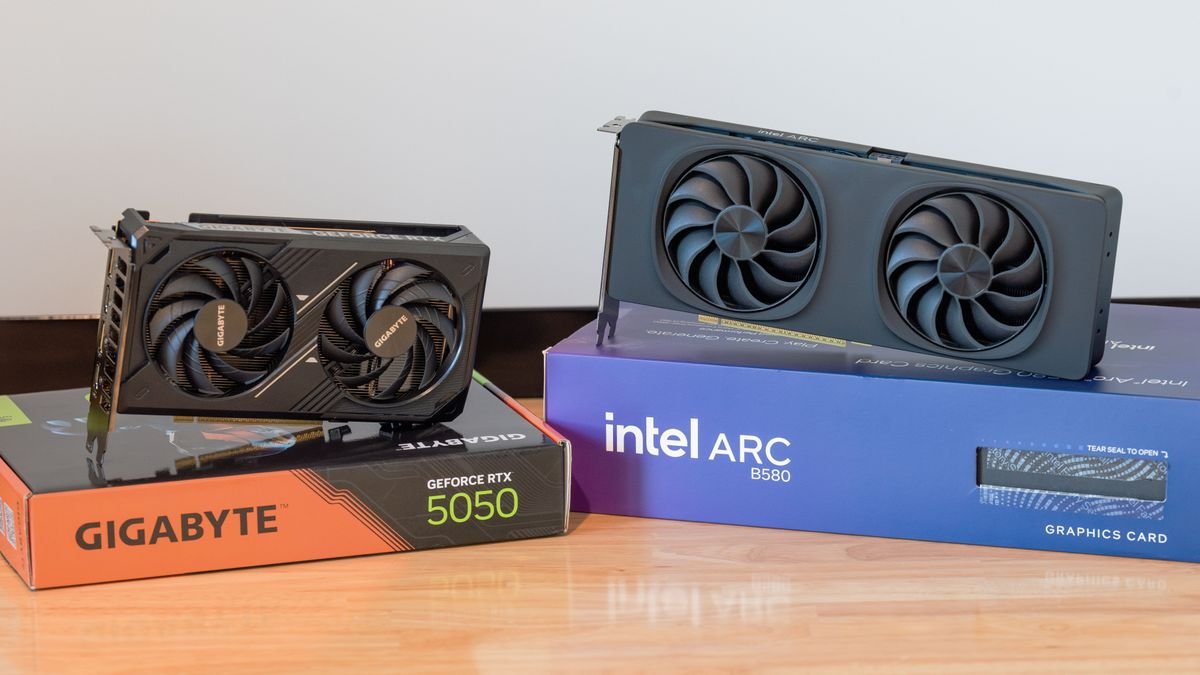
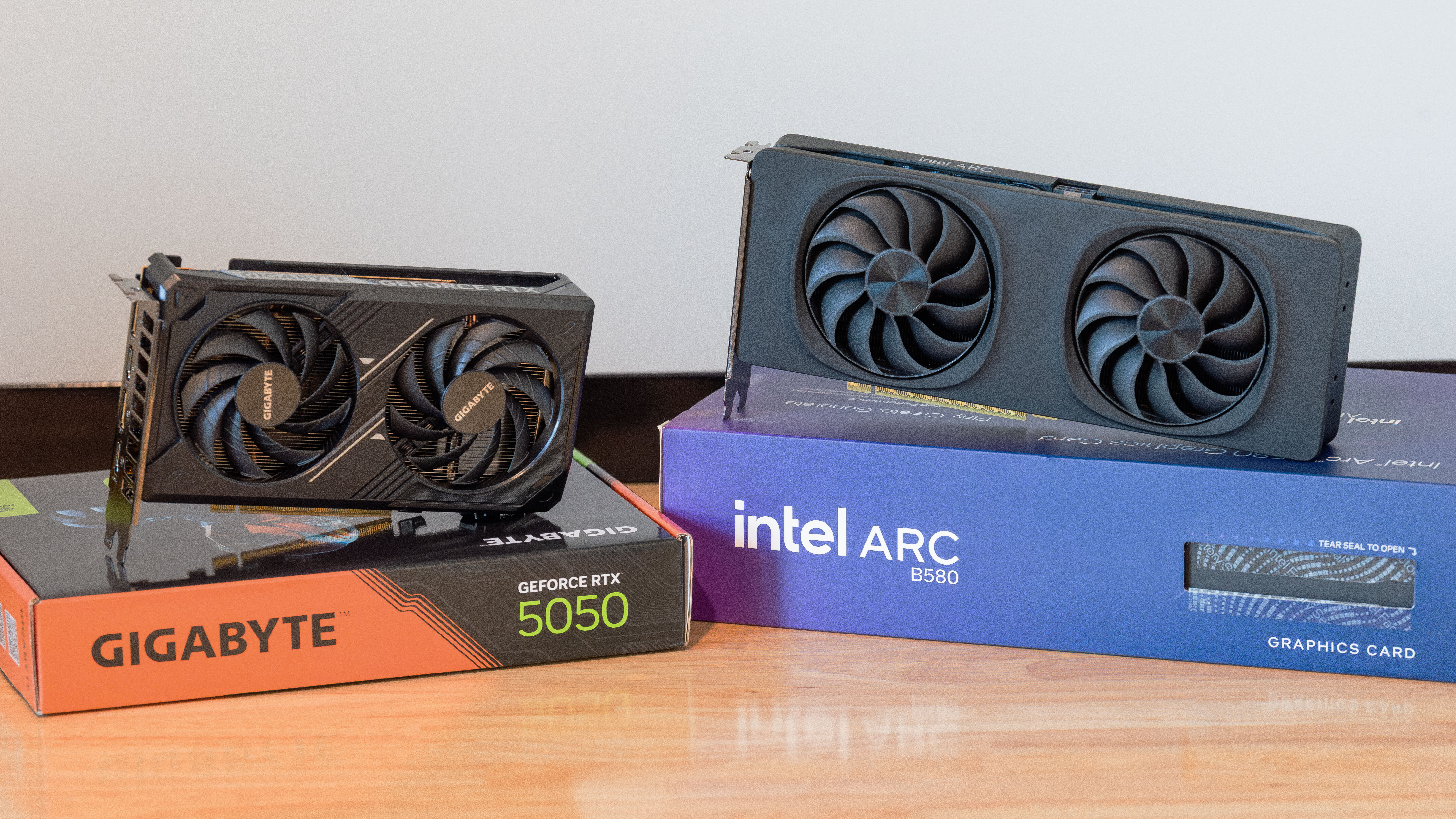
A Reddit user has demonstrated that SteamOS, Valve's Arch-based gaming operating system built around AMD silicon, can boot and run on an Intel Arc B580 discrete graphics card. Posting in the r/SteamOS subreddit as SaperPL, they documented the feat this week, pairing the Arc B580 with a Ryzen 5 5600 processor and getting Valve's full gaming-mode interface running on the card. The catch is that reaching that point took a Radeon card, a workaround for a broken installer, and a motherboard setting that nearly sank performance along the way.
Go deeper with TH Premium: GPUs
The opening exists because recent SteamOS beta builds quietly widened hardware coverage. Valve's changelog for the beta cites improved compatibility with recent Intel and AMD platforms, language clearly aimed at the wave of Intel-powered handhelds rather than desktop Arc cards. However, because the underlying Linux graphics driver is shared, the same Mesa stack that targets Intel handheld chips also recognizes a desktop Arc GPU. SaperPL's system reported the card as Mesa Intel Arc B580 Graphics (BMG G21) on Mesa 26.1.2, running SteamOS 3.9.
Getting there was not exactly plug-and-play. According to the post, newer SteamOS images that supposedly already include Intel Arc support failed during setup. These images did not boot into the older live desktop-style installer with install, update, and recovery options. Instead, they started installing directly to the drive, then failed when the system tried to connect to the network and pull its first update. SaperPL says the same problem occurred even when testing with a Radeon RX 9060 XT, suggesting the issue was not limited to the Arc B580 itself.
The workaround was suitably PC-gaming messy. SaperPL installed an older “repair-main” SteamOS build using the Radeon card, pulled the required updates, and then swapped in the Intel Arc B580. After that, SteamOS booted on the Intel GPU and ran from the Main channel. The poster also noted that users without a spare Radeon card may be able to follow a Steam Community workaround to bypass the installer’s update failure directly, although that still leaves the process firmly in enthusiast territory.
The first performance results were mixed. SaperPL tested 14 games, including Cyberpunk 2077, Helldivers 2, Marvel’s Spider-Man: Miles Morales, Indiana Jones and the Great Circle, Toxic Commando, Hades, Rocket League, and others shown in the SteamOS library screenshot. The interface itself appeared to behave well, with the poster saying the Steam library and store navigation worked smoothly, even while downloads continued in the background. Gamescope also reportedly worked similarly to Radeon, apart from a VRR bug on FreeSync displays with HDR that caused occasional flickering.
Frame rates were another story. Indiana Jones and Toxic Commando were initially barely above 20 FPS at 1080p on the lowest settings, while Helldivers 2, Cyberpunk 2077, and Spider-Man: Miles Morales fell far below comparable Windows benchmark videos. The poster’s monitoring suggested the CPU was not the main problem, with the GPU often sitting around 80% to 90% usage while the Ryzen 5 5600 hovered between roughly 30% and 50%.
The biggest culprit turned out to be a familiar one for Intel Arc users: Resizable BAR. SaperPL later updated the post to say that ReBAR had been disabled on the Asus B450 Strix motherboard after a CPU change. Once enabled, Cyberpunk 2077 and Spider-Man appeared to perform as expected, while Indiana Jones and Toxic Commando improved significantly, though still not fully matching Windows reference results.
Get Tom's Hardware's best news and in-depth reviews, straight to your inbox.
That detail matters because Intel Arc GPUs are unusually sensitive to Resizable BAR. Without it, the CPU cannot efficiently access the GPU’s full memory space, which can lead to severe performance drops. In this case, it made the difference between “SteamOS on Arc is broken” and “SteamOS on Arc is early, but actually running.” Even on Windows, leaving ReBAR off will severely impact Arc performance.
Commenters also pointed to another likely limitation: kernel support. Intel’s Arc drivers on Linux have improved considerably, but the newest performance work often depends on recent kernel and Mesa versions. If SteamOS’ Main channel is still behind the very latest Linux graphics stack, Arc performance may remain below what the same card can do under Windows or faster-moving Linux distributions.
For now, this is more proof of concept than a consumer-ready feature. Valve has not turned SteamOS into a general desktop gaming OS with clean support for every GPU, and the install path shown here is still too awkward for normal users. But the result is interesting. SteamOS running on an Intel Arc B580 suggests Valve's hardware net is widening, whether intentionally for desktop GPUs or indirectly through work on Intel-powered handhelds.
That could matter for future SteamOS machines. AMD remains the obvious fit for Valve’s gaming hardware today, but Intel has been pushing harder on Linux graphics support, and low-profile Arc cards could become attractive for small living-room builds if the driver stack matures.

Follow Tom's Hardware on Google News, or add us as a preferred source, to get our latest news, analysis, & reviews in your feeds.
Etiido Uko is a news contributor for Tom's Hardware covering the latest updates in big tech and the PC industry. He is a mechanical engineer and senior technical writer with over nine years of experience in documentation and reporting. He is deeply passionate about all things engineering and technology, and is an expert in gadgets, manufacturing, robotics, automotive, and aerospace.
What's Your Reaction?
 Like
0
Like
0
 Dislike
0
Dislike
0
 Love
0
Love
0
 Funny
0
Funny
0
 Wow
0
Wow
0
 Sad
0
Sad
0
 Angry
0
Angry
0







Comments (0)