

Gear Doesn’t Matter. Yes it Does
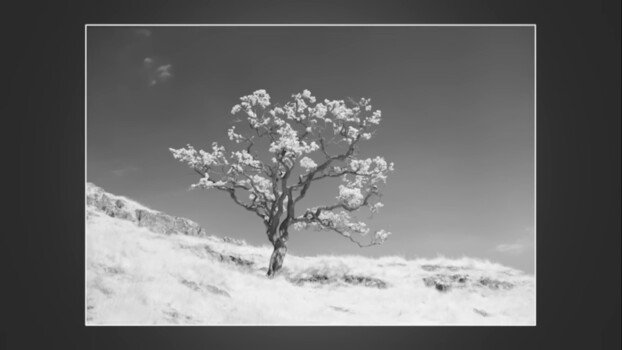
Trying different genres of photography can be both challenging and rewarding, especially when you either feel like a change or when the seasons force your hand. But have you ever considered infrared?
As a landscape photographer, I love being outdoors, and I also enjoy the early starts and late finishes. However, the summer in Ireland and the UK can be quite inhospitable, with 4:30 a.m. sunrises and 10 p.m. sunsets, and photographing during the long, harsh-light days is far from ideal. But that changes when it comes to infrared!
In this video from Thomas Heaton, he shows us just how powerful infrared photography can be, how it totally transforms the scene, and moreover how it enables you to not only shoot during clear blue sky days, but also produce some incredible images!
Infrared (IR) photography captures light frequencies beyond the human visual spectrum by bypassing the internal filters typically installed in standard digital cameras to block non-visible light. This is achieved either by utilizing specialized opaque lens filters that permit only IR wavelengths to reach the sensor, or by permanently removing the internal infrared-blocking filter through a camera conversion.
Because IR light behaves differently than visible light, the process relies on the specific reflective and absorptive properties of materials at a molecular level. Chlorophyll, for instance, is highly reflective, causing vegetation to appear bright white in a phenomenon known as the "Wood Effect," while water and clear skies absorb IR radiation, rendering them dark or black.
The results? Well, take a look at the video; I'm sure you will be pleasantly surprised!
Have you considered or photographed in infrared? Let me know how your experiences went in the comments below.
What's Your Reaction?
 Like
0
Like
0
 Dislike
0
Dislike
0
 Love
0
Love
0
 Funny
0
Funny
0
 Wow
0
Wow
0
 Sad
0
Sad
0
 Angry
0
Angry
0










Comments (0)