

‘Memorizu’ Review: A Tender, Artful Japanese Reflection on the Media That Keep Us Together
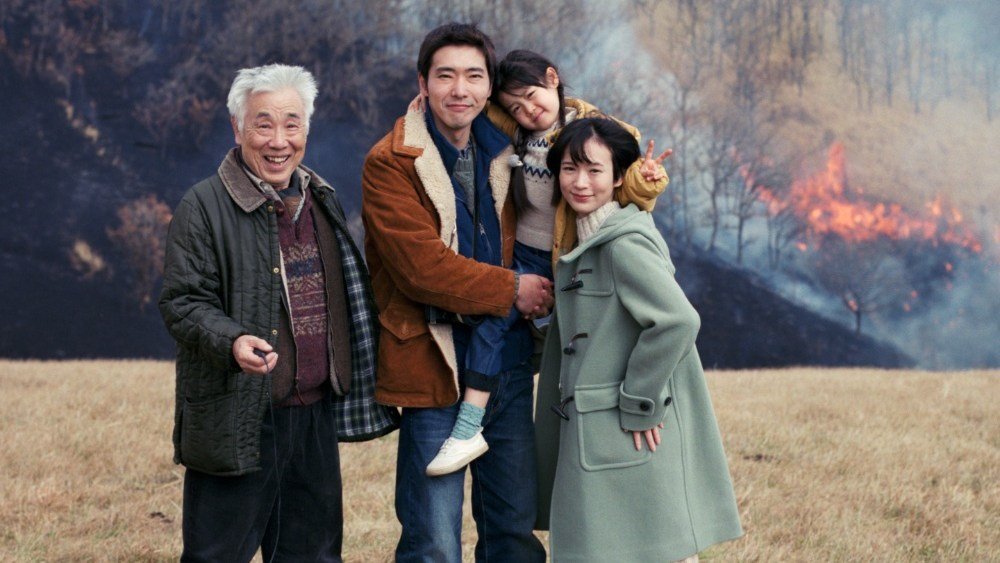
We all used to send postcards to show loved ones our location when we traveled away from home; some of us still do, though it’s a practice tinged with nostalgia. It’s more immediate, after all, just to send a photo, though somehow both more and less personal: What you lose in tactile, handwritten effort, you gain in the person’s actual perspective, the comfort of seeing what they’re seeing. As it follows a devoted father reluctantly separated from his family for two months, Miiku Sakanishi‘s deeply affecting debut feature “Memorizu” marvels at the forms of digital connection that are now woven into our closest relationships, finding the poetic intimacy in very ordinary communications.
A standout in Tribeca’s international competition, this elegantly reserved film won the festival’s award for best new director, and ought to similarly impress world cinema programmers and distributors as it continues along the fest circuit. Sakanishi’s gentle touch recalls contemporary compatriots like Koji Fukada (“Nagi Notes”) and Sho Miyake (“Two Seasons, Two Strangers”) in its quiet, hopeful humanism and stylistic restraint. Though “Memorizu” is narratively sparse, it holds attention with the well-observed clarity of its domestic portraiture and — aptly enough, for a story in which much depends on photography — the sharp, subtle beauty of its image-making.
It begins with a farewell — a protracted one, as Yuta (Tasuku Emoto) waits with his wife Yuki (Moeka Hoshi) and kindergarten-age daughter Hana in a ferry departures lounge, trying to explain to the mournfully incredulous girl that he’s about to be away for 60 days. Sakanishi captures a warm, affectionate family dynamic in brief, conversational strokes, switching between a calmly composed camera and the loose spontaneity of smartphone shooting: small moments of child-parent play and chatter captured for future reference. But the reason for Yuta’s departure, too, is family-oriented: On the remote island of Kyushu, Yuki’s elderly but working father Makoto (Issey Ogata) has broken his leg, and with Yuki unable to leave her job as a Tokyo tour guide, Yuta must go to look after the old man, and help him run his photography studio.
It’s a slightly awkward arrangement: The two men have a civil relationship but not a close one, and exchange little more than small talk as they fall into a placid but stilted domestic routine. Between the scarcity of the words exchanged between them and the autumnal tranquility of the Kyushu countryside, Yuta comes to enjoy the silence: His daily walks of Makoto’s dog become treasured hours, rich in regular sights (a hill, a horse, a fire) to appreciate alone and share with those back home. Yoichi Kamakari’s relaxed lensing drinks in the cool, dry landscape without making an overt spectacle of it, finding as much interest in a deep ochre towel hanging out to dry outside as in the hazy, smoke-blue mountains beyond.
Voicemails and video messages also serve to shorten the distance between Yuta and Hana in particular: a very different use of the camera from the formal portraits that continue to be Makoto’s bread and butter, though those, too, can become valuable facsimiles of human presence to some of his aging clients. Back in Tokyo, meanwhile, a good portion of Yuki’s job involves taking posed phone snaps of her mostly Chinese customers, which she does with unflagging cheer and good grace: In a different way from her father, she too is in the business of making and preserving memories.
Sakanishi has about as little interest in sentimentalizing older technology, however, as he does in maligning the new, instead seeing both as naturally continuous in their aiding of human experience and connection. All the actors are on the director’s mellow, humane wavelength, but Ogata — the grave but wry veteran of Edward Yang’s “Yi Yi” and Martin Scorsese’s “Silence” — is especially moving as a man aware that his profession, and indeed his life, will soon be things of the past. Modern screen culture is an easy target for satire, as many a film (from heavy-handed tracts like “Men, Women and Children” to more tension-oriented screenlife exercises) has identified the ways in which our devices distance us from each other; rather more unusual is one that celebrates the humble cellphone as an instrument of togetherness.
What's Your Reaction?
 Like
0
Like
0
 Dislike
0
Dislike
0
 Love
0
Love
0
 Funny
0
Funny
0
 Wow
0
Wow
0
 Sad
0
Sad
0
 Angry
0
Angry
0











Comments (0)