

The First-Ever Documentary Film Was ‘Moana’
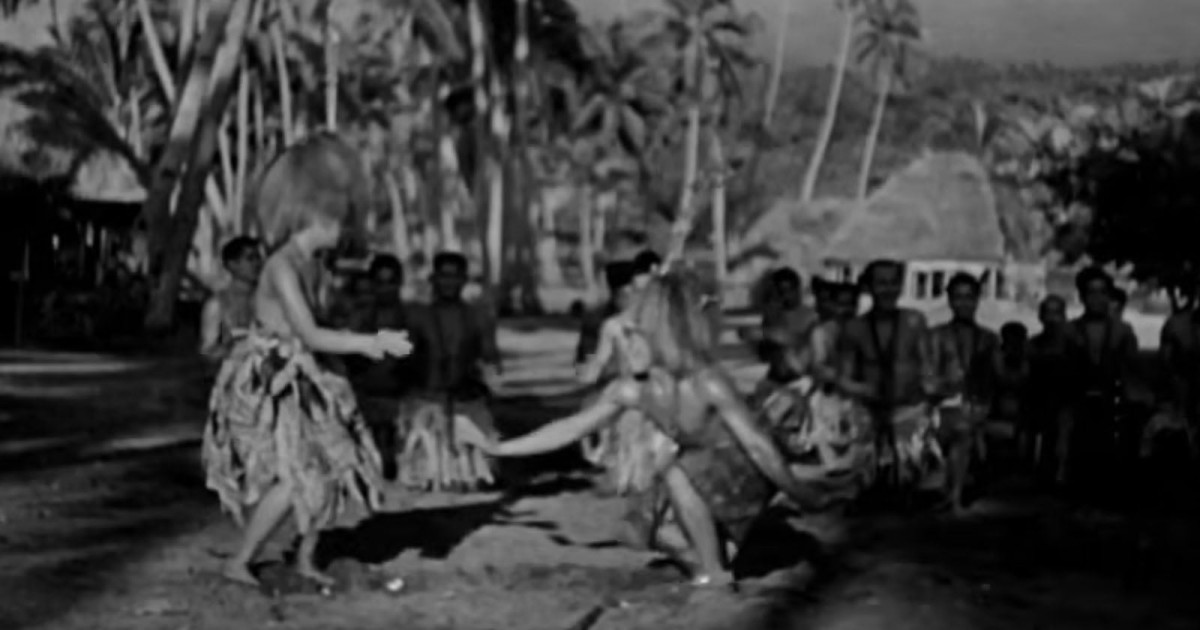
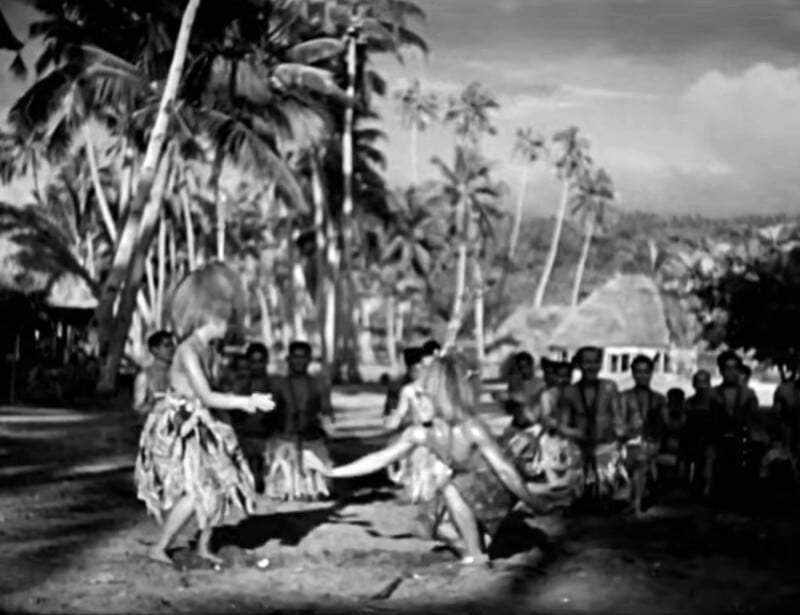 A scene from Moana (1926).
Disney’s live-action remake of Moana is set to be released in theaters tomorrow, and all is not well: box office sales are projected to be weak and critics are asking why this film, starring Dwayne Johnson, is even being made in the first place. But the first movie called Moana was shot all the way back in 1926 and far from being a live-action remake, it was the very first film to be labeled a documentary.
Nowadays, documentaries are one of the most popular television genres; Netflix, for example, relies heavily on a steady stream of them to keep audiences subscribed to its service. But back in the 1920s, at a time when silent movies still reigned supreme and “talkies” were still a few years out, the idea of a documentary film, as we know it today, simply didn’t exist.
Step forward Robert J. Flaherty, who had made his name in 1922 with his famous film Nanook of the North, a docudrama about an Inuk man searching for food so he can feed his family in northern Canada. The film features epic sequences, such as Nanook building an igloo and hunting for walrus. It was such a success that Flaherty had the money and contacts to try and recapture Nanook’s magic, and so he chose the Pacific island of Samoa.
“He had a vision of this great sea monster story,” film historian Bruce Posner tells The Guardian. “But when he arrived, there was no sea monster. There was this island life where everybody was happy.”
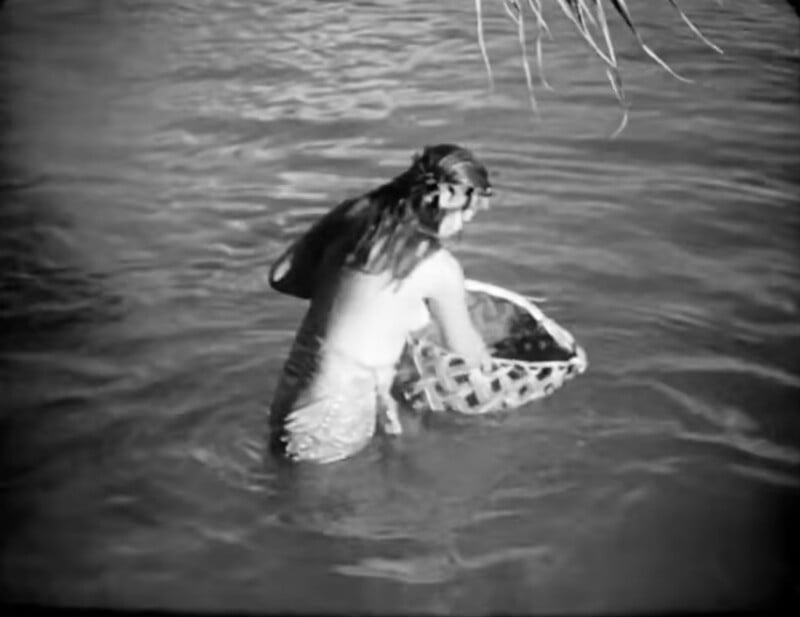
With no monsters of the deep, Flaherty instead shot an ethnographic film of Samoan life that was outdated even in 1926. But it’s believed that this is exactly what the American filmmaker decided to capture: an older way of island life before it disappeared entirely into the modern world. By the 1920s, Samoans were already wearing Western clothing, yet Flaherty persuaded them to don traditional tapa cloth costumes and the women went topless.
Blurring the Lines Between Fact and Fiction
Flaherty ultimately shot a bucolic picture of island life that didn’t have the same kind of drama seen in Nanook. One reviewer said this of the film: “Instead of entertaining, it interests.” It was a flop compared to Nanook.
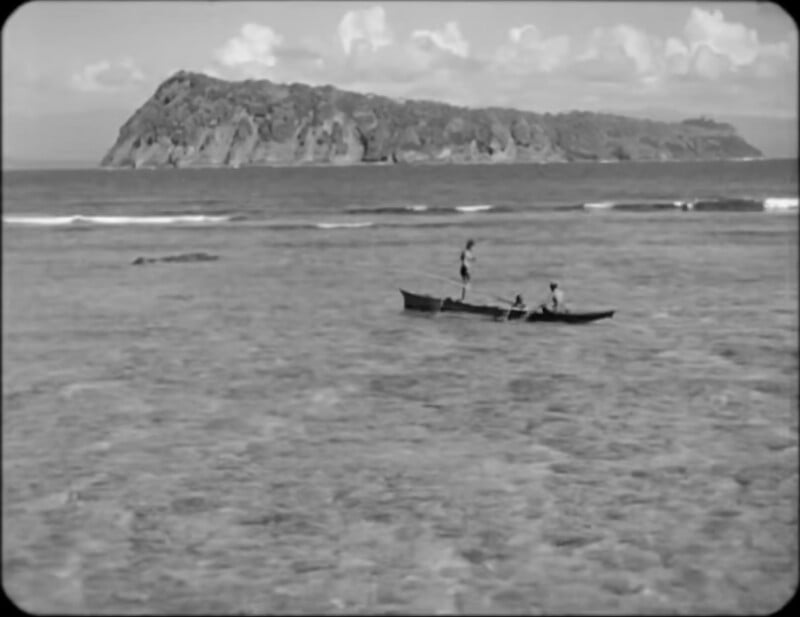 Flaherty filmed in Samoa for 18 months, turning a cave into a film lab. He made himself ill after drinking water from the cave that had been poisoned with silver nitrate from his celluloid.
But it was another reviewer, John Grierson, who wrote in the New York Sun that Moana, “being a visual account of events in the daily life of a Polynesian youth and his family, has documentary value.” According to legend, it was that final part of Grierson’s sentence that led to an entirely new genre being coined and categorized.
Of course, when Flaherty was shooting the original Moana, he had no concept of what a documentary was; for him, there was no line between fact and fiction. Flaherty cast the stars of his documentary when he arrived in Samoa by picking who he thought were the best-looking people. He lied about their familial relations and staged sequences, just like he had in Nanook.
Despite this, Flaherty still worked with elders on the island to recreate what life had been like in Samoa for centuries. The result was an important document that is largely cherished in modern Samoa.
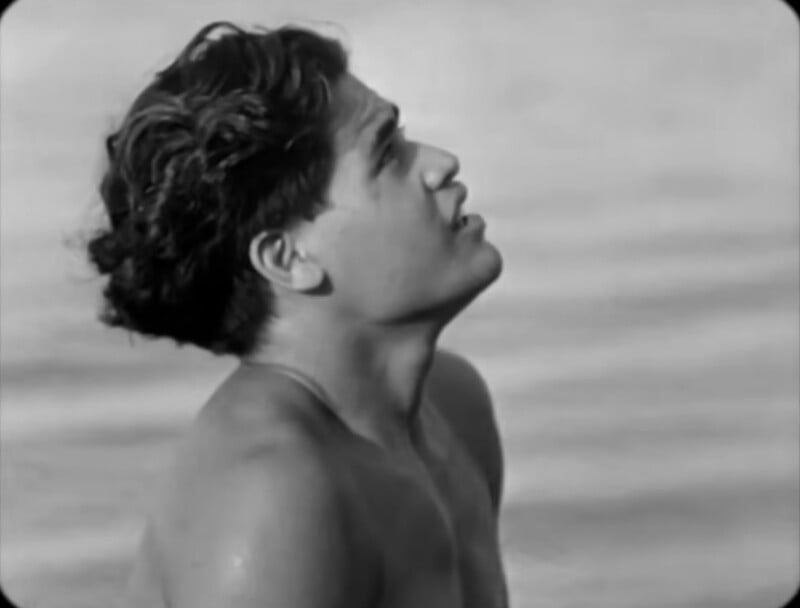
In Flaherty’s version, Moana is a young man. Posner tells The Guardian that he believes “someone at Disney picked the bones of the 1926 Moana to make their movie.”
It would still be a few years before the term documentary photography would appear. Despite the likes of Lewis Hine and Matthew Brady using their cameras to document the tumultuous times they lived through, it wasn’t until the U.S. government’s Farm Security Administration hired photographers like Dorothea Lange and Walker Evan to record American life during the Great Depression that critics and curators began referring to their work as documentary photography.
What's Your Reaction?
 Like
0
Like
0
 Dislike
0
Dislike
0
 Love
0
Love
0
 Funny
0
Funny
0
 Wow
0
Wow
0
 Sad
0
Sad
0
 Angry
0
Angry
0









Comments (0)