

A long-buried secret hidden in a cosy game about books made me realise something essential
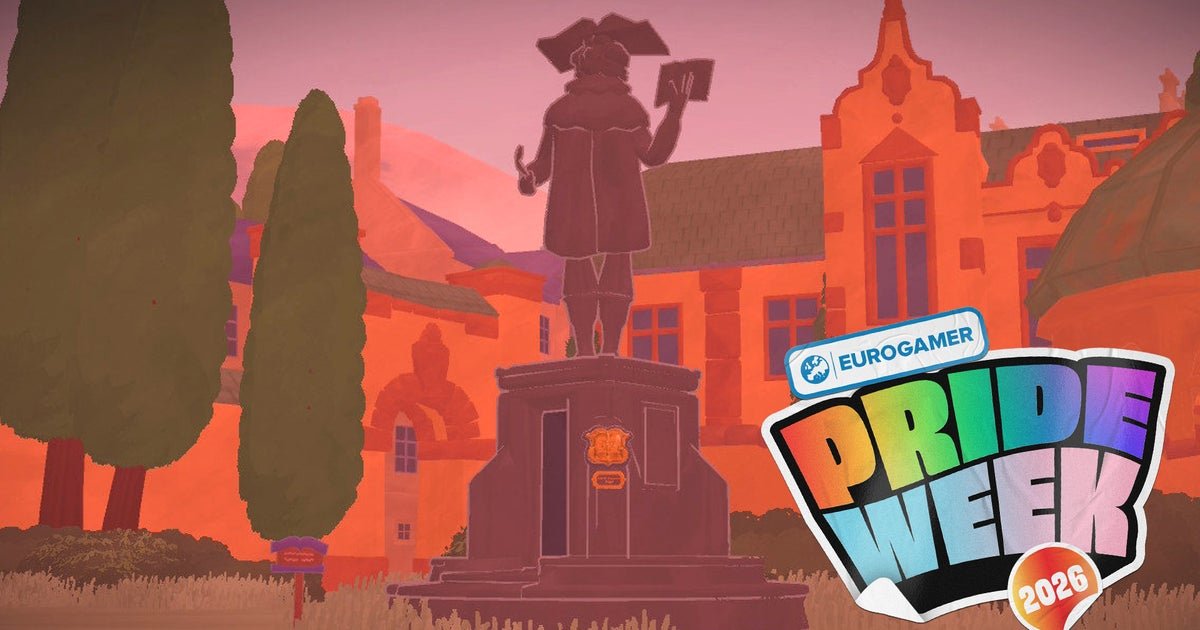
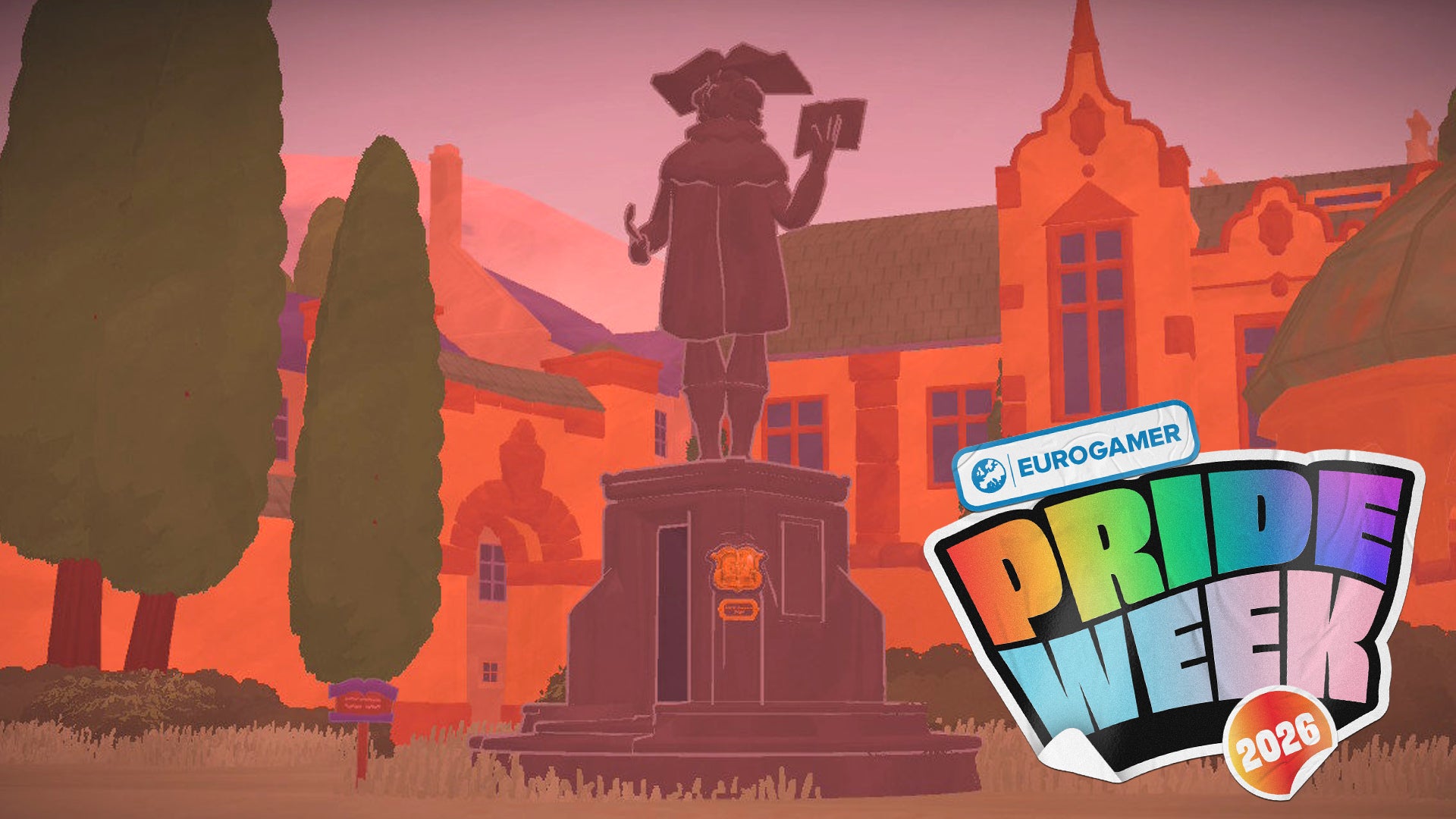 Image credit: Eurogamer/Neoludic Games
Hello! Eurogamer is once again marking Pride with a week of features celebrating the intersection of queer culture and gaming in all its guises. Things get underway today as Lottie plays historian in Tiny Bookshop and is moved by what she finds. And if you want to catch up on previous years' festivities, why not have a nose around our Pride Week hub?
Bookstonbury - the setting of developer Neoludic Games' Tiny Bookshop - reminds me immensely of Aberystwyth, the Welsh town where I went to university. There's the seaside promenade, the castle ruins on a hill and, of course, the university. Admittedly, St. Bookston's place of learning is a fair bit fancier than the concrete modernist mass of the main Aberystwyth campus, but, hey, at least we have the grandly gothic Old College.
During my Aberystwyth days, I was a stereotypical literature student, spending most of my time in the library, though there were rare days when I'd wander up to the castle to read - rain and wind allowing. There, I'd occasionally fantasise about opening a bookshop in the town; one that would stay in business despite my poor Welsh (sorry Taid), and one where I'd most likely spend my time reading rather than selling books. That, of course, never came to pass - but thanks to last year's Tiny Bookshop, I can now live that lost life vicariously.
Thankfully, Neoludic's game doesn't make me do my virtual bookshop taxes. But it does let me indulge in a personal passion: recommending books. In fact, it's a core part of the experience. Customers enter your little book wagon with a set of reading wants - perhaps they'd like a nature text book or a romance with a happy ending - and you'll have to find something suitable on your shelves. Some of the books here have been invented by the developer, but what really struck me was the wide selection of real books. From The Odyssey to The Origin of Species, to the works of Stephen King, the care Neoludic has put into choosing its expansive real-world library really conveys its love of books. And I was particularly delighted to see so many LGBTQIA+ stories and works by queer authors.
I knew I was gay early on in my teenage years. Not having anyone I felt comfortable talking to about it, I retreated to the one sanctuary which has never failed me. No, not RuneScape, books. Yet, stories with lesbian characters and queer narratives were very hard for me to find, and I wasn't brave enough to ask for help. Matters weren't helped by Waterstones feeling more akin to a Twilight temple - a shrine to (mostly) heternormative teenage horniness if you will - than a bookshop in those days. Outside of Carmilla, where was my lesbian teenage vampire romance?
I did discover the works of the manga artist group Clamp and the joys of queer fanfiction, which provided a window into the lesbian literature I yearned to read. I even wrote (and still do) my own queer stories, but pretending can only take you so far, and I wanted to experience them too. I wanted to be told that women could slay dragons and kiss princesses. I wanted to feel seen, understood and, honestly, less alone.
I did, eventually, find what I was looking for in the pages of older works, like Sappho's poetry and Elizabeth A. Lynn's (no relation) novels. And now in modern works such as Samantha Shannon's The Roots of Chaos cycle. Where women do indeed slay dragons and kiss queens! And here's the thing: you'll find Sappho, Nghi Vo, My Lesbian Experience With Loneliness, and Gideon the Ninth (lesbian necromancers in SPACE!) on Tiny Bookshop's shelves. Teenage Lottie would definitely have used it to track down new queer novels to read! But queer narratives aren't confined to the game's tomes.
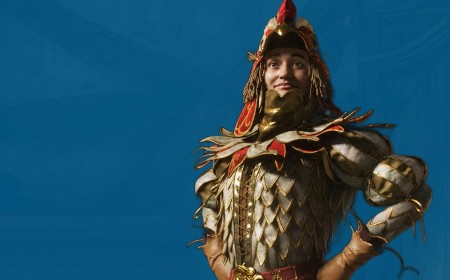
See, Tiny Bookshop isn't just about selling books, you'll be solving mysteries too. And the biggest one is the identity of local hero Saint Bookston. He's Bookstonbury's patron of the literary arts, and beloved by Bookstonbury's residents. The university is named after him, and there's even an inflatable mascot bearing his likeness (used to advertise the local supermarket and deemed insulting by some), although it does meet an unfortunate end. You'll spot countless depictions of Bookston all over town - a statue here or a fountain there - but each one looks a little different... And the biggest mystery you'll need to solve is why.
Your quest to untangle the Bookston mythos begins when you uncover a poem fragment he inscribed on a cave wall. With the help of nine-year-old Harper, the definition of inquisitiveness, you'll hunt down pieces of a crest hidden around Bookstonbury. One is sealed within a fountain, another appears beside a grave... almost like something from the beyond is guiding you. Eventually you'll find yourself in a hidden chamber beneath the university where the truth lies waiting: it turns out Saint Bookston was never a man at all. Instead, she was Sophia Theodosia Bright, a poet born in the 1500s. But more than that, she was secretly betrothed to Audrey Harington-Bright. It's Sophia's words, which you eventually uncover centuries after the couple's passing, that reveals all: the university claimed Sophia's work under the Bookston name, mutating her life, her loves, and her great achievements to create the so-called town hero.
Sophia's story, of course, reflects the real-world literary history where women writers were either diminished or forced to use male pen names. Middlemarch is often credited as one of the greatest, if not the greatest, English novels. Yet, you'll still find people believing Elliot was a man and not Mary Ann Evans. I'm sure you know of Robinson Crusoe, but have you heard of Love in Excess? It's a novel written by Eliza Heywood, which also emerged in 1719. Haywood published over 70 works, including novels, plays and political writing. Her work, however, only truly returned to the modern literary landscape in the 1980s. You have to wonder how many great works have been lost entirely, purely because they were written by a woman.
Tiny Bookshop isn't the first game to feature women who've been denied the recognition they deserve. Botany Manor - a flora puzzler developed by Balloon Studios and released in 2024 - features a story inspired by some of the enormously skilled women barred from academia, and especially science, in the 1800s. Arabella, the protagonist, should be a noted botanist, but her discoveries have either been sidelined or stolen by men - and the book you spend the game researching, Arabella's herbarium, is ultimately rejected by the publisher. Despite this, Arabella finds a new way to pursue her passion by opening a botany school for women; finding fulfillment in passing down her wisdom and, possibly, eventually being recognised for it. The legacy of Tiny Bookshop's Sophia, though, is closeted beneath the university. With both her personhood and recognition stolen, Sophia's life is reshaped into a fiction - a personification of what the university of the time believed the perfect scholar should be.
When we first read Saint Bookston's words in the cave near the start of our investigation, her poem can be interpreted as one of unrequited love. With truth, however, comes recontextualisation. Suddenly, "With hopeless want my hopeful heart now aches" reads more like Sophia wishing her love for Audrey could be expressed openly. If any semblance of their relationship had been allowed to survive publicly, the history books would have likely recorded them 'very good friends'. Though, considering how thorough the university's erasure of Sophia was, even this seems unlikely. A letter Audrey leaves behind reveals how she spent the years after Sophia's death protecting the remains of her lover's memory, and ends with the hope that, in the future, a relationship like theirs will be accepted.
My favourite aspect of Sophia and Audrey's romance isn't the reveal itself, but how, in the end, it's framed as a truth to be celebrated rather than a dark secret to be hidden away. The Bookstonbury residents react positively to the news their beloved saint is more heroine than hero, and they set up a memorial trail to educate tourists about Sophia's life and petition the university to change its name.
At its core, Tiny Bookshop is a game about stories - from the tales in the books you sell to those of Bookstonbury's residents, written into history as they live their lives. More than that, it's about the power a story can wield: how it can heal and inspire. How, when someone tries to take control of our stories - like the university's revision of Sophia's life - they can be rewritten and reclaimed. Sophia's story is one I wish teenage Lottie could have experienced. Not just because it has the lesbian characters she was looking for, but because it's a reminder of how, even if someone attempts to silence it, a voice will always, ultimately, be heard.
What's Your Reaction?
 Like
0
Like
0
 Dislike
0
Dislike
0
 Love
0
Love
0
 Funny
0
Funny
0
 Wow
0
Wow
0
 Sad
0
Sad
0
 Angry
0
Angry
0







Comments (0)