

Jon Snow's wife recalls the broadcaster's early Alzheimer's warning signs and says he was 'written off' by people after his diagnosis
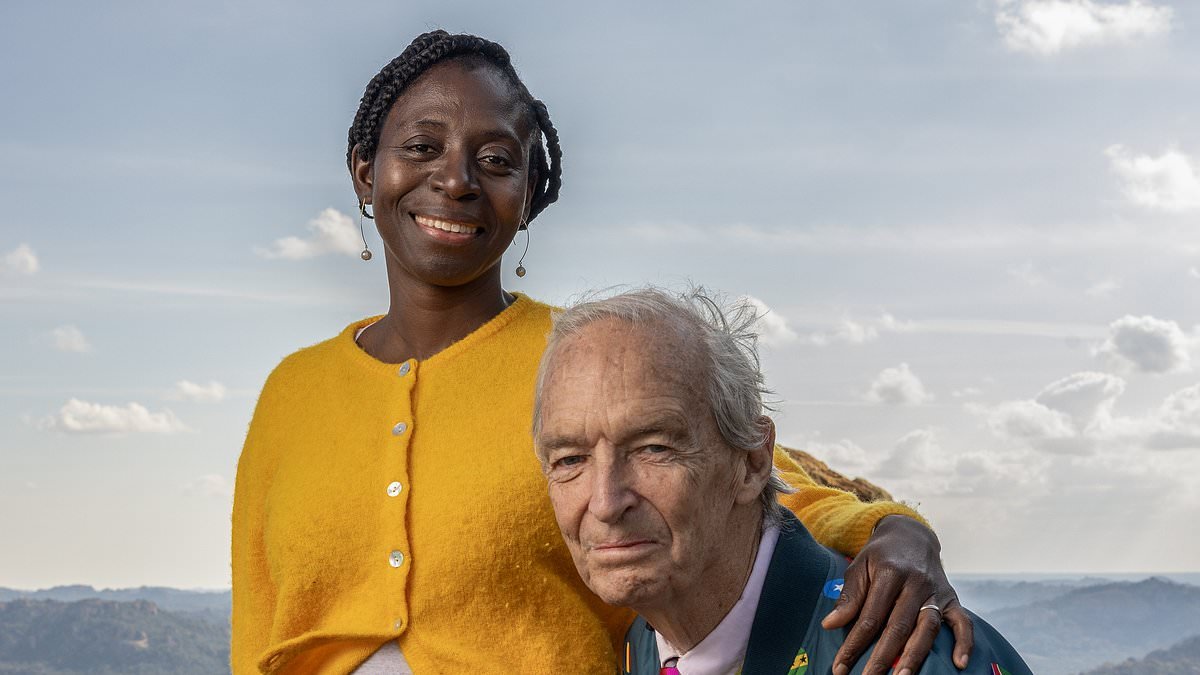
Jon Snow's wife Dr Precious Lunga has spoken for the first time about her husband's Alzheimer's diagnosis as she recalled the broadcaster's early warning signs.
Dr Lunga, who holds a PhD in neuroscience, said that Jon suffered with depression after retiring as a journalist in 2021, which can increase the risk of dementia.
She noticed that after this period Jon became 'forgetful' and she quickly picked up his changing behaviour and began to take notes of key moments.
The couple then went for tests to confirm Dr Lunga's fears, but they were initially dismissed as Jon passed the cognitive tests 'with flying colours'.
Seeking a second opinion, a scan combined with her notes about Jon's forgetful moments confirmed that he had the condition.
During an interview on Women's Hour with Anita Rani, Dr Lunga said that she felt Jon, 78, was 'written off' by people following his diagnosis.
When asked if this was the case, as often is with Alzheimer's, she said: 'Yes, we felt that. Not out of malice—more from a lack of understanding about what happens when you have Alzheimer's disease.

Everyone experiences dementia differently. Use this checklist to help you make a note of your symptoms before you talk to your GP.
Jon Snow's wife Dr Precious Lunga has spoken for the first time about her husband's Alzheimer's diagnosis as she recalled the broadcaster's early warning signs
'People are fearful of it because we're all scared we might get it ourselves. It comes with a lot of stigma, and people often want to look away. We wanted people to start having a conversation about it.'
Talking more about the initial diagnosis, she said: 'After he retired, he went into a deep depression. He missed his colleagues and his work. That lasted for about six months. After that period, he began to develop symptoms. Depression can sometimes be a trigger for Alzheimer's.
'I noticed he was becoming more forgetful and, as a neuroscientist, I picked up on it quite quickly. We went for tests. I also spoke to colleagues who encouraged us to pursue further investigations.
'What has helped me cope is having a better understanding of the condition and seeking out reliable sources of information. When he was diagnosed, we were given a booklet explaining what to expect and how to prepare.
'He was diagnosed at a very early stage. Being diagnosed early means you can manage symptoms with medication, which can improve quality of life.
'We saw a specialist in 2023. He passed the cognitive tests with flying colours, but a different type of scan told a different story.
'I had a record of occasional behaviours that I had noticed over time and had written down. I had built up a catalogue of information. It's detective work: putting that together with the scan results and my observations. From all of that, we concluded that he did have Alzheimer's disease.'
After he was first diagnosed, Jon wanted to 'hide' his condition from the world but he later decided to speak out and raise awareness.
Dr Lunga, who is a neuroscientist, said that Jon suffered with depression after retiring as a journalist in 2021, which can increase the risk of dementia
Dr Lunga: He said, "If I don't speak out, who will?" It's something that affected his mother and so many other people. He felt that when someone is diagnosed, they're often written off. You don't suddenly fall off a cliff; it's a gradual deterioration. It doesn't mean you can't continue to contribute to the world.'
Dr Lunga – a Zimbabwean epidemiologist – went on to detail how and when they told their family about Jon's Alzheimer's, because they felt they could no longer manage alone.
She said: 'We waited several months, but it became clear that we needed help. I started talking about it. Once it's out in the open, you're also telling yourself that this is real.'
Dr Lunga said that the adjustment period after was difficult, as they reconciled with the fact that they were no longer going to live the life they imagined.
She said: 'Receiving that information is a huge shock. It brings an end to many of the plans you had imagined for your post-retirement life.
'It was awful to accept that our lives were changing. The disease is a process.
'I burst into tears when I told my family, but they have been incredibly supportive. That helped a great deal.'
After living with the diagnosis for a period of time behind closed doors, they later decided to share the news with the world.
She said:' Jon is a journalist, so he's used to being in the public eye. I was occasionally nervous because the documentary gives such an intimate insight into our daily lives.
'What helped me overcome that was the thought that I'm just one of more than a million people affected by Alzheimer's. By "affected", I mean both those living with the disease and those who care for or support them.
Jon Snow: A Last Big Story – will see him navigate life with Alzheimer's as he undergoes an investigation into a Zambian community whose land was impacted by a mining disaster
'I thought sharing our story might help others, and that helped me get over the nervousness. It's not the end of life. We look for opportunities to live positively and enjoy the present moment.'
The couple have been working on a documentary which followed them, as they came to terms with his Alzheimer's diagnosis.
While filming they were away in Africa and Dr Lunga recalled how they were sitting on the banks of the Zambezi River when a woman started talking about a mining disaster.
She recalled: 'Jon said has there been an environmental disaster? He asked, "Is anyone talking about it? What can we do?" He was outraged that nobody seemed to be discussing it. It wasn't on the BBC or anywhere else, and that's how it all evolved.
'The documentary team, who were really there to film Jon's life, said, "Let's do this." I agreed.'
After firing into action, Dr Lunga said: 'He absolutely lit up. He loved the hunt for the story—the journalistic pursuit of finding out what had happened, what was happening in the community, and what people were experiencing.
lI was worried because there was probably a reason it wasn't making the news. The mining company may not have wanted the story to come out.
lWe needed to ensure that all the safeguarding measures and permissions were in place.
lI don't think many people realised how meaningful and impactful it would be for Jon to cover that story.'
As Jon's main caregiver, Dr Lunga revealed how she keeps time for herself for her own mental wellbeing.
She said: 'It's hard. I try, at least once a month, to find some time for myself—perhaps a weekend away.
'I also run a health-tech start-up, and like many women, I'm juggling multiple responsibilities and other people's needs.
'I have siblings, and my older sister Pauline often reminds me to take a pause and make time for myself. I do yoga in the morning or evening when I can.
First, it takes time to process where you thought your life was heading and where you actually are. It's about accepting where you are now.
'It's not just about surviving. The question becomes: how can we live and thrive? We live much more in the moment now, and Jon is very good at that.
'One positive aspect is that he's incredibly present when he's with you. Finding the right balance is a constant juggling act. Every day is different, and it's about continually adapting.'
When asked how he is now, Dr Lunga said that he enjoys piano playing and he still enjoys travelling, despite the usual advice being to keep to routine.
She said: 'There's much more variation in his playing now. He loves Bach. He'll hear something and then sit down at the piano and play it. He used to play the same tunes repeatedly, but now he'll experiment with different chords and melodies, putting them together in new ways.
Before meeting Precious, Jon had been in a 35-year relationship with human rights lawyer Madeleine Colvin, with whom he has his two daughters
'He plays for longer and seems to be more creative in his improvisation.'
She continued: 'He loves going on adventures and visiting beautiful places. That's one reason we were at Victoria Falls.
lHe loves travelling. The usual advice is often to stick to routines, but because he's a journalist, travelling and seeing the world has always been part of who he is. He still loves doing that. His love of music hasn't gone away either.'
To conclude the interview, Dr Lunga was asked if she had any advice for other people in the same situation, and said: 'I'd like people to know that there is always hope—hope for a life well lived. Look for sources of support.
'When Joh was diagnosed, we were given a book. I understood Alzheimer's from a scientific perspective, but living with it is something entirely different. The practical advice about planning for the future and simplifying life was invaluable.
The key message is that Alzheimer's should not be stigmatised. It can happen to any of us, and there should be no shame attached to it.
Jon married Precious in March 2010 on the Caribbean island of Mustique, the exclusive hangout of the rich and famous.
The ceremony was conducted at the £800-a-night Firefly Hotel, which has hosted guests including rocker Mick Jagger, royal Zara Phillips and actors Liz Hurley and Hugh Grant.
By this point, the pair had been together for nine years, having met when Jon was 53 and Precious was 26, but the couple dismissed critics of their age gap.
Jon said her 'mental age' was far higher than his, saying: 'She's very, very mature. I mean, she's a serious boffin.'
Before meeting Precious, Jon had been in a 35-year relationship with human rights lawyer Madeleine Colvin, with whom he has his two daughters.
Jon has gone public with his diagnosis in a bid to raise awareness.
In England, more than a third of dementia sufferers don't have a diagnosis and, despite being one of the country's biggest killers, research into the condition lags way behind cancer.
According to Alzheimer's Society, for every 45 patients taking part in late-stage cancer clinical trials, just one person took part in dementia trials.
Ahead of the documentary's release, Jon chose to go public with his diagnosis to the Daily Mail and has since been inundated with messages from fans, as well as Prime Minister Sir Keir Starmer – who hailed the newsreader as a 'true giant in journalism'.
Reflecting on the influx of well-wishes, Jon said: 'I'm truly bowled over by the outpouring of support and affection since revealing my dementia diagnosis.'
Visits to the Alzheimer's Society website have surged following Jon's announcement, and the number of people accessing its symptom checker has more than doubled.
On this, the veteran news anchor said: 'As a journalist, you never expect to become the story, but it's heartening to know that sharing my experience has contributed to a surge in visits to Alzheimer's Society's website, with people seeking information, support and ways to get involved in the fight against dementia.
'Receiving a dementia diagnosis can turn your world upside down, but I really do believe it's better to know.'
His new documentary – Jon Snow: A Last Big Story – will see him navigate life with Alzheimer's as he undergoes an investigation into a Zambian community whose land and water were impacted by a mining disaster.
It will air on Channel 4 at 8pm on June 20.
The Daily Mail and Alzheimer's Society have partnered in a drive to beat dementia, which claims 76,000 lives each year and is the UK's biggest killer.
The Defeating Dementia campaign aims to raise awareness of the disease, in an effort to increase early diagnosis, boost research and improve care.
For dementia information and support, visit alzheimers.org.uk or phone the Dementia Support Line on 0333 150 3456
WHAT IS DEMENTIA?
Dementia is an umbrella term used to describe a range of progressive neurological disorders, that is, conditions affecting the brain.
There are many different types of dementia, of which Alzheimer’s disease is the most common.
Some people may have a combination of types of dementia.
Regardless of which type is diagnosed, each person will experience their dementia in their own unique way.
Dementia is a global concern but it is most often seen in wealthier countries, where people are likely to live into very old age.
HOW MANY PEOPLE ARE AFFECTED?
The Alzheimer’s Society reports there are more than 1million people living with dementia in the UK today, of which more than 500,000 have Alzheimer's.
It is estimated that the number of people living with dementia in the UK by 2040 will rise to more than 1.4million.
As a person’s age increases, so does the risk of them developing dementia.
Rates of diagnosis are improving but many people with dementia are thought to still be undiagnosed.
IS THERE A CURE?
Currently there is no cure for dementia. But new drugs can slow down its progression and the earlier it is spotted the more effective treatments are.
What's Your Reaction?
 Like
0
Like
0
 Dislike
0
Dislike
0
 Love
0
Love
0
 Funny
0
Funny
0
 Wow
0
Wow
0
 Sad
0
Sad
0
 Angry
0
Angry
0









Comments (0)