The memory chip that makes a router remember how to be a router is a world away from the sleek GPUs that are attracting eye-popping investments and alarming valuations, as well as sending stock markets shooting upwards. They’re small, historically have been cheap, and are based on technology that has been around for years.
But despite being a world away from GPUs, the price of these often overlooked chips is skyrocketing, thanks to the all-encompassing memory price crisis caused by the AI boom.
While public and press attention has focused on the expensive chips, there’s an equally large impact beginning to be felt on older, less attractive memory chips. HBM is vital for AI accelerators, while DRAM and high-capacity NAND are being swallowed up by rapidly expanding data centres. A June report from Morgan Stanley reckons memory prices have risen more than sixfold over the last year, breaking with decades in which memory became steadily cheaper as production increased.
It’s not just HBM and DRAM that’s being affected. The crunch is also spreading down into much older forms of memory, including NOR flash and single-level cell, or SLC, NAND. Morgan Stanley expects NOR flash to remain undersupplied through 2026, while JPMorgan has warned its forecasts don’t fully capture a potential supply crunch in SLC NAND. The effects are already showing up in prices. TrendForce says contract prices for both NOR flash and SLC NAND rose by more than 100% during the first half of 2026, while it expects SLC NAND prices to rise another 120% to 170% in the second half of the year compared with the first half.
Picking winners
An increase in prices will have an impact on the tech we use day in, day out. NOR flash is commonly used to store boot and program code, and is a core part of automotive, industrial, and networking equipment. SLC NAND is deployed across a number of uses because of its reliability and endurance when placed in embedded hardware with long lifespans.
Both are vital. And both are being overlooked in favour of higher-margin chips — pushing the supply crunch to tech that previously never faced any issues. “The SLC NAND market is probably under a billion dollars a year,” said Jim Handy, a semiconductor and SSD analyst at Objective Analysis, in an interview with Tom’s Hardware Premium. That tiny scale adds up to a big problem, because it disincentivises any new investment.
“What you've got going on is a purely economic phenomenon,” said Handy. Hyperscalers and cloud providers are “all trying to outspend each other”, pouring unprecedented sums into semiconductors to build AI infrastructure. That willingness to spend big means the most profitable customers naturally move to the front of the queue.
Companies including Nvidia, Broadcom and Marvell need huge amounts of semiconductor manufacturing capacity for chips destined for AI systems. “They’re sucking up all of the wafers,” says Handy. “And then the companies who make NOR flash and SLC are having a hard time getting wafers to build their product, and so they have to raise prices.”
The problem is even starker in the NAND market. Bryan Ao, research manager at TrendForce, told Tom’s Hardware Premium in an interview that major NAND manufacturers, including Micron, Kioxia and SK Hynix, have been cutting the wafer capacity devoted to SLC because they can make considerably more money using it for newer NAND technologies. Ao estimates that a 12-inch wafer devoted to mainstream NAND can ultimately generate close to $20,000 in revenue. Use the same space to produce SLC and the figure is closer to $6,000 to $8,000.
Even if they wanted to, smaller SLC suppliers in China and Taiwan can’t just spin up new production. Lead times for some semiconductor manufacturing equipment have stretched to between 12 and 15 months, said Ao. The result is what he calls “severe undersupply”.
Big prices, big returns
BNP Paribas forecasts the average NAND price will hit $279.50 per terabyte during 2026, up from $73.10 in 2025. JPMorgan expects the memory shortage to persist for at least another two years, with customers getting just 70% to 80% of their orders fulfilled. TrendForce says manufacturers are shifting capacity towards advanced, higher-value memory products, with mature processes increasingly squeezed as a result.
There are some alternatives available. Kioxia says its serial SLC NAND is an alternative to NOR flash. But moving an existing industrial or networking product onto a different chip can itself require engineering work and qualification. Nor is there much incentive for memory manufacturers to fix the problem by building new SLC capacity – which means manufacturers are unlikely to invest billions in capacity whose useful market may disappear. That creates an unusual trap: there may not be enough demand to justify new factories, but there is still more demand than the shrinking supply can satisfy.
Hardware manufacturers can eat the higher component bill and accept lower margins, or pass it on. “We'll just have to either have lower margins, or we'll have to raise the prices to the consumer,” Handy said.
An ongoing issue
The problem is one that seems to have no solution – at least in the short term. Ao expects memory prices to remain high over the next five years and does not expect them to return to 2023 or 2024 levels. That broadly fits with the structural nature of the shortage identified by TrendForce, which says there are no significant capacity expansion plans for NOR flash or SLC NAND.
Handy sees one possible way out, but it is hardly reassuring. “As long as the race between the hyperscalers keeps up to spend, then it will continue to be an issue,” he said.
Handy compares the AI buildout to the internet infrastructure boom of the late 1990s. Rather than enough capacity eventually arriving to restore balance, he thinks spending may simply overshoot what the market can economically support.
“I'm expecting the same kind of a thing to happen here that we've got too many people spending too much money on AI, and not really making any return on it yet,” he said.
Until then, the least exciting memory chips in a computer may become some of the hardest to replace. Or, as Ao put it: “Pretty much we have to get used to this high price, no matter which segment of memory.”


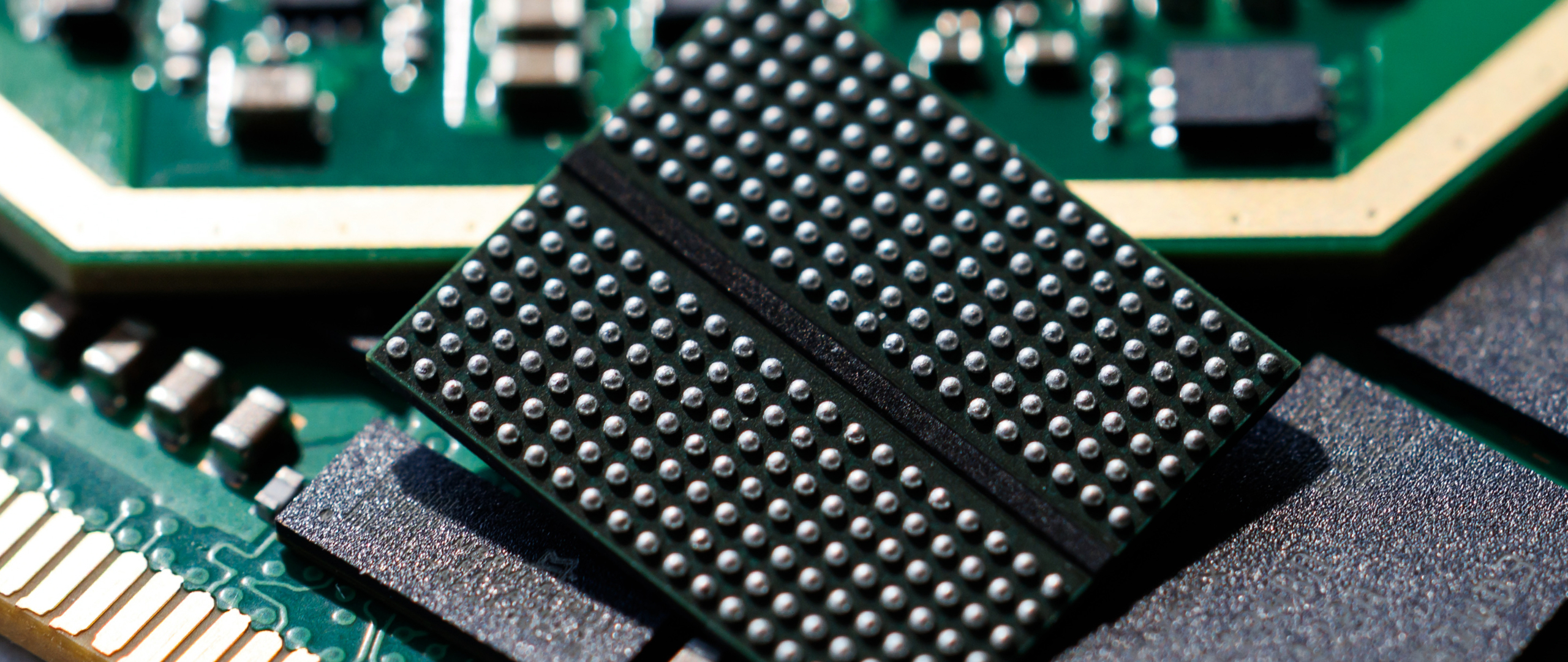 (Image credit: Getty Images / Bloomberg)
 Like
0
Like
0
 Dislike
0
Dislike
0
 Love
0
Love
0
 Funny
0
Funny
0
 Wow
0
Wow
0
 Sad
0
Sad
0
 Angry
0
Angry
0








Comments (0)