

The Case Against Chasing Epic: Why Your Local Forest Might Be Your Best Subject
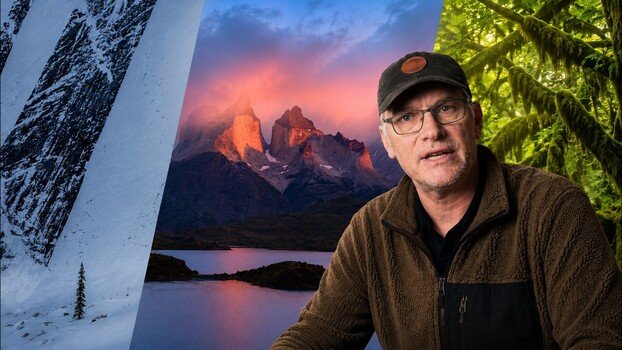
Chasing dramatic landscapes and remote destinations is easy to justify when the results look stunning on social media. But Adam Gibbs, who has photographed Antarctica, Patagonia, Iceland, and the Canadian Rockies, has spent years questioning whether spectacular scenery actually produces better photographs.
Coming to you from Adam Gibbs, this thoughtful video makes a case that impressive and interesting are two very different things. Gibbs argues that beautiful scenery and compelling photography aren't the same, and that some of his strongest work has come from places within an hour of his home. Social media has sharpened this problem: a quiet woodland image placed next to a mountain exploding with sunrise color will almost always lose the click. Over time, extraordinary starts to feel ordinary, and the appetite for bigger, more dramatic, more extreme images keeps growing. AI-generated imagery has pushed this further, making every mountain taller and every sunset more saturated, until real experiences start to feel like disappointments by comparison.
Gibbs points to his recent work in Jasper and Waterton as a concrete example of what happens when you slow down and look harder. Most people walk past a burnt forest without a second thought, but he found patterns in the repeated tree trunks, the way snow interacted with dark bark, the rhythm of thousands of vertical lines. He started working with multiple exposures, and the photographs shifted from documentation to interpretation. The trunks began to resemble brush strokes. The work became more abstract and more personal. Photographing the same forest for 20 years forces a kind of attention that a first visit to a famous location never requires, and that pressure, it turns out, produces more interesting results.
The deeper point Gibbs is working toward is about what actually drives your photography. There will always be someone with a more remote location or a more dramatic mountain. Trying to out-epic the internet is a competition with no finish line. What Gibbs finds more useful is asking a different question entirely: not whether a scene is impressive enough, but whether it is interesting enough. He looks for curiosity, for relationships between shapes, for patterns and mystery light, and sometimes those things appear in dramatic landscapes, but more often they don't. Fog drifting through trees, patterns in beach sand, details in a piece of driftwood, these aren't consolation prizes for not being in Patagonia. They're the subjects that require you to actually see rather than simply show up.
Check out the video above for the full breakdown from Gibbs, including how he thinks about developing a personal photographic vision and why photographing familiar places repeatedly might be the most underrated practice in landscape photography.
What's Your Reaction?
 Like
0
Like
0
 Dislike
0
Dislike
0
 Love
0
Love
0
 Funny
0
Funny
0
 Wow
0
Wow
0
 Sad
0
Sad
0
 Angry
0
Angry
0









Comments (0)