

Five Older Cameras That Prove Great Photography Isn't About Technology
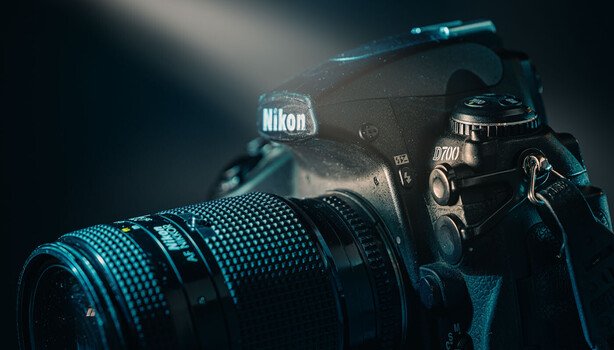
There's this idea going around that the newest cameras, with the latest sensor or faster processor, will give you the best image quality. I say that's just plain wrong.
Every year we're fed a long list of features designed to convince us that our current camera is now inadequate. Sure, camera technology has undoubtedly improved over the past twenty years, but those improvements have become increasingly incremental. For most photographers, a camera that is ten, fifteen, or even twenty years old is still capable of producing outstanding images. But most photographers don't know that!
It's easy to forget, while being bombarded with the latest specs, that the limiting factor isn't the camera—it's the photographer.
The Great Camera Image Quality Myth
From my experience, image quality doesn't improve dramatically with every new generation of cameras. The reality is that photography reached a point of technological maturity quite some time ago.
When I compare images shot on my 18-year-old Nikon D700 to images I shot on my new Nikon Z6 III, there is no real difference. In fact, I would even go so far as to say that in some situations, the sensor on the old D700 has a nicer, more organic quality about it.
It's true that many early digital cameras often struggled with high ISO performance and dynamic range when shooting in low light or scenes with both very bright and very dark areas. Older digital sensors had fewer megapixels too, although that has little to do with image quality, just the size of the image you can print. I shot photos on my D700 that appeared on the cover of magazines or in glossy brochures. They looked great. A well-exposed image from this, and many other cameras from back then, can still be printed large, published professionally, displayed in galleries, and shared online without anyone questioning its quality.
Below are some comparison photos. The first in the sequence was shot on an 18-year-old Nikon D700, and the second was shot on a brand-new Nikon Z6 III. The same lens was used on both cameras to keep things fair. Can you really see a difference in image quality? Nope, didn't think so.
A used D700 can be purchased for around $485, and a new Z6 III will cost you $2,000. Maybe it's worth penny-peeping instead of pixel-peeping?
Nobody Looks at a Great Photograph and Asks About the Sensor
When you look at the most memorable photographs you've ever seen, what stands out? What do you remember? The emotion, feeling, story, great lighting, or the dynamic range the sensor was able to capture?
Viewers do not respond to camera specifications. This is irrelevant the moment a photograph connects with us emotionally. I've said this on my YouTube videos, and many times in my articles on Fstoppers, and I'll keep saying it: a photograph succeeds because of what it says, not because of the equipment used to create it.
Older Cameras Often Have More Character
Something rarely discussed is that older cameras often possess a unique rendering that many photographers find appealing. Older CCD sensors like those found in the Leica M9 rendered colors much better than modern stacked CMOS sensors do. Reds, greens, and skin tones are much richer and more natural looking.
Early digital sensors could be less clinically accurate, less aggressively processed, and more distinctive in their output. Some say they can be more analog and film-like in their rendering. I have to agree.
Older sensors require a little more care in getting the right exposure, as highlights can blow out more easily. There is less dynamic range, which means a more contrasty, expressive image—perfect for street photography. Or the requirement to take a couple of exposure-bracketed shots and merge them together in post. Newer sensors are clean, precise, and clinical. Someone recently said it's the difference between listening to a vinyl record versus a high-resolution digital audio file.
My take is that older sensors are better for expressive artistic photography, whereas modern sensors are more practical and superior for commercial work.
The reason photographers romanticize CCD cameras is the same reason many photographers romanticize vintage lenses. It's not because they're better. It's because they're different. Like modern lenses, modern cameras are designed to remove flaws.
Many photographers eventually discover that some of those flaws were actually part of the charm in the first place.
More Megapixels Means Better Photographs, Right?
Wrong. The megapixel race has convinced many photographers that resolution is everything.
Yet for most real-world applications, it isn't. As you've seen with the samples above, a 12-megapixel camera can produce excellent results, the same as a 24-megapixel camera. Making prints from these two cameras is no different, up to a point. Many of the photographs hanging in galleries were created using cameras with far fewer megapixels than modern cameras.
Unless you're making enormous prints, cropping heavily, or working in specialized commercial fields, the difference between 24 megapixels and 45 megapixels is often far less important than manufacturers would like you to believe.
Modern Cameras Solve Problems Most Photographers Don't Have
Today's cameras are remarkable. Eye-tracking autofocus using subject recognition. 20 frames per second shooting with AI-driven processing. There is no doubt that wildlife photographers and sports photographers will find these features useful. But if you're photographing architecture, landscapes, travel, street photography, portraits, or everyday life—well, I certainly don't need any of it, how about you? Why pay for something you don't use? Why carry around incredibly sophisticated—and often bigger—cameras while photographing subjects that could be captured perfectly well with a camera released a decade ago?
Final Thoughts and Recommendations
Camera manufacturers need to sell cameras; that's obviously their business. So it's no surprise that with each new release, they have to hype up a game-changing advancement that will somehow transform your photography.
Come on though, when you look at photographic history, the images we remember were rarely created because of cutting-edge technology. They were created because someone had something to say and knew how to say it with a camera.
Modern cameras are wonderful tools, but older cameras remain remarkably capable. They are still as relevant today as the day they were released. A well-maintained camera from ten or twenty years ago can still produce professional-quality images, as good as any new camera can.
I've chosen five cameras that have achieved almost legendary status and are still actively used by enthusiasts and professionals today.
1. Nikon D700 (2008)
When this camera was launched, it was a game-changer for me and my professional work. I would go so far as to say it sits alongside the D850 as the best digital Nikon ever made. I'm not including the D850 in this list, as it's a larger pro-bodied camera, not really necessary for everyday/hobbyist photography use.
I chose the D700 over the D850 because I used it for travel and lifestyle photography and wanted the smaller form factor. Even then, it's a bit of a beast, a hefty piece of metal weighing a little over 1 kg! This is the only negative this camera has. It's otherwise perfect. If it were 300 g lighter and a little smaller, I'd still be using it today.
- Full frame, 12.1 megapixels, but capable of producing professional results. It's still perfect for documentary, portrait, and wedding photography. And if you really must have a larger image file for large-format printing, you can always use Generative Upscale in an app like Photoshop.
- The color rendition and tonal range are a pure delight.
- Pricing: Expect to pay $320–$615.
The D700 has developed a cult following; get one with a low shutter count before it's too late!
2. Canon EOS 5D (2005)
This was the first camera that made full-frame digital photography accessible.
- Full-frame CMOS 12.8-megapixel sensor.
- Weighs just over 900 g.
- Has a distinctive color palette and rendering.
- Many Canon enthusiasts still prefer its files to those of modern cameras.
- Not as well built to withstand extreme conditions as Nikons, but equally as capable image-quality-wise.
- Pricing: Expect to pay $160–$250.
Another camera that has developed a cult following.
3. Fujifilm X-Pro1 (2012)
This little puppy is a highly regarded rangefinder-style camera, perfect for street and travel photography. It's known for its unique 16.3 MP APS-C X-Trans CMOS sensor rendering, which lacks a low-pass filter, resulting in very sharp images.
- Weighs just 450 g.
- Beautiful color and tonal response.
- Sluggish focus and processing.
- Encourages a slower, more deliberate style of photography. The all-metal camera feels good to hold and use, and offers a great user experience.
- Produces images many photographers describe as film-like.
Pricing: Expect to pay $500–$620.
Many street photographers have discovered this camera since the newer X100V and X100VI became hard to buy new.
4. Sony a7 (2014)
This is the hybrid camera that started the mirrorless revolution. This was because it had good video capability and became a popular choice for hybrid content creators during the early days of YouTube's increasing popularity.
- 24.3-megapixel full-frame BSI CMOS sensor.
- Weighs 475 g.
- Video: the ability to shoot 10-bit 4:2:2 internally, in addition to 5-axis IBIS, was the main factor this camera shot to fame with hybrid creators. Nothing else could touch it at the time.
- Excellent image quality by modern standards, although not the best option for portraits, as skin tones were yellow-green and muddy.
- Huge adaptability for vintage lenses.
- Pricing: Expect to pay $330–$550.
This camera shows that a decade-old mirrorless camera is still more than capable of holding its own against newer mirrorless models.
5. Leica M9 (2009)
This early digital M rangefinder is the most antiquated camera of this bunch, with limitations similar to those of using a film camera. ISO is the big one; things start to look grainy after ISO 800. So you need good lighting and/or fast lenses. The sensor is said to be "magic," giving film-like results, with lovely highlight roll-off.
The big elephant in the room with the M9 is the corrosion issues the sensor had. You need to find an example that had Leica's recall upgrade, or you're taking a huge risk.
- 18-megapixel Kodak CCD sensor has a very distinctive look.
- Weighs 585 g.
- One of the most sought-after and affordable digital Leica cameras, often the gateway drug to the world of Leica M!
- Not technically perfect, but renowned for its rich color and rendering.
- Pricing: Expect to pay $3,400–$3,850.
This popular camera demonstrates that character and user experience often matter more than specifications.
The next time you're tempted by the latest release, ask yourself a simple question: would that latest new camera genuinely improve your photography over an older model? For most of us, the answer is obvious.
I'd rather buy an older camera and put that money saved into some vintage lens or a photographic travel adventure.
What's Your Reaction?
 Like
0
Like
0
 Dislike
0
Dislike
0
 Love
0
Love
0
 Funny
0
Funny
0
 Wow
0
Wow
0
 Sad
0
Sad
0
 Angry
0
Angry
0







Comments (0)